
As the war continues, the Iranian regime has pressed ahead with appointing its new Supreme Leader. Mojtaba Khamenei, the son of Ali Khamenei, was formally elevated in Tehran even as Israeli and American strikes continue to dismantle the regime’s military leadership, its fighting forces and its air defences – a striking dynastic turn for a system that has long presented itself as a revolutionary republic rather than a hereditary regime. Having watched Israel systematically eliminate senior figures around him while degrading the regime’s ability to fight and defend itself, the new leader may reasonably wonder whether his days could be numbered.
Mojtaba Khamenei has long been regarded as one of the most influential figures inside the Iranian system
The announcement came late in a day otherwise dominated by the now-familiar pattern of the war between Israel and Iran: Israeli strikes deep inside Iranian territory, Iranian missile launches against Israel, continued fighting along the Lebanese front and a series of drone attacks across the Gulf.
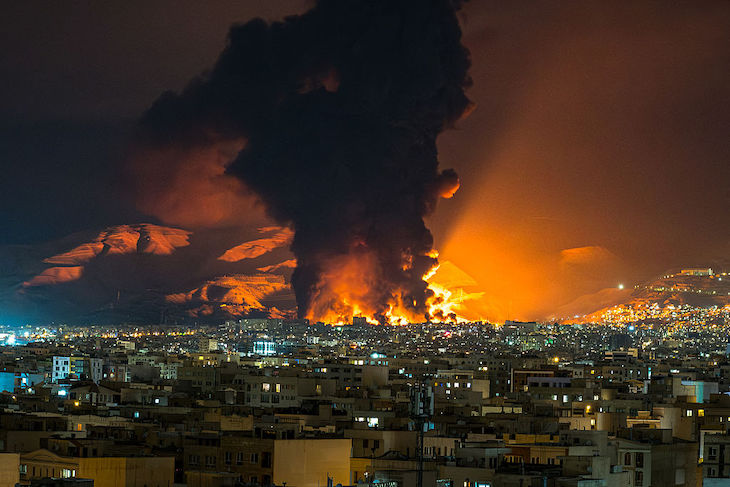
Earlier in the day Israeli operations were focused on weakening Iran’s military infrastructure. Israeli aircraft struck fuel depots used by Iranian military forces in Tehran, leaving large storage facilities burning into the morning. Separate strikes targeted installations at Isfahan airport linked to Iran’s fleet of F-14 fighter jets, continuing a campaign aimed at limiting Iran’s ability to contest Israeli air operations.
Israel has also maintained pressure on the Iranian command structure directing the war. Israeli officials reported the killing of Abu al-Qassem Baba’iyan, head of the military office of the Supreme Leader and chief of staff of the emergency headquarters known as Khatam al-Anbiya. Baba’iyan had only recently been appointed after his predecessor was killed in an earlier Israeli strike.
Iran’s response followed the pattern seen throughout the conflict. Missile launches from Iran towards Israel continued. Air-raid sirens sounded across several regions, including central Israel. Emergency services said a number of people were injured after impacts were reported, including one man in serious condition and others with moderate and minor wounds.
Across the Gulf there were reports of Iranian drones striking or approaching several countries. In Kuwait, local reports said a Shahed-type drone hit a tall civilian tower in the capital, while pro-Iranian channels claimed that another UAV struck a radar installation associated with a US base. In Bahrain a drone hit a hotel, and air-defence systems were activated in the United Arab Emirates as incoming drones were intercepted.
Israel’s northern front remained active as well. Hezbollah claimed responsibility for thirty-three attacks against Israeli forces in a single twenty-four-hour period – the highest number since the current phase of fighting began. Israeli strikes continued across southern Lebanon, including an attack that Lebanese sources said killed around twenty people in a village in the south.
The scale of the fighting has already produced significant displacement. Lebanon’s welfare ministry said more than 517,000 people have registered as evacuees since the escalation began earlier in the week.
By Sunday evening Tehran announced its new leader: Mojtaba Khamenei, chosen by the Assembly of Experts to succeed his father after his killing in the early strikes of the war. Mojtaba Khamenei has long been regarded as one of the most influential figures inside the Iranian system, though he has never held formal elected office. His elevation to Supreme Leader therefore represents both a continuation of the current power structure and a departure from the Islamic Republic’s traditional claim that authority flows through clerical institutions rather than family succession.
The announcement was followed by scattered reports of protests in Tehran, including chants shouted from residential buildings. Shortly afterwards further missile launches from Iran were reported, with the regime keen to project continuity and resolve at a moment of internal transition.
Oil markets reacted sharply to the escalating conflict. Prices surged more than 25 per cent on Monday
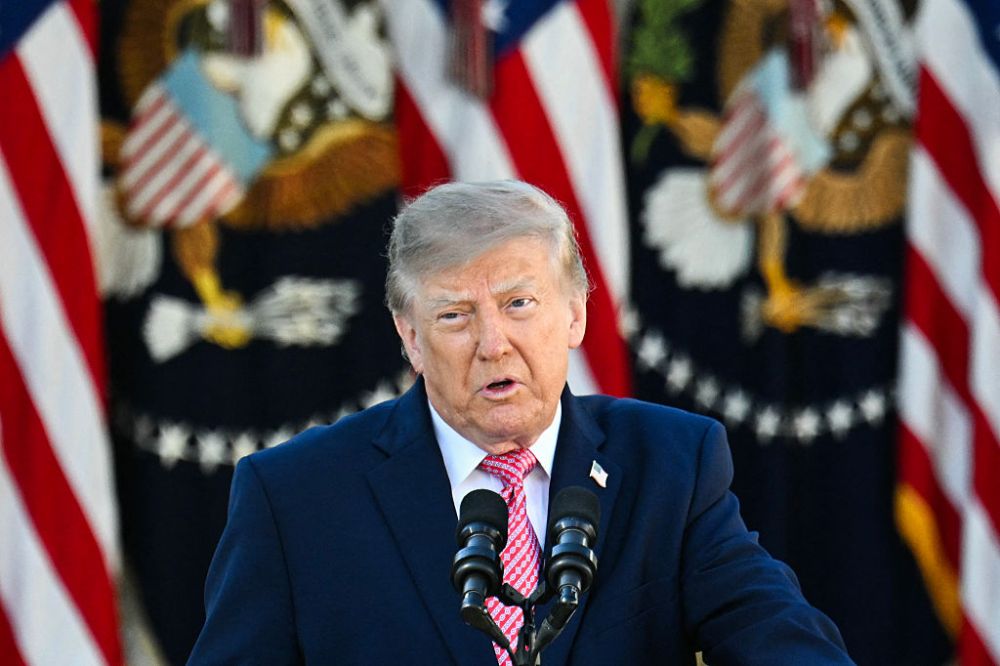
Diplomatic contacts also continued alongside the military developments. Media in the Gulf reported that the presidents of the United States and the United Arab Emirates spoke by phone during the day, shortly after the American president held a conversation with Israeli prime minister Benjamin Netanyahu.
Oil markets also reacted sharply to the escalating conflict. Prices surged more than 25 per cent on Monday to their highest levels since mid-2022 as fighting around Iran disrupted shipping through the Strait of Hormuz, with tanker traffic reduced to a fraction of normal levels and dozens of vessels waiting outside the strait in the chokepoint through which roughly a fifth of the world’s oil supply normally passes.
Iran’s leadership transition is therefore unfolding under fire. Mojtaba Khamenei assumes power as Israeli and American strikes continue to dismantle parts of the regime’s military leadership, its fighting forces and its air defences – a campaign Washington continues to frame as pushing the Islamic Republic towards what US defence secretary Pete Hegseth described as an inevitable unconditional surrender, whether Tehran chooses to acknowledge it or not.
At the same time, the first tiny hints of divergence between Washington and Jerusalem have potentially surfaced. American officials have reportedly privately urged caution over Israeli strikes on Iran’s oil infrastructure, with Republican senator and Trump ally Lindsey Graham posting last night on X that the country’s energy economy will be essential if a post-ayatollah state is to rebuild. Israeli officials insist, however, that every strike is being reviewed internally for legal compliance and that the fuel facilities targeted so far are directly tied to the regime’s war effort.
Throughout the Middle East conflict, Jonathan Sacerdoti will be providing daily situation updates each morning



Comments