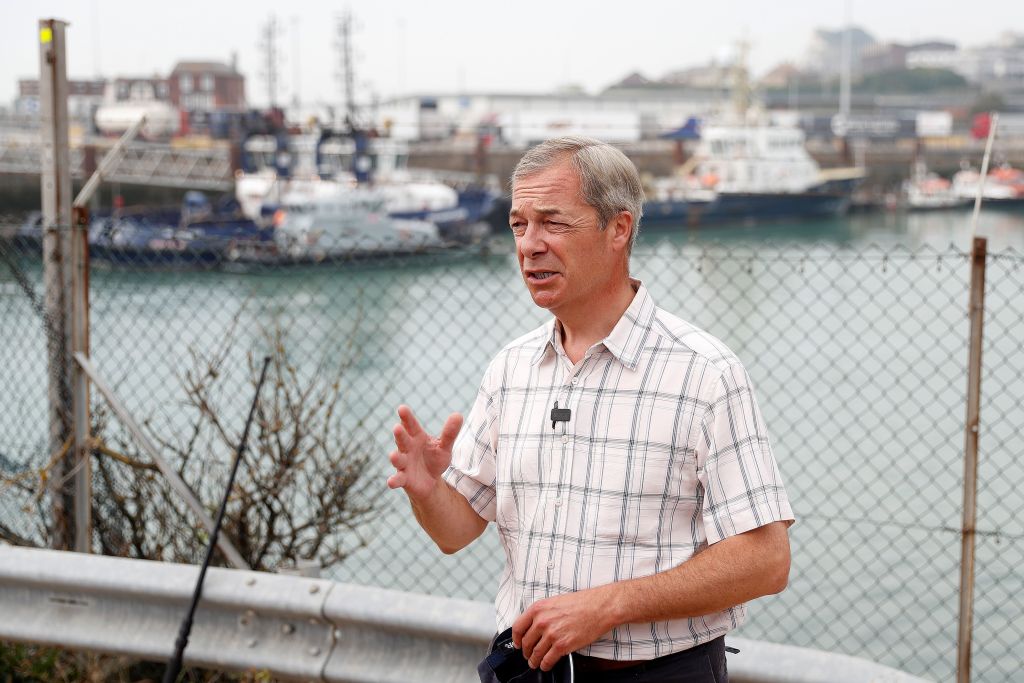
There’s something reassuring about Nigel Farage’s promise to stop the boats by sending in the Navy to return rescued migrants forcibly to France before they can land here. The migrants wouldn’t have much to complain about. If they genuinely want to be rescued at sea – rather than levy moral blackmail on the UK government – they can’t complain at being deposited back where they came from. And after all, what is a navy for if not to, well, stop boats invading our shores?
Unfortunately, scratch the surface and things get much less simple.
The first thing is that it’s not clear the Navy has the ships. It’s all very well to talk of using landing craft or River-class patrol boats: but we don’t have many of either. And one suspects they are not well-suited to being run as essentially prison transport vessels carrying large numbers of potentially mutinous foreigners. Even versatile inflatables, of which we do have a fair number, might have their work cut out gently propelling an overloaded dinghy full of people who did not wish to be propelled through a choppy Channel.
There’s also severe doubt whether the Navy would have the will. The last time it carried out a sustained anti-migration operation, against would-be Zionist immigrants off the Palestine coast in the late 1940s, it had difficulty enough forcibly boarding larger ships in order to divert them, and viewed the operation with distaste. With smaller vessels in the Channel which can’t practically be boarded – not to mention an increasingly critical world looking on at what some might see as a flagrant breach of human rights – such dissatisfaction would appear in spades.

True, our armed services are traditionally non-political and will do their absolute best to carry out orders, even if they disagree with them. Nevertheless, even though Royal Navy personnel do take that obligation seriously, they remain able to resign. There is a distinct danger that an operation of this sort, even if insisted on by a Reform government, might lead to a haemorrhaging of experienced naval top brass just at a time when the country stands most in need of it.
And this leaves another practicality. Imagine the problems just mentioned are solved and a Royal Navy vessel laden with unwilling returnees arrives off the French coast. What then? You might be tempted to think that if the Spaniards could without too much ceremony send foreigners back from Ceuta to Morocco, we must be able to do the same with France. But in practice the cases are very different.
Using your security forces to take fairly small parties from the harbour at Ceuta, landing them on some deserted Moroccan shore a short distance away and then returning to repeat the process, is one thing. Shepherding large unwilling groups a fair way across the Channel to a relatively populated French coast is something else. The returnees will almost certainly refuse to leave the vessel when it arrives. Are they to be forcibly pushed into the sea and left to wade ashore? If a single person died in such an operation, the publicity would be catastrophic.
There is admittedly an ingenious point put forward by Reform here. Could we perhaps accuse the French of something like a crime against humanity if they refuse to let people disembark? This looks neat. Unfortunately it almost certainly won’t work, for at least two reasons. First, the French immigration authorities could very plausibly say that if the returnees did not wish to enter France, they could hardly be guilty of a crime against humanity in not letting them do so. Second, two can play at that game. Imagine the French government using a largish vessel to rescue would-be immigrants, sailing her to Shoreham, and then murmuring the words ‘crime against humanity’ if we refused to let them off. We’d be, as the lawyers say, in some difficulty.
Undoubtedly something must be done about the boats. It might be possible to find a way to forcibly tow a dingy to France without risking the lives of either the intercepting crew or the passengers on the dinghy. If we could, there would be much to be said for not worrying too much about the legalities and returning all such vessels to the French coast. But although there are many things the Senior Service can do, this isn’t one of them. Nigel might have the germ of a good idea at the back of his mind, but he needs to think a great deal more carefully before asking us to accept it.






Comments