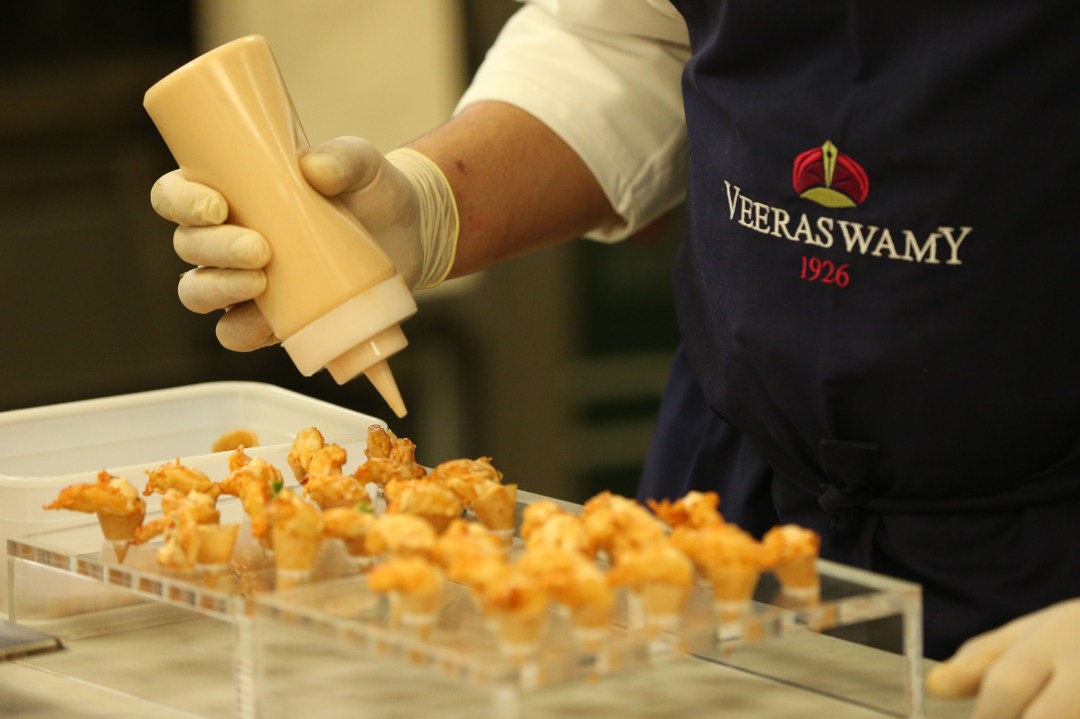
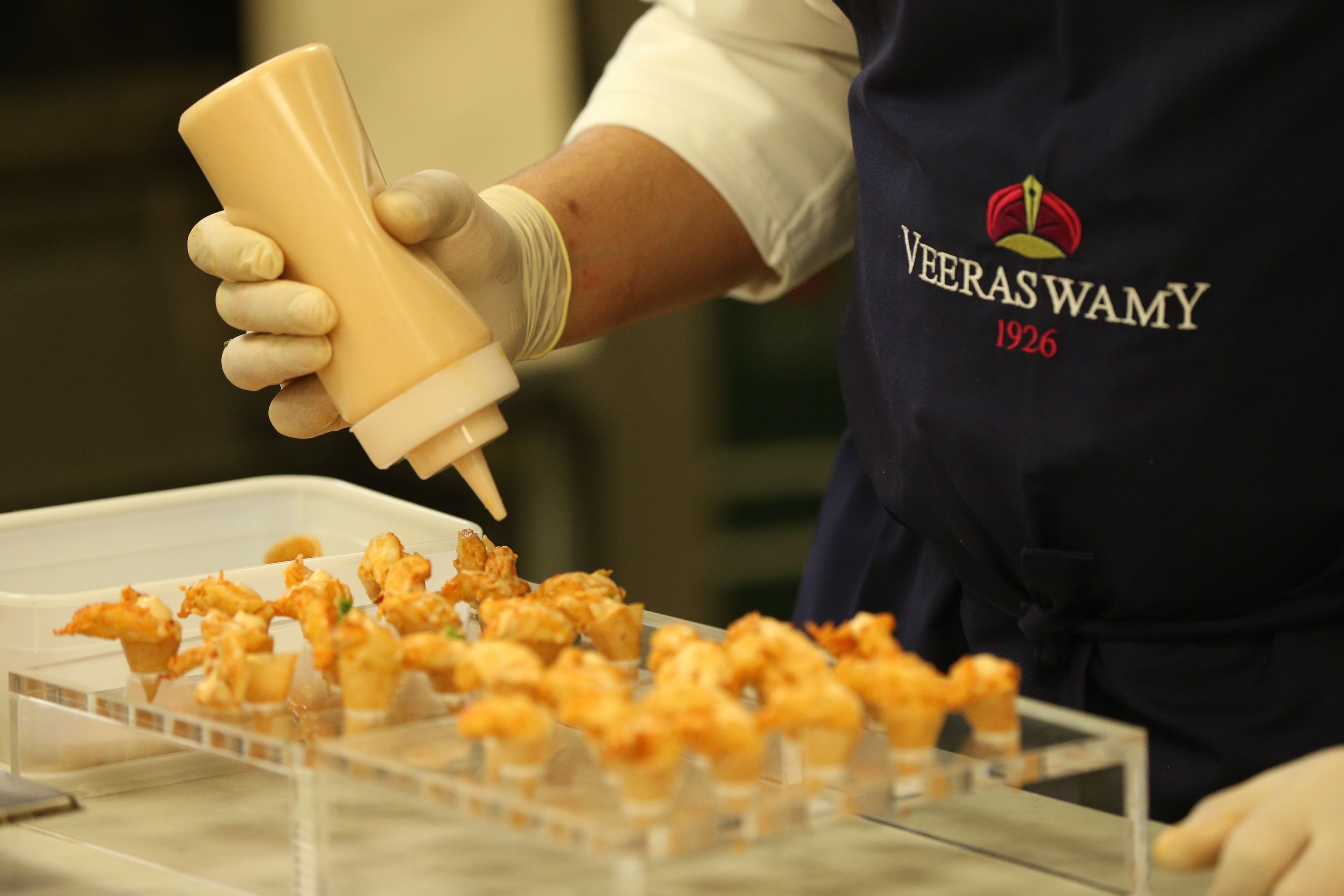
There are relatively few restaurants in London – or anywhere else, for that matter – that have made it to their centenary. There are even fewer that have been threatened with the closure of their premises in the precise year they are going to turn 100. And there are practically none so popular that news of their possible eviction has resulted in a petition with tens of thousands of signatures – which will be sent to the King in the hope he can reverse what would be a heritage-threatening disaster for one of the capital’s most historic establishments.
Such is the recent story of Veeraswamy, the country’s oldest Indian restaurant which was founded in March 1926 and has been a haunt of the beau-monde and demi-monde ever since. The only thing that unites those heading to this first-floor establishment in Victory House, tucked away off of Regent Street, is that they are keen to sample some of London’s finest Indian cuisine. So fine, in fact, that the restaurant celebrated its 90th birthday a decade ago by being awarded a Michelin star.
When Veeraswamy first opened, its culinary ambitions were rather more modest. It was founded by Edward Palmer, a retired Anglo-Indian officer whose great-grandmother was the Moghul princess Faisan Nissan Begum. On its launch day – 16 March 1926 – an advertisement promised ‘clean Indian and English food, good wines and Oriental coffee’. It was a hit from the outset, and went from strength to strength eight years later when the MP and restaurateur William Stewart took it over and established a winning culinary formula that lasted for decades. Those of conservative palates could stick to such quintessentially English dishes as steak and kidney pie and apple tart and custard, but those who wished to walk on the ‘wild side’ could treat themselves to Madras chicken curry with mango chutney and sambals. They could even drink beer with it, if they so wished.
Under normal circumstances, Veeraswamy might have struggled to engage traditionally conservative Londoners. Yet what Palmer and Stewart both understood was that there were many scions of Empire, either now retired and missing the flavours of India, or who had wished to go but been thwarted by the gradual decline of British influence overseas and diminishing military posts. Therefore, for the relatively small cost that ‘a really good meal’ promised, just about anyone could afford to visit Veeraswamy and enjoy their first curry experience. Chances are that it would not be their last.
I popped into Veeraswamy for lunch not so long ago. I am happy to report that, on a culinary level, it is every bit as imperial and magisterial as it has always been. Under its current owners Namita Panjabi and Ranjit Mathrani, it offers a fully Indian menu that has long since consigned steak and kidney pie to history. Those of a nostalgic disposition will be thrilled by the mulligatawny soup – a menu fixture since 1926. Meanwhile, those who wish to experience Anglo-Indian delights at their finest will be thrilled by a selection of kebabs, curries – of which the lobster malabar curry and Begum’s noorani lamb chops are two of the highlights – and, of course, perfectly judged service. ‘Good wines’ are still conspicuous by their presence on the menu – the ‘Bee-Side’ Grenache is perfect – and the entire luxurious experience offers the hungry as enjoyable a meal as they have always received here.
A man who loves heritage and history as much as the King should nurture this particular jewel in London’s Anglo-Indian crown
Yet the prospect of this continuing in its current form is looking less and less likely. The Crown Estate, which owns Viceroy House, wishes to refurbish the building and turn it into offices. A spokesman has sternly said that the idea of Veeraswamy staying in situ is incompatible with these plans, and that the restaurant’s owners will be offered compensation and assistance with finding new premises. Yet, for many diners, Veeraswamy’s tangible links to a long-gone London are what make it such an enjoyable place to visit. The petition that will be presented to King Charles calls for the monarch to ‘protect [an] historic institution’ and save a ‘symbol of Indo-British cultural connections’.
So far, Buckingham Palace is declining to get involved and has suggested that it is a matter for the Crown Estate. With Veeraswamy receiving a wide level of public support, its potential ejection will reach the courts later this year. Before then, there’s a 100th birthday to manage, with a lavish celebratory dinner that will coincide with the petition being delivered. While it isn’t known whether the King himself has ever visited Veeraswamy, he’s certainly eaten the food – the chefs helped cater banquets at Buckingham Palace in 2008 and 2017. A man who loves heritage and history as much as he should nurture this particular jewel in London’s Anglo-Indian culinary crown.
We shall see, over the coming months, whether Veeraswamy is to be turned out of its historic home or whether it can achieve a David-and-Goliath victory. Anyone who has visited the restaurant in the past few years – or, indeed, past century – will be hoping that it is allowed to remain where it is. Whatever happens, anyone who loves London’s traditions should make a beeline for Veeraswamy and raise a glass to its centenary. It may be the last time that we are able to and that, in its own way, would be a tragedy.



Comments