On the first night of Welsh National Opera’s new Flying Dutchman, the company’s co-directors walked on stage to salute their departing music director Tomas Hanus. There were cheers, of course; Hanus has been a courageous MD and his Wagner was thrilling. But no one has been appointed to succeed him, and that morning WNO had announced a 2026-27 season that amounts to a near-total artistic collapse, with just two full-scale operas. A major international company has been reduced to a community arts provider, and a Pollyanna press release announcing ‘a powerful statement of renewal’ did nothing to quell the feeling that the lights are going out on Cardiff Bay.
It’s not just Cardiff, either. We hear much about the plight of English National Opera which, for the record, has absolutely not relocated to Manchester. But that whole fuss created a smokescreen behind which the English and Welsh Arts Councils (both are culpable) have eviscerated a far more vital national company. WNO’s carefully nurtured touring networks were the backbone of professional opera in much of England. They’ve been shredded by opera-hating ideologues. Liverpool has already lost its WNO season and now there’s no main-stage work in Bristol, too. WNO used to present eight productions a year in Birmingham, but as of next season, the second city of the United Kingdom gets nothing. Zero. Zilch.
No wonder Hanus has called it quits. True, his contract was up, but what conductor, given the choice, would stick around to watch Britain become home to the largest city in Europe with no regular professional opera? In March 2024 Hanus sent a public letter to the Arts Council of England, pleading for his company’s future. ACE’s response came in a brutal private email: shut up, or we’ll slash your remaining funding. Elected politicians simply shrugged. So if you want an artistic parallel to the fate of Britain’s armed forces – precipitous national decline, engineered by the very people whose job it is to maintain our institutions – well, here it comes, live on stage at the Wales Millennium Centre.
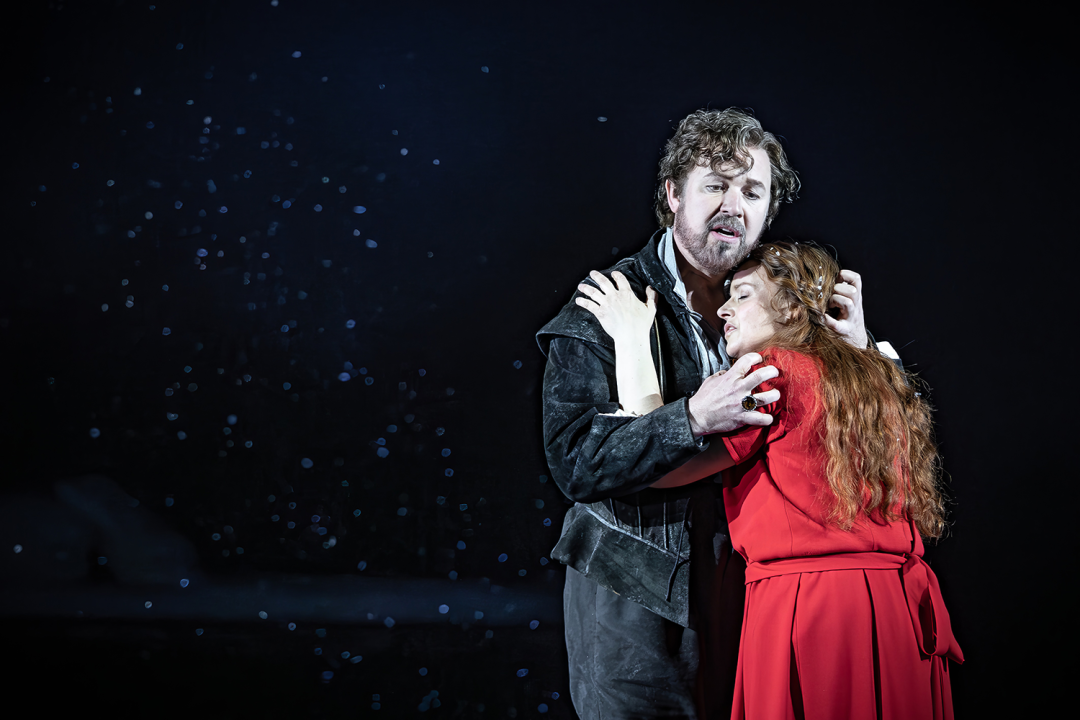
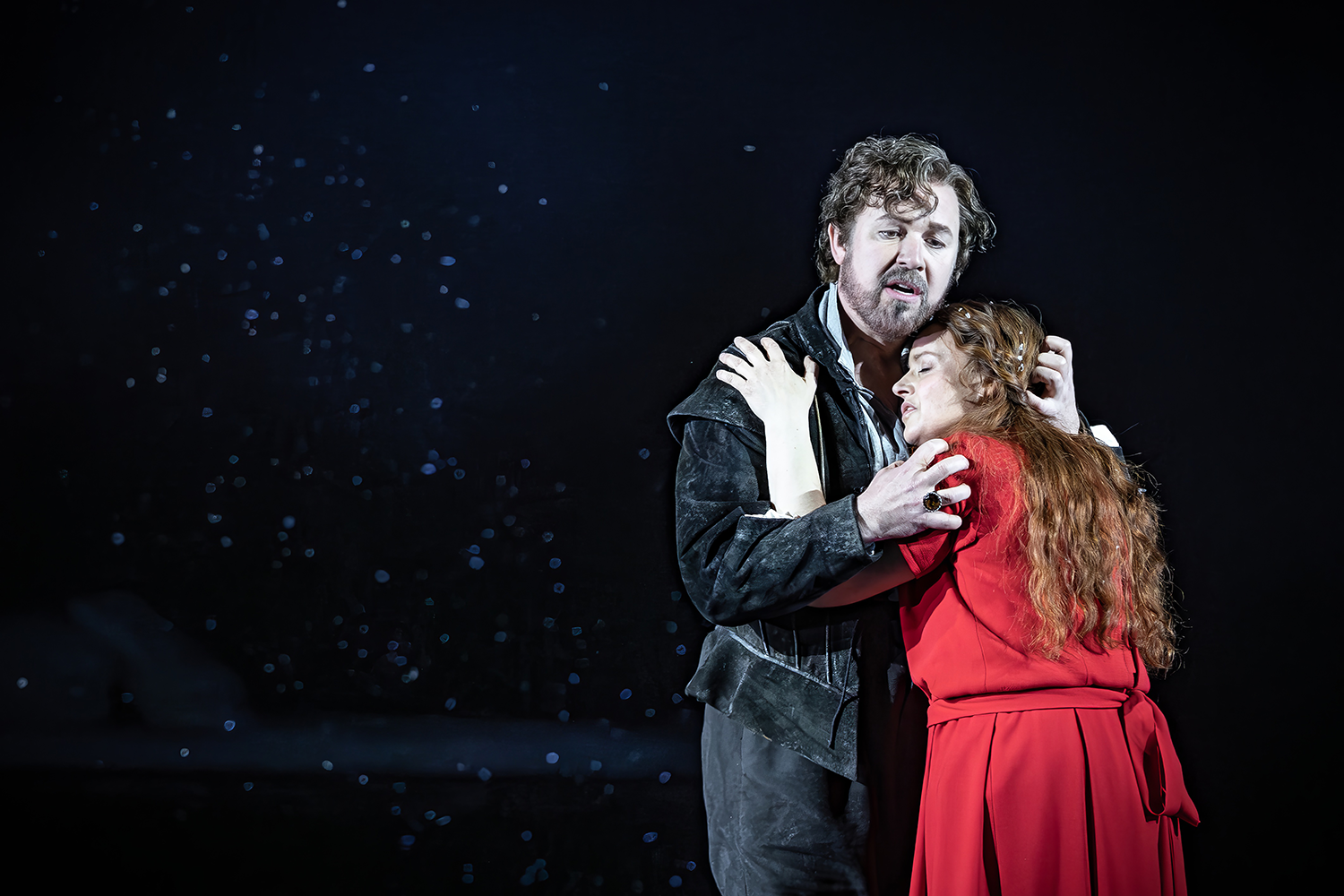
Enough misery. You should see The Flying Dutchman if you can because even on starvation funding and after repeated punishment beatings, it represents WNO’s traditions at their best. There’s the conducting of Hanus, and the playing of the orchestra: turbulent, purposeful, shot through with darkness and expressive ardour. There’s the gale-force, Bible-black singing of the WNO chorus – still, in its reduced state, a sound that Covent Garden struggles to better. There’s a cast that matches company regulars (Simon Bailey as the Dutchman) with international names (James Creswell as Daland) and under-valued British talent (the tremendous Rachel Nicholls as Senta). And there’s a staging, directed by Jack Furness, which takes bracing imaginative risks while remaining faithful to the spirit of the score.
Furness is a virtuoso of light and shade. Clouds billow, and figures appear and vanish, dream-like, in the recesses of Elin Steele’s abstract sets. Meanwhile, Furness’s decision to provide Senta with a childhood back story is justified by the intensity of Nicholls’s performance – burning up from within, with singing to match. Creswell was a wiry, bluff Daland and Bailey made a strikingly youthful and stirring Dutchman; a plausible object of Senta’s affections. So, too, more surprisingly, was her luckless boyfriend Erik – sweetly sung by Leonardo Caimi, and presented by Furness as a young man with genuine inner life. Serious artists, and a serious company, will find something fresh in the most familiar masterpiece. It isn’t necessary to destroy an art in order to renew it.
In the circumstances, I feel uneasy about praising Regents Opera’s Salome, because this model of opera-production – site-specific, scaled-down and privately funded – has been used by opera’s enemies as a stick with which to beat the full-scale art form. It’s not remotely a substitute, of course, though the main issue with this production (presented, like last year’s impressive Regents Opera Ring, in a boxing venue in Bethnal Green) was the loss of string tone in the 24-player orchestration. Ingenious though it was, we got all of Strauss’s iridescent harmonies but little Jugendstil silk. Salome thrives on sensuality, after all.
At its best, though, fringe opera offers something distinctive and worthwhile, and Mark Ravenhill’s catwalk staging juddered with aggro and roiling hormones. Herod (Robin Whitehouse) was an East End mobster and Salome (Kirsty Taylor-Stokes) his sulky metal-chick stepdaughter, whose lust for Jochanaan (a clenched, furious Freddie Tong – much more of a presence than is usually the case) seemed to be at least partially reciprocated. Taylor-Stokes was searing in her huge, hideous final scene. Critic’s luck: we weren’t invited to the pre-show cabaret, which I’m told involved strippers. But the severed head, when it arrived, was wet with gooey half-congealed blood. A couple near the front got up and walked out: Strauss would have been delighted.



Comments