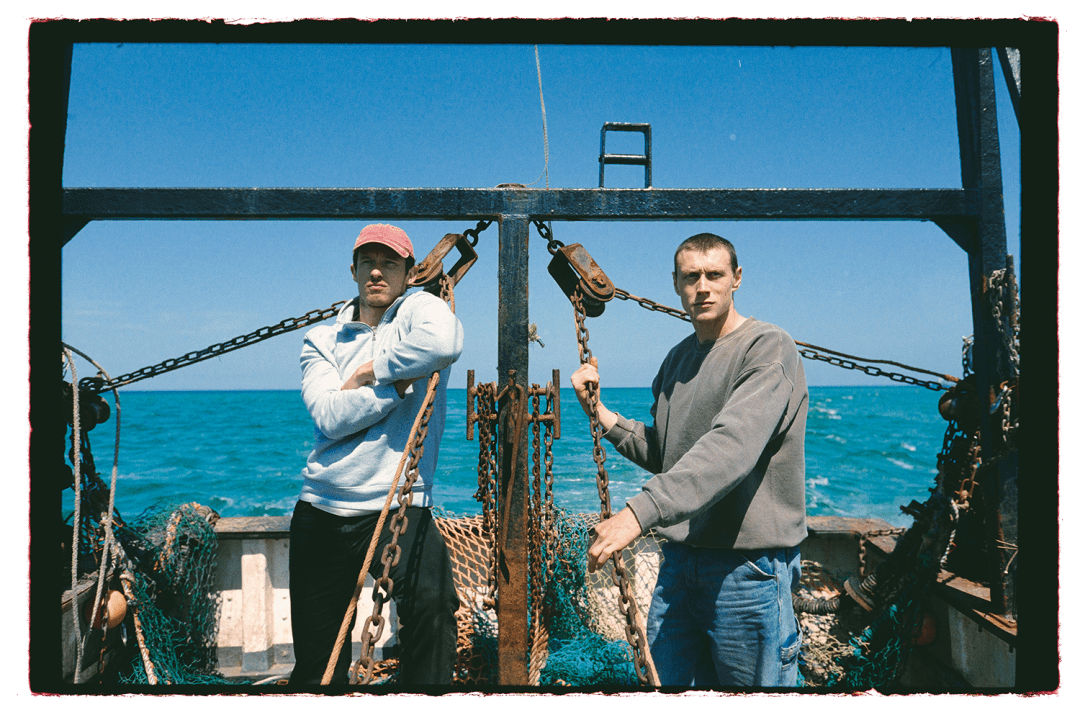
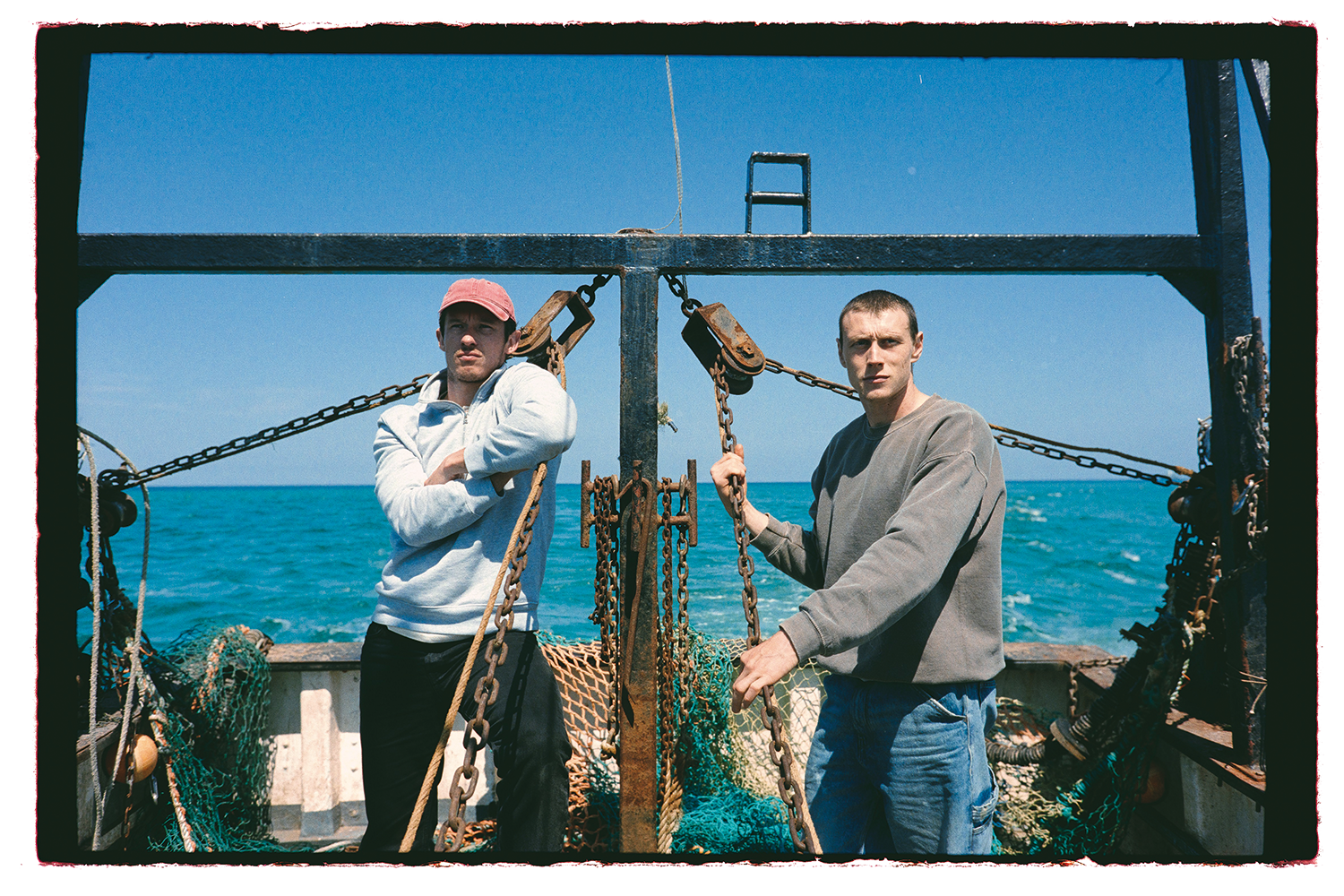
Rose of Nevada is the third film in Mark Jenkin’s Cornish trilogy and if you have seen the first two (Bait, Enys Men) you will have booked your cinema ticket already. Rooted in characters shaped by the histories and tensions of Cornwall’s fishing folk, Jenkin’s film-making is uniquely tactile, textured and sensory. It has been said you can’t watch one of his features without feeling the rust on your hands and the salt in your hair. I would even add that it may be a while before you find your land-legs again.
Starring George MacKay and Callum Turner (Jenkin can now attract A-listers), the film is a time-loop drama where the quantum physics can concern you – if you so choose – but I would recommend doing yourself a favour and just going with it (which is what I did; I have no regrets). We open with a montage of decay: rusted mooring hoops, rotting wood, abandoned fishing nets. A boat drifts into the harbour. It’s the Rose of Nevada, which disappeared 30 years earlier, taking its crew with it. ‘Jesus Christ, it’s back,’ says its owner. He puts it to use and hires an old sea dog as the skipper (a terrific Francis Magee) and a two-man crew. The crew are Liam (Turner), a drifter passing through, and Nick (MacKay), who lives in the village and has a beloved wife and child and a leaking hole in his roof. His neighbour Mrs Richards (Mary Woodvine) stands outside her house in a nightie with bare, dirty feet, looking demented. There is also a widow Tina (Rosalind Eleazar), whose story we don’t know yet. All we need know for now is that both fellas desperately need
the cash.
You can’t watch one of his features without feeling the rust on your hands and the salt in your hair
They set out on a 48-hour fishing trip and return with a tremendous haul. All is not as it was back home, however. They’ve somehow travelled back to 1993 when the fish were plentiful, the pub thriving, the food bank a post office. Weirder still, the village believe that the two men are the original crew, Alan and Luke, whom they lost 30 years earlier. (Only one went down with the boat. I’ll not say what happened to the other.) Liam is taken to be Alan, husband of Tina and father of a little girl. He doesn’t tell Tina that she’s mistaken and happily insinuates himself into the family. Nick is now Luke, son of Mrs Richards. This younger version of Mrs Richards had been expecting him home for tea. (We now know why she goes mad.) They both find themselves inhabiting the lives of the disappeared. But while Liam is content, Nick desperately wants to find a way back to his family. Where are they?
Jenkin deploys a hand-cranked 16mm camera, which gives the film the otherworldly feel of something that may have been dug up from the Soviet era. And the sound is added in post-production, which creates the most heightened audio experience. Hulls creak, chains clank, winds howl, and if there is a roof leaking or a tap dripping you will certainly know about it.
Though it’s about how we carry the past and what can be lost in a single generation, the film is never nostalgic or sentimental. It’s not Back to the Future. It’s terrifically atmospheric, thrumming with foreboding and dread. And don’t worry, it is narratively propulsive, too. (Keep your eye on a particular photograph and hat.) Booked a ticket yet?




Comments