I’m just going to say it. Not all immigrants are the same. I know that reading that might make you feel uncomfortable, particularly if you’re white and American and therefore more vulnerable to cancel culture and snowflakery. But it’s true. Some immigrants are simply better than others. And by better, I mean that immigrants from certain nations and cultures are more likely than others to integrate and make a positive contribution to their new country.
Sweden is a useful terrarium of immigration; the good, the bad and the ugly
Sweden is a useful terrarium of immigration; the good, the bad and the ugly. I was born in Sweden to Iranian parents in the early 1990s. At the time, Sweden had a population of just over eight million, and the country was rapidly becoming a destination for migrants. Fast forward to today, and it has a population of over ten million, of which about a fifth were born abroad. When including those born in Sweden with two foreign-born parents, the number of those with a ‘foreign background’ rises to almost a third of the population.
Today, Sweden is home to people from all over the world: Iranians fleeing the Islamic occupation; Iraqis who fled the Gulf war; Yugoslavs who escaped civil war and genocide; Kurds (from Turkey, Iraq and Syria) and Assyrians (Aramaic- and Syriac-speaking Christians from Iraq and Syria) fleeing persecution, as well as Turks. There are Chileans who fled Pinochet; East Africans (Somalis, Ethiopian and Eritreans) fleeing, well, everything. And Poles looking for greater opportunities.
All of these nationalities and cultures in one tiny, historically homogenous society, make for a wonderfully interesting study of migration and integration. Living there for 15 years – until I was 13 and for a few years in my thirties – made me convinced that not all immigrants are the same, and nor should they be treated as such.
In Sweden, there is one common thread amongst those who have integrated well and those who have done so less well. Non-Muslims, including Iranians, Assyrians, Christian Eritreans, Poles and to some extent people from the Balkans, are often in the former group. Kurds, Ethiopians and Somalis, particular those of the Muslim faith, have not, generally speaking, fared as well. Turks are often somewhere in between. The difference in Christian and Druze Lebanese in Sweden, compared to Lebanese Muslims, and Christian Eritreans and their Muslims counterparts, is also clear to see.
Iranians in Sweden have a stellar reputation and, from both personal and anecdotal experience, saying you’re of Iranian descent in a business meeting gives you immediate credit. Swedish-Iranians are known for becoming doctors, dentists and entrepreneurs. There are at least ten members of Swedish parliament of Iranian descent. The environment minister, Romina Pourmokhtari, was born in a Stockholm suburb to a family of Iranian origin. When she took office, she was 26 years old, making her the youngest cabinet minister in Swedish history.
Ali Ghodsi, co-founder of Databricks, one of the most valuable private companies in the world, is Swedish-Iranian. There is even a significant population of British-Swedish-Iranian doctors and dentists in the UK who left Iran in the 1980s and 1990s, studied in Sweden and moved to the UK over the last 20 years.
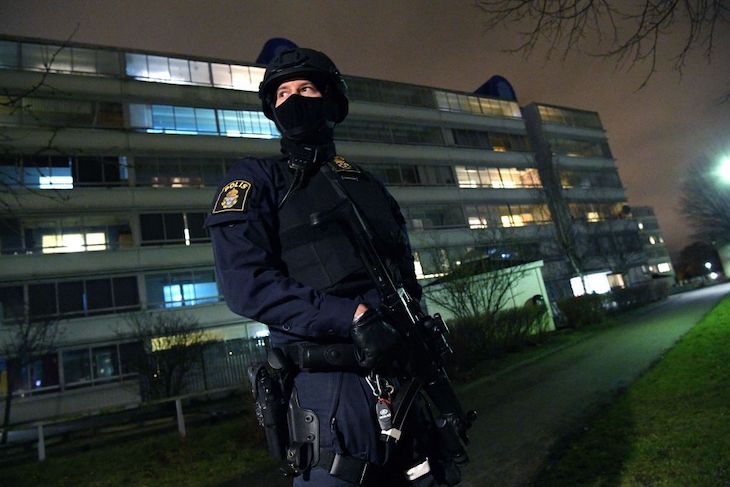
Sweden has clearly benefited from immigration, but it has also paid a price. When I was a kid growing up in Uppsala – the sacred heart of pre-Christian Scandinavia, where my father got a place at the medical school after teaching himself Swedish – a fatal car crash would make the national news. Now Sweden is known globally, usually for positive reasons, but also for its gang violence. It seemed unthinkable back then that knife crime and bombings would happen in Sweden. Yet many Swedes are now tragically familiar with these crimes.
Those with migrant backgrounds are overrepresented in Sweden’s criminal gangs, acting as both perpetrators of violence and leaders of these networks. The shootings and bombings have spread from the city centers, to the suburbs. In 2023, in Upplands-Bro, 30 minutes north of Stockholm, a teenage boy was found dead in a forest; in the months before, there were several shootings and bombings targeting houses and apartments. Police think that some of the violence was organized by criminal leaders based in other countries, including Turkey and Serbia. The violence hasn’t stopped. In 2025, there were 84 homicides in Sweden.
Sweden shows that there is an uncomfortable truth when it comes to immigration
Two main rival gangs are responsible for much of the violence in Sweden. These networks, Foxtrot and Rumba, are both run by immigrants. Foxtrot, by a Kurdish Turk; Rumba, by the Swedish-Turkish national Ismail Abdo. Both gangs are heavily involved in drug trafficking. Both have been responsible for bombings in Sweden, including the deliberate murder of innocent relatives of their rivals. Criminals in Sweden have also been used as European proxies by Iran’s Islamic Republic, the regime that has taken the Iranian people hostage for 47 years.
As an immigrant myself, I think the attitude of some immigrants, particularly in Sweden is a disgrace. In Sweden, everything you could possibly want as an immigrant, or otherwise, is handed to you on a plate. There is excellent health care, language classes, housing, social services and benefits. Schooling, school meals (before and after school) and college places, with stipends for those who can’t afford higher education, are on offer. When I was a kid, the state would even pay for after-school lessons for your mother tongue. It was a beautiful acknowledgment by the state of the importance of languages to the development of a young person.
Unlike the disadvantages some people have in America, a poor socioeconomic background is not an excuse in Sweden. So why do immigrants in Sweden turn to crime and violence? There really is no excuse, and it is hard not to point the finger at their cultural or familial upbringing.
Whether there is a lesson here, that’s for the economists, social and political scientists, and policymakers to say. I believe in a points-based immigration system where every prospective migrant is assessed based on their likelihood to integrate and contribute (as well as their richness and depth of culture and emphasis on enlightenment, education and hard work within that culture). Countries must also have a humane and compassionate approach to immigration, taking responsibility for the displacement caused by arms sales and their foreign policy.
But Sweden shows that there is an uncomfortable truth when it comes to immigration: cultural compatibility is a legitimate and necessary part of any assessment to determine if a person should, or shouldn’t, be allowed in.






Comments