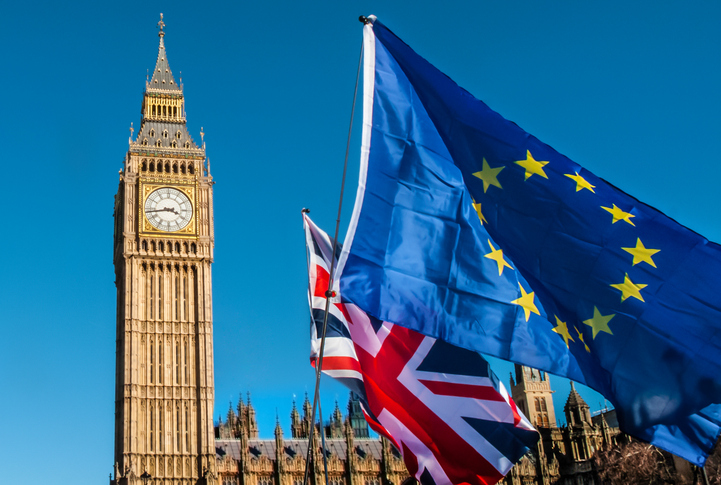
I saw in the Financial Times last week that the UK wants to align to EU law on animal and plant health while also opting out of rules to suit ourselves. Labour wants to keep rules that: allow stronger hemp-derived cannabidiol (CBD) products of up to 10mg versus the EU’s 2 mg limit; maintain bans on live animal exports and foie gras; and protect domestic innovation in areas such as lab‑grown meat, algae and insect products, gene‑edited crops and a bovine TB vaccine.
‘The UK government is being lobbied by multiple sectors for exceptions, including foodmakers, farmers and the chemical industry,’ we learn. The CBD industry fears losing this benefit of Brexit and rightly says, ‘The industry should not find itself being ruled by regulatory decisions where the UK has no vote and no voice.’ The National Farmers’ Union wants to protect gene editing and a new TB vaccine.
The Cabinet Office says, ‘We are making a sovereign choice in the national interest to align in some areas where it makes sense to do so.’ It is fatuous to call this a sovereign choice while knowingly accepting indefinite subordination without a voice: this rubbish was said about membership itself.
This is not merely a row about the impact of leaving the EU
Sovereignty is not merely the technical possibility of making a one‑off decision. It is the continuing ability to govern yourself: to set and revise your own rules in the light of your own needs. When you adopt the regulatory framework of a foreign power, when commercial realities make reversal prohibitively costly and when you have no seat at the table where the rules are made, you may have exercised a choice at the outset but you have chosen powerless subordination thereafter.
It is extraordinary that anyone prefers this submission to the arbitrary power of others. Yet in her recent lecture, the Chancellor made the case for accepting EU law, saying, ‘a decision to align should mean higher growth and investment, more jobs and consumer benefits for the long term.’ So let’s get into the options and why we would be better off as an independent country.

Yes that’s right: it’s back to the old Brexit arguments thanks to this Labour government. And if you think this is bad, wait until Nigel Farage takes power and reverses the lot…Here we go.
The economist Julian Jessop has written about the claim that Brexit has cost us 8 per cent of GDP since 2016. The claim has often been repeated and it is one of the foundation stones in the case for alignment to EU rules.
But have a look at the change in GDP of the UK, comparable EU countries and the US since 2016. If you thought the UK was the obvious under-performer, you would be wrong. That is Germany.
The UK is mid-pack. That’s not impressive and it is a sign of a few things. One is that we did not deregulate sufficiently to make a difference. Another is, as Lord Lawson used to tell me, that leaving the EU did not make much difference to GDP. And if you can disentangle the impact of Covid, well done but I don’t believe you.
But what is radically implausible is the idea that if we had remained in the EU then the UK’s change in GDP would be up above Spain’s. Why would you think that?
The NBER‑type studies that produce the higher numbers rely on synthetic versions of the UK economy that are highly sensitive to modelling choices and are not derived from any observable causal mechanism. The Office for Budget Responsibility’s famous 4 per cent long‑run productivity loss estimate is built on an assumed 15 per cent permanent collapse in UK trade intensity. That collapse has not happened: UK trade as a share of GDP has broadly tracked peer economies instead of falling off a cliff.
This is not merely a row about the impact of leaving the EU. It is a row about what kind of economic analysis we are prepared to trust.
Shanker Singham and the Growth Commission have set out why the standard CGE and GTAP models beloved of Treasuries are structurally incapable of capturing most of the gains from trade liberalisation and pro‑competitive regulatory reform. These models are essentially static. They focus on tariffs and visible border barriers, and they assume fixed industrial structures and patterns of competition. They count what is easiest to count. They do not count what happens to competition, innovation, investment and entrepreneurial energy when you open an economy and strip out market‑distorting regulations.
The consequences are not trivial. When New Zealand’s Treasury modelled the gains from its trade deal with China, it underestimated the outcome by roughly 500 per cent; gains projected over eleven years turned up in about eleven months. That is a fundamental failure of the framework, not a rounding error. Yet these are the same kinds of models now being used to tell us that the marginal gains from EU alignment are decisive while the costs are modest. It will not be true.
So what happens when you apply a framework that can see dynamic effects to the government’s alignment agenda?
The Growth Commission estimates that aligning UK sanitary and phytosanitary (SPS) rules with the EU would cost the British economy around £15 billion. It also notes that the EU’s own SPS regime already imposes costs of about €39 billion (£33.8 billion) on EU member states collectively. These are not regulations that produce prosperity. They are regulations that are already imposing heavy burdens on those who live under them.
More generally, the Growth Commission characterises the EU regulatory model as one of the most anti‑competitive and growth‑destroying in the developed world, with a heavy bias towards precaution and harmonisation at the most restrictive level. That model has produced chronically weak growth across much of the continent. Having left, the UK now has regulatory freedom to set rules that are more open and pro‑competitive than any EU member state: potentially even more agile than the United States, particularly if we pursue mutual recognition and competition‑friendly standards. Every step of alignment forfeits some of that freedom. Once supply chains, investment decisions, and legal obligations are locked to the EU rulebook, reversal becomes politically and economically near‑impossible.
In a customs union with the EU, the UK would be bound by the EU’s trade policy without a say
Singham has repeatedly stressed that there are two competing models for the global trading system. The one reflected in the WTO system, the US approach to regulatory cooperation and agreements like CPTPP¹ is based on regulatory competition, equivalence and mutual recognition. The other, favoured by the EU and by China, is based on harmonisation, with market access conditional on replicating their rules.
The government’s alignment strategy, step by step, chooses the second model just as the United States is elevating the reduction of market distortions into the central plank of its trade policy.
The costs radiate outwards. The Growth Commission warns that SPS and broader regulatory alignment risk undermining our CPTPP membership, weakening our relationships with Australia and New Zealand, and creating precisely the kind of internal distortions that invite justified US trade complaints. By aligning with Brussels, we do not simply bind ourselves more tightly to the EU; we jeopardise the strategic and economic relationships which could, if we chose, underpin a prosperous and renewed UK of global outlook.
Alongside alignment, we are once again hearing siren calls for a new UK–EU customs union although this seems to have been ruled out. As the former trade minister Greg Hands has explained, that would be ‘the worst choice of all’.
In a customs union with the EU, the UK would be bound by the EU’s trade policy without a say. We would be obliged to apply tariffs and trade concessions negotiated to suit the EU‑27, not us, in forums where we no longer sit.
The EU-UK Trade and Cooperation Agreement already provides tariff‑free trade in goods, subject to rules of origin. The remaining frictions are overwhelmingly non‑tariff barriers. A customs union does not remove those unless it is paired with far‑reaching regulatory alignment, which brings us straight back to rule‑taking without a say.
Strip away the inflated estimates of Brexit damage and the static models that cannot capture dynamic gains, and the economic case for alignment collapses. What remains is a political preference for the comfort of familiar institutions, the approval of Brussels and the avoidance of decision, all presented as economic necessity. We should instead make use of the freedom we have.
The Growth Commission shows that credible liberalisation and regulatory reform packages deliver gains several times larger than the narrow tariff‑only estimates produced by official models. The headline sub‑1 per cent GDP gains we are used to seeing for ambitious trade and regulatory deals are known to be too pessimistic.
We should treat regulatory freedom outside the EU as a precious asset, not a problem to be managed away. We should pursue a serious global strategy through CPTPP. We should build our relationship with the United States and other like‑minded countries around a shared commitment to regulatory competition, open markets and reduction of anti‑competitive distortions. We should reform at home – planning, energy, tax, labour markets – using dynamic analysis that fully captures the benefits of greater openness and competition rather than relying on models that have already been shown to mislead.
Above all, we should stop pretending that a policy of gradual alignment is something other than what it is: a policy of subordination and decline.
This piece was first published on Steve Baker's Substack Voices for a Free Future.




Comments