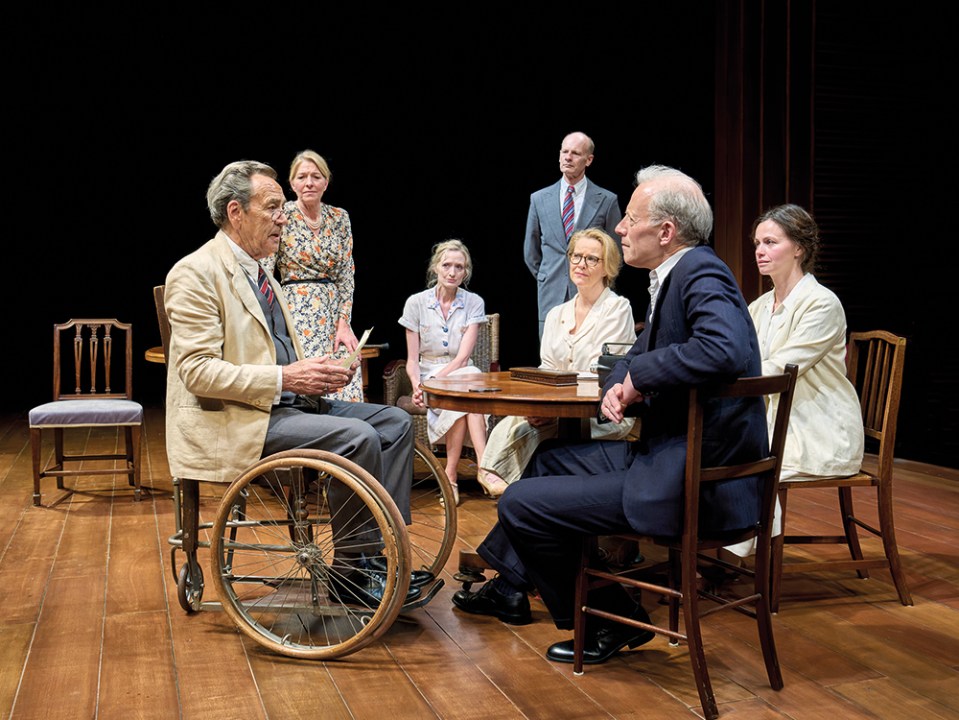

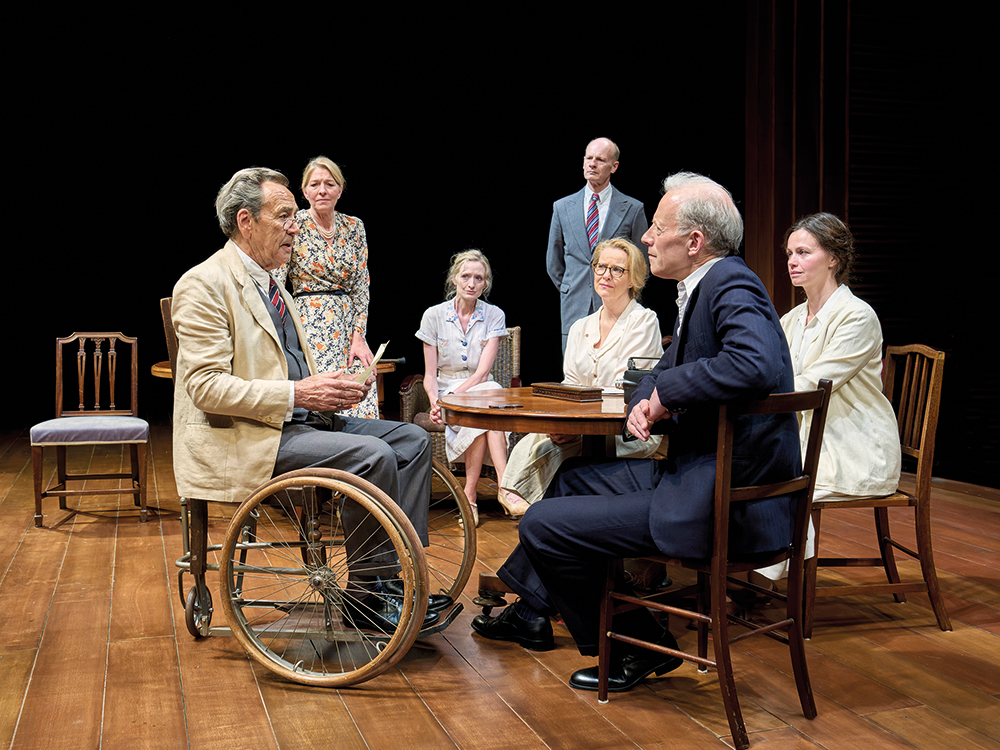
Springwood, set in June 1939, looks at a series of tricky meetings between the American president FDR and George VI at the Roosevelts’ family retreat in upstate New York. George and Queen Elizabeth are guests at the poky old house and although they complain to each other about their sleeping quarters they hide their dismay from their hosts. The writer-director, Richard Nelson, evidently despises the main characters apart from FDR (Robert Lindsay) who comes across as a genial old buffer addicted to whisky.
The dialogue is divided into easy-to-handle segments. First, we get the history bit. FDR tells George that the US ought to join Britain in the coming war but pro-German sentiment is very strong and the majority of Americans may support Hitler. Then we get the therapy bit. George confesses that his tyrannical and heartless father turned him into a spineless quivering ninny who craves the approval of everyone he meets.
Within the context of the play, this makes sense. George (Andrew Havill) appears to be a brainless dolt who gets into a panic about eating sausages in public even though his heritage is German. He allows a minor English diplomat, Cameron, to wander around the royal bedroom wearing a bathrobe and chatting to the King and Queen as if they were shipmates on a boating holiday. When the Queen speaks to Princess Elizabeth over the phone, Cameron takes a seat and listens to their private conversation. And George keeps a whisky bottle hidden in his briefcase like a guilty parson. He happens to be the emperor of India.
Elizabeth (Rebecca Night) is portrayed as a stuffy crosspatch with no sense of fun or warmth. Jemma Redgrave’s Eleanor Roosevelt has similar faults. She’s aloof, snobbish and quick to criticise those around her. She eventually bonds with the prickly Elizabeth who confesses that she didn’t wish to marry her husband. ‘And I certainly didn’t want to be Queen.’ It’s not clear why Elizabeth shares this juicy detail with the First Lady whom she barely knows. Perhaps she’s unaware that Eleanor writes a daily syndicated newspaper column.
In the second act, the royal couple learn that FDR keeps a mistress and that Eleanor is a closet lesbian. Their horrified reaction to these humdrum secrets gives the impression that the royals are unfamiliar with womanising and homosexuality. The play succeeds in conjuring up the awkward tedium of a lifeless weekend in the countryside but it’s quite an ordeal, very short of rewards, apart from Tom Piper’s attractive costumes. The main characters feel like suburban lightweights rather than global leaders who command armies and empires. The company of ten includes six actors who contribute nothing to the drama. Quite a waste of talent.
Monarchs Anonymous is set in a mental-health workshop where kings and queens share their emotional problems. A great idea. Confessional speeches are inherently dramatic and the monarchs are likely to reveal fascinating snippets about their lives during the therapy sessions. But the script depicts the characters as shallow, prattling figures of fun. Henry VIII is a mulish psychopath. Charles II flounces all over the stage, boasting about his sexual exploits. Marie Antoinette delivers drunken speeches on behalf of the peasantry whom she claims to adore. A Sikh princess, Sophia Duleep Singh, speaks in a piercing voice about her support for women’s rights.
The show contains no historical insights and the characters spend their time bickering and carping while the harassed therapist tries to keep order. Who is this for? Children would find it tiresome. So would teachers and parents. The message is that the dominant cult of mental health is a wonderful thing for us all, and that even anointed monarchs must bow to the therapist’s will.
The Truth by Florian Zeller is a good old-fashioned sex comedy that delivers a fistful of brilliant surprises. Michel is enjoying a casual affair with Alice who happens to be the wife of his best friend, Paul. Michel insists that Alice keep their romance a secret but as the story develops his plan backfires and he falls victim to a set of cunning ambushes laid by Paul and the other characters.
The plot is a miracle of precision engineering. Stephen Mangan is terrific as the narcissistic hypocrite at the centre of the story and he persuades us to like him rather than to find his self-deceit and disloyalty unappealing. Ardal O’Hanlon does a great turn as the sly and debonair Paul who knows more than he admits.
Directed by Lindsay Posner, the show has an abundance of charm, fluency and lightness. Lizzie Clachan’s interiors beautifully represent the stylish homes of the upper middle-class characters. And her costumes are beyond sensational. Sarah Hadland (Alice) and Janie Dee (as Michel’s wife) may never again wear such beautiful outfits. Designers should treat this show as a masterclass.






Comments