
Javokhir Sindarov from Uzbekistan dominated the 2026 Fide Candidates tournament, which concluded in Cyprus earlier in April. His ten points from 14 games is a record in the modern all-play-all format, and he was the only player to get through the tournament without loss. Sindarov, who became a grandmaster at the age of 12, rises to fifth in the world rankings. Now 20 years old, he will face the 19-year-old Indian world champion Dommaraju Gukesh in a match for the title, likely to be held later this year. It will be the youngest title match in history, symbolic of the extraordinary development of chess in both countries.
In Cyprus, Fabiano Caruana was one of the pre-tournament favourites, and was Sindarov’s closest pursuer as the second half began. Two consecutive losses knocked him out of the race, including against Anish Giri, who still retained a faint hope of catching Sindarov when they met in the penultimate round. But Sindarov’s steady defence looked no less fluent than his attacking displays earlier in the event, and he closed out tournament victory with a round to spare.
Indeed, Magnus Carlsen described Sindarov as ‘a lot more well rounded’ in comparison to Gukesh having ‘very obvious weaknesses’. Gukesh has recently announced that he will reduce his commitments in the 2026 Grand Chess Tour to focus on training, with Sindarov named as his replacement. Yet the world champion remains a player who saves his best for the biggest moments, whatever his recent dip in form might suggest.
Rameshbabu Praggnanandhaa-Javokhir Sindarov
Fide Candidates, Cyprus, March 2026
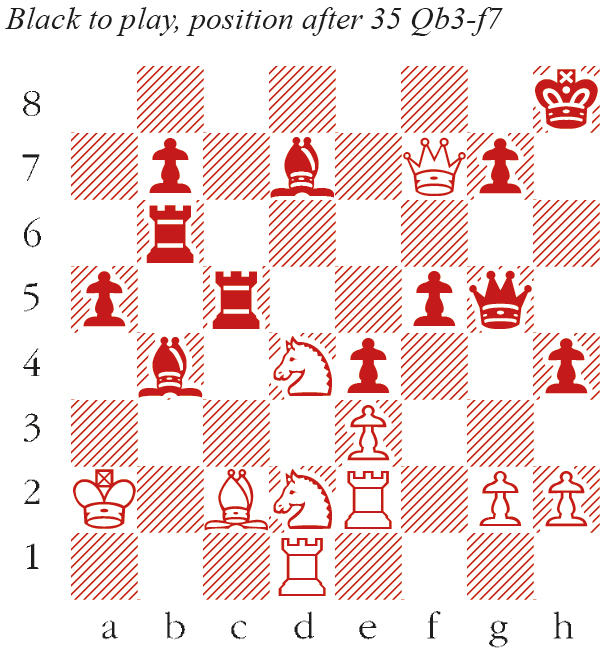
1 d4 d5 2 c4 e6 3 Nc3 Be7 4 Nf3 Nf6 5 Bf4 O-O 6 e3 c5 7 dxc5 Bxc5 8 a3 Nc6 9 Qc2 This line of the Queen’s Gambit Declined has been heavily tested at the top level, including during the Carlsen-Caruana World Championship match in 2018, when Caruana played 9…Qa5 on two occasions. Sindarov had prepared a different idea. Re8 10 Bg5 d4 11 Bxf6 Qxf6 12 Ne4 Qf5 13 b4 Nxb4!? To my eye, the compensation after 13…Bf8 14 exd4 looks rather thin, though the computer considers it sufficient. But Sindarov’s sacrifice is far more enterprising. 14 axb4 Bxb4+ 15 Kd1 dxe3 16 Bd3 Qg6 17 fxe3 f5 18 Ng3 Bc5 A strange position. Black has no direct attack, but the bishop pair and passed a-pawn are enduring assets, and in the long term White’s king lacks a safe harbour. 19 Qc3 19 Ke2 looks natural, but after 19…Qh6 20 Qc1 a5 Black’s game is much easier. e5! Exploiting the fact that 20 Nxe5 Qf6 wins material. 20 Bc2 e4 21 Nd2 21 Nd4 is desirable, but collapses after 21…f4! 22 exf4 Rd8 23 Ne2 Qxg2 Rd8 22 Kc1 Qg5 23 Re1 Qe7 24 Re2 Bb4 25 Qb2 a5 26 Nb3 Ra6 27 Nd4 Qg5 28 Kb1 h5 This move makes a profound impression. Despite his material deficit, Sindarov proceeds calmly to restrain the Ng3. 29 Ka2 h4 30 Nf1 Bd7 31 Rd1 Rc8 32 Nd2 Rb6 33 c5? A blunder under pressure. 33 Rb1 was still viable. Rxc5 34 Qb3+ Kh8 35 Qf7? (see diagram) Praggnanandhaa must have counted on this when venturing 33 c5, but there is a flaw: Rxc2+ Decisive, as 36 Nxc2 Be6+ wins the queen. 36 Kb1 Rxd2 37 Rdxd2 Bxd2+ 38 Ka2 Bxe3 39 Qxd7 Bxd4 40 Qxd4 Qf6 White resigns






Comments