
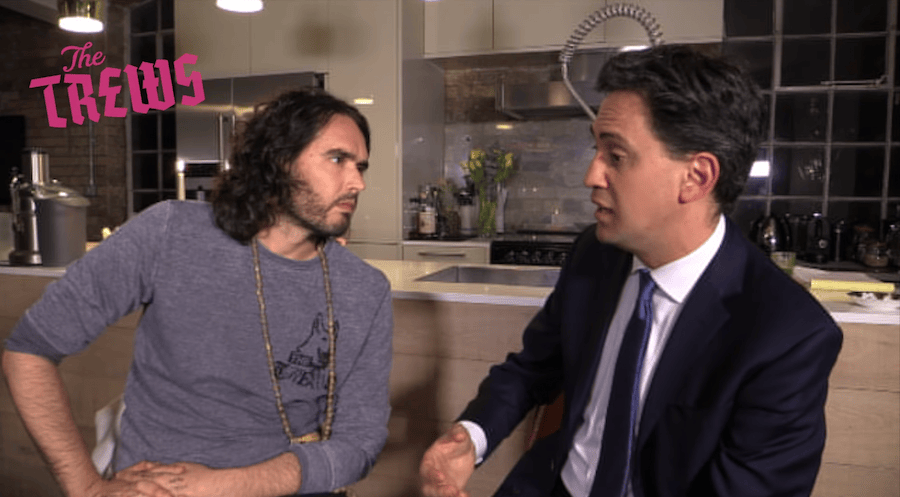
Should Labour have courted Russell Brand more than a decade ago? And should the party apologise now that he has been jailed for rape and sexual assault? Ed Miliband’s interview with the now convicted comedian came up at Prime Minister’s Questions today when Kemi Badenoch said Miliband ‘thought cosying up to Russell Brand would make him prime minister’ and ‘I don’t think we need to trust his judgement’. Labour frontbenchers, including Miliband, have been under pressure to apologise for that interview from opponents who claim that Brand’s predatory behaviour was in plain sight even back in 2015.
This kind of thing is, to a certain extent, part of the game of politics, where people end up having to apologise for decisions they took a long time ago in the light of new information that everyone insists should have always been obvious. Sometimes, that insistence is based on little more than the luxury of hindsight. But in the Brand case, there were a lot of warning signs at the time: the list of ‘victims’ of his sex addiction that he wrote about in his own book, behaviour towards female comedians (including Ayesha Hazarika, who was a senior Labour aide at the time but was not consulted on the Brand interview), and radio stunts.
Brand was not the outlier that Labour’s critics are trying to suggest today
That those warning signs were not really the main reason for the furore around the interview tells us something about the environment in which it took place. The criticisms were mainly that this was a man who had, up to this point, advocated not voting at all, and who thought that revolution was preferable to democracy. Brand’s openly misogynistic behaviour should not have been acceptable back in 2015: indeed, many people thought that at the time. But it was certainly normalised in pop culture to the extent that he had been rehabilitated after his 2008 phone calls to Andrew Sachs about his granddaughter. He was appearing on Question Time and Newsnight. He was not persona non grata.
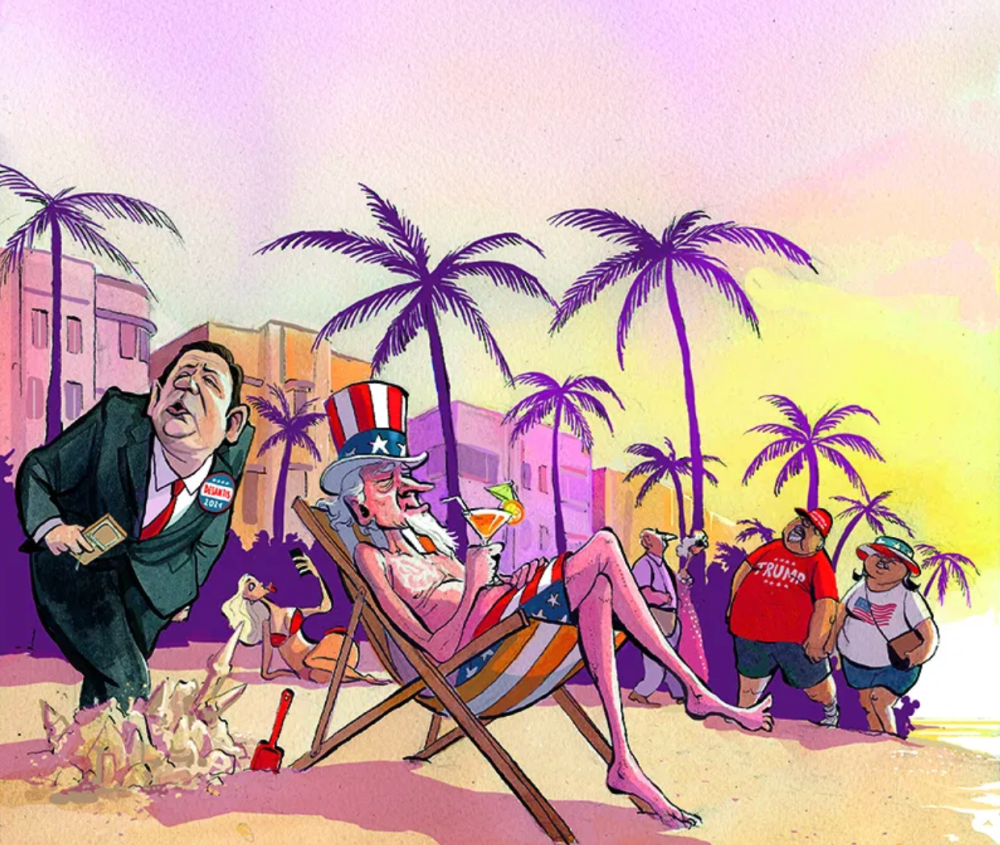
Nor is it fair to say that Brand had been rehabilitated merely because of a ‘lad culture’ that existed in the world of entertainment that made misogyny seem normal. One of the reasons Miliband and his team probably thought he was on the right side of acceptability was that parliament was not – and is still not – a bastion of good treatment of women. The then Labour leader will have spent a lot of time – knowingly or unknowingly – with sexual predators who operate in the political world. The same is true of all his opponents. The fact that we still have a US president who openly boasted about grabbing women ‘by the pussy’ but who British politicians understandably have to work out a way of getting on with underlines that sexist and predatory behaviour is embedded into political culture.
So Brand was not the outlier that Labour’s critics are trying to suggest today. He benefitted from sexual predators being a normal part of life, just something everyone has to deal with, both in entertainment and politics. And the problem with this rush to accuse people over decisions taken a decade ago is that it avoids acknowledging that this behaviour is still too normal, still too widespread, still something a politician desperate for votes or a TV production company might minimise or overlook in the quest to connect with a certain audience.
Perhaps things are changing a bit, and perhaps Brand’s conviction and allegations against other big figures suggests that they cannot get away with appalling behaviour in plain sight. But until everyone in politics acknowledges how abnormal and unacceptable behaviour that has ended up appearing ‘normal’ is, there will be many more rows about someone who, apparently, should never have been courted at all.
It would be difficult and painful for Miliband and his Labour colleagues to say this, but it would also be true: they courted Brand because, even with his reputation at the time, he was widely considered to be acceptable and sufficiently normal. And they want to reflect now on how they bought into the normalisation of that behaviour, so that they don’t make the same mistakes again. But that would involve admitting that someone at some point made a mistake, something British politics rarely rewards either.





Comments