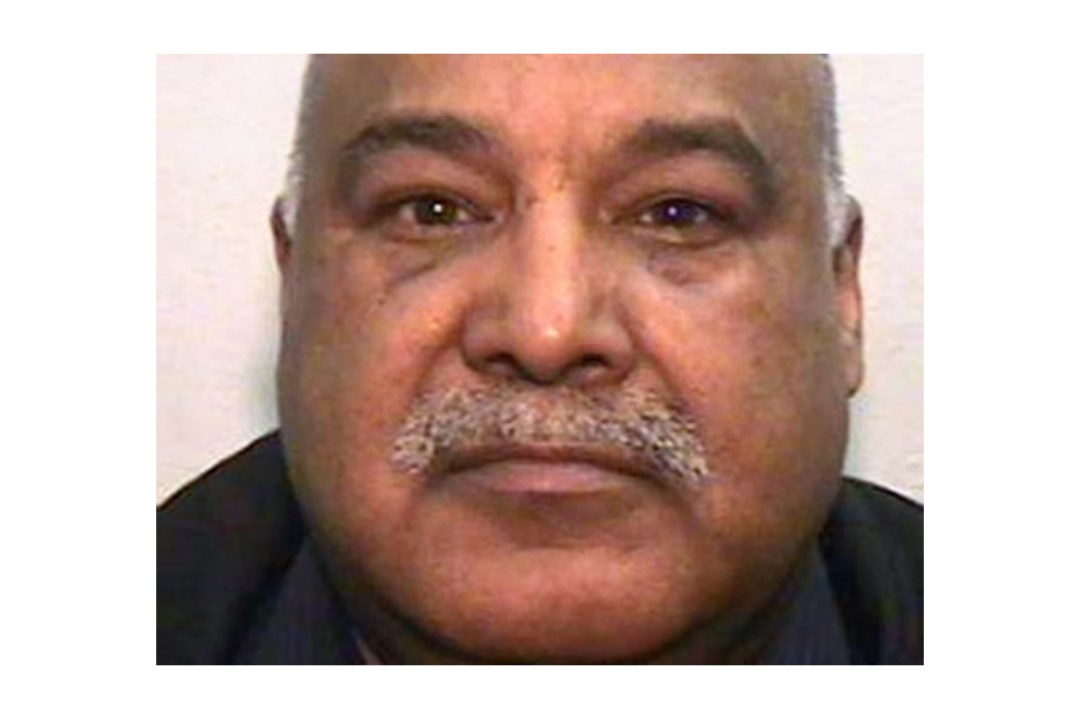
If you want to understand why the traditional mainstream parties struggle to gain support, and why Reform is leading the polls, one name will suffice: Shabir Ahmed.
Ahmed will reportedly be released from prison this week, having served 14 years of a 19-year sentence for multiple counts of rape and sexual offences against girls. Ahmed is a Pakistani national (he was formerly a dual British-Pakistani citizen but his British citizenship was removed after his conviction).

There will, of course, be anger that the leader of a Rochdale rape gang – who made his victims call him ‘Daddy’ – has been released five years early. But that anger is as nothing in the context of what will happen to Ahmed after his release, which is said to be happening tomorrow: nothing.
Yes, nothing will happen to Ahmed once he is released. Other than having to conform to the usual licence conditions, including – but only for an initial period – living in supervised accommodation and being subject to an ‘exclusion zone’ centred on Rochdale, plus signing the sex offenders register for life, Ahmed will be free to do as he wishes.
That is all despite Ahmed being a foreign national, a guest in our country. He has committed some of the worst crimes in its history but will suffer no adverse consequences from those crimes beyond a prison sentence from which he was released early and a few conditions after his release. According to Probation Service documents leaked this week, he will remain here because under the Immigration Act 1971 Ahmed ‘cannot’ be deported to Pakistan. Under that act, because he arrived here before 1973 and lived here for at least five years before his deportation was considered, his removal is barred.
The details of his case are sickening. Ahmed is living proof that evil exists. But one does not need to know the full story of his depravity to understand the implications of the British state’s refusal to deport him.
Because it is a refusal. It is a choice to keep him here. The law is not an abstract thing handed down to us over which no one has any say or control. The scandal that led the police and local authorities to turn their backs on the victims of rapists such as Ahmed is one of the most shocking and devastating in British history. But for all the attention focused on it now, the arms of the state have still not properly come to terms with the consequences. One of which is that it is unconscionable that any of the perpetrators who are foreign nationals should be offered the hospitality of our country. To say they ‘cannot’ be deported is itself more evidence of the depths and implications of this scandal. The law could be changed in a day if there was the political will do so. Parliament is sovereign. If it wishes to act, it can. If treaties prevent action, it is a deliberate, conscious choice to prioritise those treaties above justice. The choice has been made, and continues to be made, to do this.
When the system means that the rights of a foreign national responsible for the mass rape of children are held to be more important than the rights of victims – and the rest of us – not to have to share our country with such people, it would be surprising were the parties that have been responsible for that system for decades not shunned. And when a party like Reform highlights this and promises to change that system, of course it is going to win support.
Shabir Ahmed represents so much of what is wrong with a British state that will not deport foreign child rapists and that prioritises the rights of foreign criminals over the rights of British citizens to be protected from them. It is no wonder that it is not just Labour and the Conservatives in whom the public have lost faith, but the British state and institutions themselves.






Comments