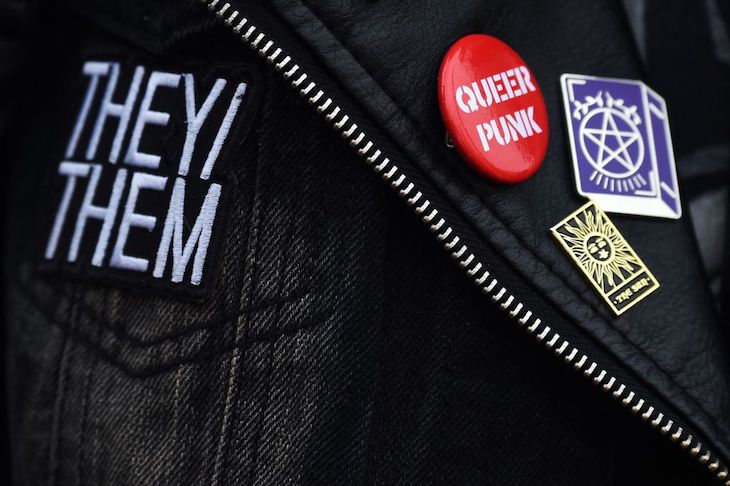
Mind your language if you want to speak in the Scottish Parliament. Newly elected presiding officer Kenny Gibson has told an interviewer that MSPs must refer to other members using their preferred gender pronouns. Scotland’s devolved elections, held on 7 May alongside England’s local elections, returned two MSPs who express a gender identity at odds with their male sex. Iris Duane considers himself a woman and says his pronouns are she/her. Q Manivannan identifies as ‘non-binary’ and says his pronouns are they/them. In an interview with the Times, Gibson said:
This parliament is likely to push more gender legislation, including odious plans to ban parents from trying to protect their offspring from sinister gender ideologues
‘You have to respect what that person wants to be called. And if someone doesn’t do that, then you have to call that out in the chamber and you have to take the appropriate action. If there’s a clear issue of it looks like it’s being deliberate, then you have to act on that because you can’t have someone, a member of the parliament, feeling undervalued or disrespected. So whatever your personal views are of what they call themselves, it is what they want to call themselves, I think, which is significant.’
The guidance on chamber conduct, issued under the previous presiding officer, is a moveable feast. While acknowledging that the appropriateness of a particular term is ‘generally a matter for members to debate, not a matter for the presiding officer in the chair to rule on,’ it goes on to say the chair ‘will not…tolerate views being expressed in a way that is personally insulting or that might give rise to harassment’. The definition of harassment is broad: any language or action ‘that is, or can be perceived to be, demeaning, discriminatory or harassing towards another member based on that member’s protected characteristics’. It’s worth noting that all of this is predicated on ensuring ‘language in the chamber is appropriate and meets the high standards expected of members by the general public’. If the parliament wants to base pronouns policy on public opinion, their terms are very much acceptable.

I’ll leave it to the lawyers to ponder whether Gibson’s pronouns policy would be open to legal challenge. Instead, I want to offer objections philosophical and political. Parsing the presiding officer’s comments and the guidance, the parliament’s position seems to be that members are free to express sex-realist opinions in the chamber when speaking on policy, but they cross a line if they don’t refer to a member by his or her preferred pronouns. This is an appeal to courtesy but courtesy works both ways. Publicly asserting a gender identity is a personal choice but demanding that others affirm that identity denies them personal choice in the language they use.
While a trans-identifying person might be left feeling upset – or, after the current fashion, ‘unsafe’ – to hear themselves referred to by their sex-based pronouns, the person prohibited from stating objective facts or forced to speak untruths is caused no less distress. Insisting that someone comply with your gender preferences – that they, in effect, become part of the self-identification process – when you know they don’t want to is coercion. Insisting they do so on pain of being accused of harmful or bigoted conduct is emotional blackmail. What is being sought is not courtesy but submission.
A more fundamental problem is the politics involved. Three of the six parties represented in the Scottish Parliament – Labour, Reform and the Tories – have made their opposition to gender identity ideology well known. The Conservatives in particular campaigned on a manifesto that repeatedly declaimed gender theory and pledged to repeal various policies upholding it in the Scottish Government, schools and other public bodies. Their deputy leader Rachael Hamilton has been vocal in her sex-realist views. This didn’t stop her constituents in Ettrick, Roxburgh and Berwickshire re-electing her. For some, it might be the reason they voted for her. Either way, Hamilton has a mandate from the electorate to fight gender ideology at Holyrood. Yet Kenny Gibson seemingly believes he can override that mandate and coerce her to submit to the very doctrines her constituents sent her to resist. Who exactly does he think he is?
Gibson was himself an opponent of gender ideology and gave no indication that he had undergone a change of heart. That this development coincided with his appointment to a plum job in a parliament dominated by gender activists is no doubt just that: a coincidence. But if he intends to use the authority of his office to force MSPs to conform with genderist dogma, he will quickly learn that the presiding officer’s authority depends not only on the support of the majority but the trust of the minority. And while the faulty Holyrood system fosters strong executives and weak parliaments, there are channels through which opposition parties can make known their objections to politicised rulings and tactics by which they can undermine the chair and delay and disrupt proceedings. A parliament run by, for and according to the whims of the gender lobby has taken sides in a political controversy and forfeited the loyalty and deference of those members it has sided against.
This parliament is likely to push more gender legislation, including odious plans to ban parents from trying to protect their offspring from sinister gender ideologues and their pernicious lies about children being born in ‘the wrong body’. Should Kenny Gibson decide to spurn impartiality in favour of pandering to the genderists, he will render himself too compromised to chair these debates and he can expect to be told so by one MSP after another. If this is the path he has resolved to go down, he had best prepare himself for a fight.




Comments