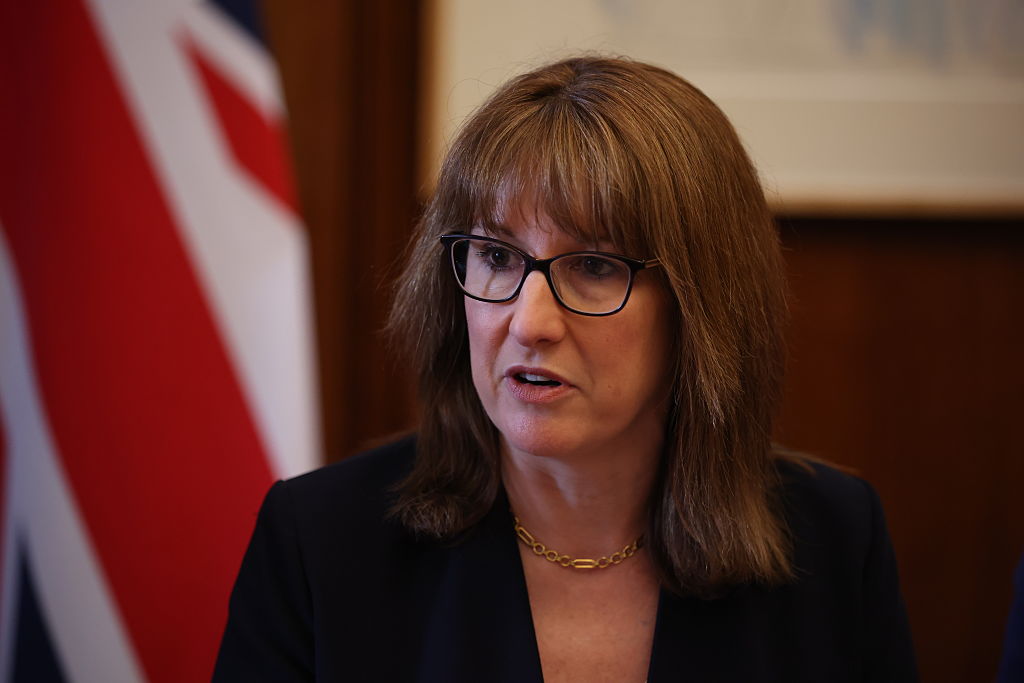
It is a ‘folly’ with ‘no clear exit plan’. The Chancellor Rachel Reeves certainly made little secret of her views on President Trump’s decision to go to war with Iran as she landed in Washington for a meeting of the International Monetary Fund. If fairness, Reeves may have a point. The trouble is, this was the wrong time, and the wrong place, to start goading the President – Britain can’t afford to lose its trade deal with America right now.
It is a high-risk strategy for a country as vulnerable as ours to pick a fight with the President
Reeves feels ‘very frustrated’ and ‘angry’ with President Trump, she told the Mirror as she flew off to the US. ‘To start a conflict without being clear what the objectives are and not being clear how you are going to get out of it,’ she said. ‘I do think that is a folly and one that is affecting families here in the UK.’ Trump, however, is not the kind of president who takes criticism on the chin. By Wednesday morning, he had already threatened to rip up the trade deal with Britain.
The UK economy is in no position for that. It is already perilously close to a recession, and the IMF has just warned that we will be hit harder from the fall-out from the conflict than any other major economy. The gilts market is already fragile, with investors nervous over weakening growth, and the potential cost of an energy bail-out. And we are increasingly dependent on oil and gas from the US. In 2024, the US became our top source of crude oil imports, overtaking Norway, while we increasingly import American LNG. If Middle Eastern supplies dry up, we may well need that energy to keep the lights switched on and the trucks running. It is a high-risk strategy for a country as vulnerable as ours to pick a fight with the President.
Attacking Trump might play well within the Labour party, and it will deflect the blame for a worsening economy away from her own government. Yet if Reeves is worried about how vulnerable Britain is to the impact of the war on the economy, perhaps she should examine her own policies. If she allowed fresh exploration in the North Sea, and lowered the punitive windfall tax on production, rising oil prices would not matter so much. Likewise, if she had not ramped up borrowing to fund lavish spending on welfare and public sector salaries perhaps the gilts market would be less of a concern. Or if she had not hammered business and investment with higher taxes, perhaps growth would be more robust. Instead, it is easier to blame everything on President Trump – and if he does retaliate, she will deserve it.


Comments