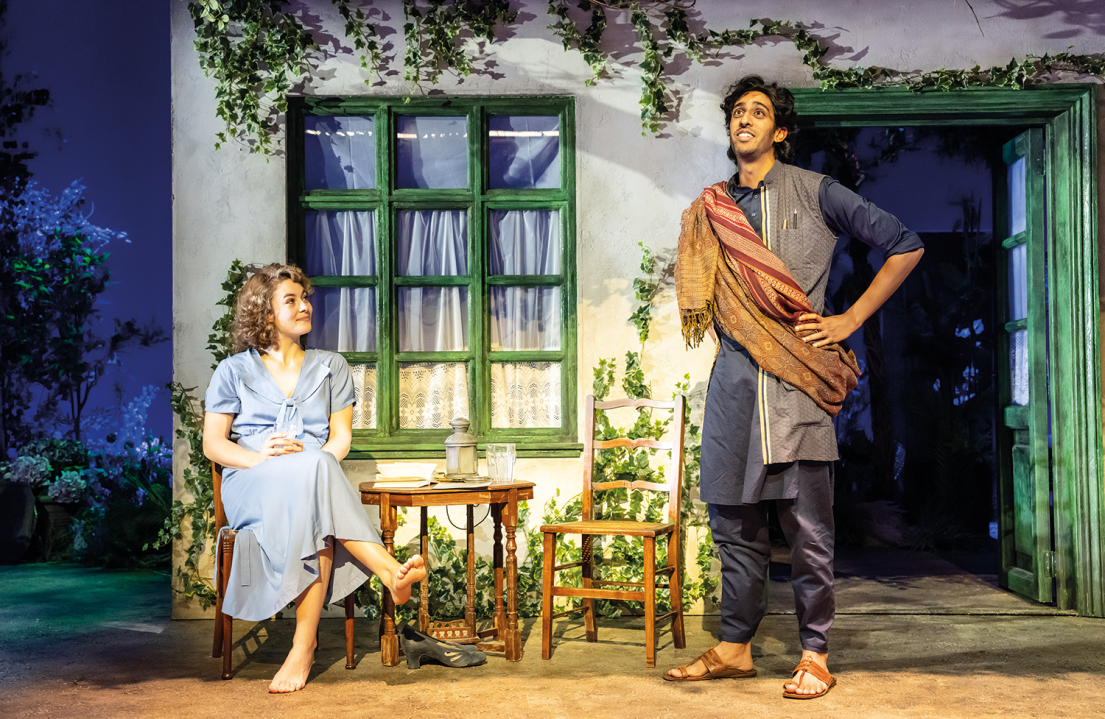


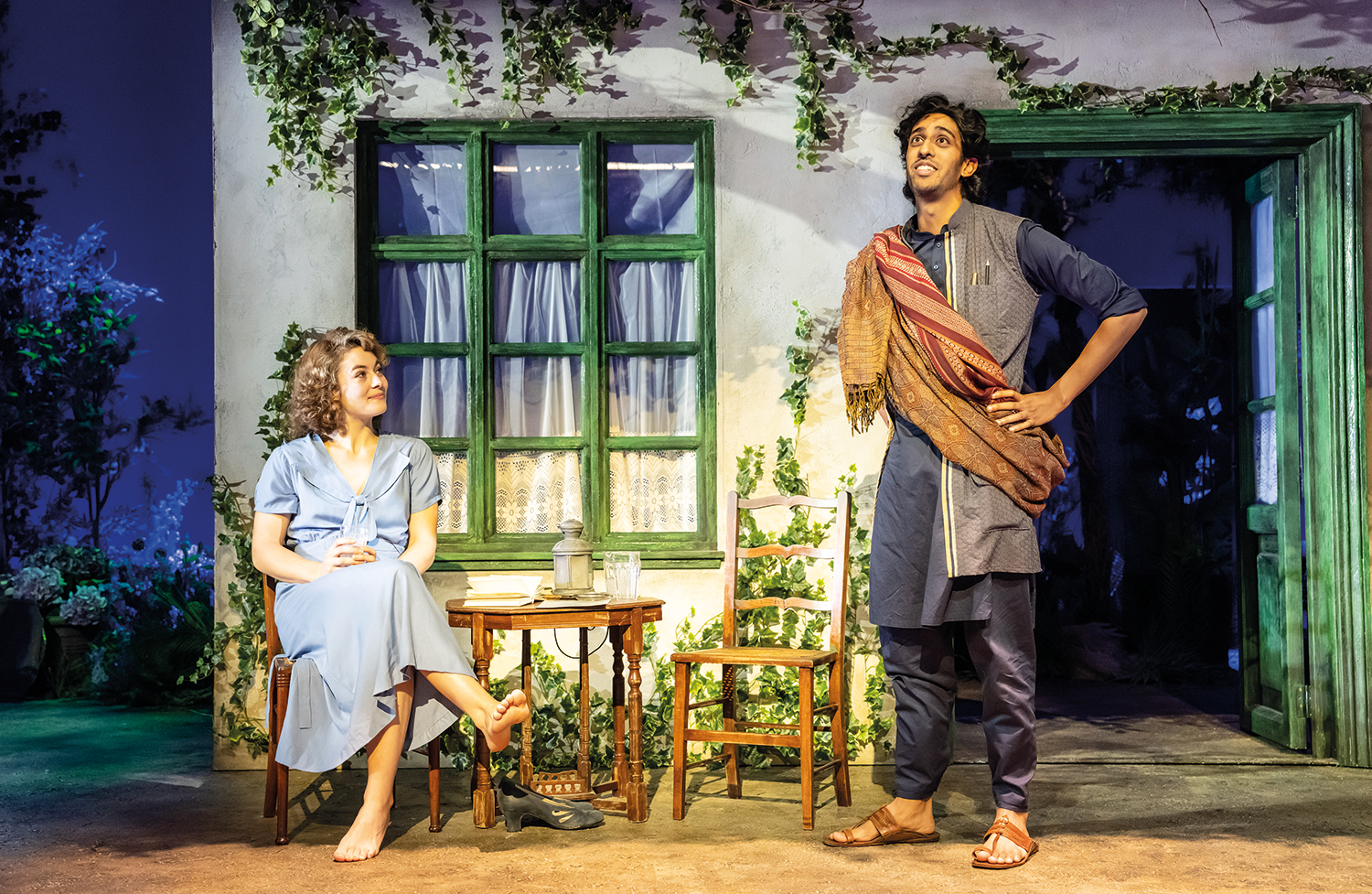
Unusual. After the press night of Indian Ink by Tom Stoppard, no one leapt up and cheered. The crowd applauded politely at the amusing dialogue and the marvellous acting in Jonathan Kent’s handsome three-hour production but there was no standing ovation.
The script feels like a literary novel overstuffed with detail. Flora Crewe is a ravishingly beautiful but utterly sexless poet who floats around India in the 1930s provoking the adoration of lustful men. But she doesn’t evolve or change during the action. And she’s maddeningly indifferent to the romantic attention she excites. A maharajah tries to impress her with his fleet of Rolls-Royces. A dashing English captain proposes marriage and she laughs in his face. A talented young artist paints her nude but she gives him the cold shoulder.

Her slightly irritating story is told in flashback by a literary biographer, Eldon, who asks her surviving sister, Mrs Swan (Felicity Kendal), to show him the family archive of letters and pictures. These investigative scenes are set in the 1990s and the show leaps back and forth across 60 years. Bit awkward. Eldon, just like Flora, is a characterless cipher and he has little to gain by dredging up her dreary banter from years ago. Mrs Swan, also like Flora, is angelically sweet but lacking in the slightest trace of personality. A third sleuth, Anish, joins the hunt – he’s very dull as well – and he wants to know if his father bedded Flora. (He didn’t.) The news doesn’t change Anish either way.
In this play, nothing matters to any of the characters because the show is just a cultural filing cabinet full of oddments that fascinate Stoppard. He wants to display his collection to the audience by ruminating about, for example, the difference between Islamic and Hindu art, the relative status of beggars in India and America, and the habitual discourtesies of politicians. It’s all good stuff but scattered at random without any organising principle. A key motif is the history of the British Raj and Stoppard seeks to revise the accepted falsehood that the Brits were all racist psychos and the Indians were all brutalised zombies. Students of Indian history in the 1930s will find this fascinating. As will lifelong Stoppard fans.
This indigestible script is unlikely to attract many revivals so it would be best to buy tickets now. You may find that you admire every aspect of this production without liking it at all.
Daniel’s Husband, by Michael McKeever, is a bourgeois comedy of manners about two handsome gay couples who enjoy life to the full. They gather in Daniel’s sumptuous home to discuss their careers and to trade witty gossip over glasses of claret before supper. Daniel is a brilliant architect in a long-term relationship with bestselling novelist Mitchell who claims that his books lack merit. His agent Barry has started a fling with hot young medic named Trip.
The opening scene chugs merrily along until a row erupts between Daniel and Mitchell over the question of marriage. Daniel wants to solemnise their relationship but Mitchell refuses. Their petulant tiff wrecks the cosy little supper party.
Then a huge swerve. One of the characters suffers a medical disaster which leaves him unable to speak or move. And the show changes genre. The frothy comedy of manners is over and the script turns into a discursive morality play about guardianship and the competing rights of lovers and family members. If an adult slips into a coma, should his boyfriend care for him or must his parents step in? Cue a legal battle which gets nasty very quickly.
But the budget can’t stretch to a court of law so the story is told at second hand in Daniel’s apartment. And the viewers are bound to feel excluded because the real action is taking place in a faraway courtroom. It’s like listening to the cup final on the radio. And yet, as a spectacle, the show scores top marks. The handsome actors are trim and athletically built. The costumes are great. The teeth are terrific. As are the wigs. Perhaps some of the hair is natural. Who knows? Daniel’s chic apartment, designed by Justin Williams, is a marvel of sophisticated urban elegance.
David Bedella, as the literary agent, stands out in a part that offers little scope for his comedic skills. Liza Sadovy (Lydia, the victim’s mother) is portrayed as an interfering control freak but she plays the role with great poise and grace. It’s a shame that these smart, witty characters have to shriek at each other for most of the action and to deliver whining screeds of self-pity.
This is a very limited work by a writer who seems to have led a sheltered life. He imagines that losing your lover in your mid-thirties is the worst tragedy a human can face. Not many would agree.




Comments