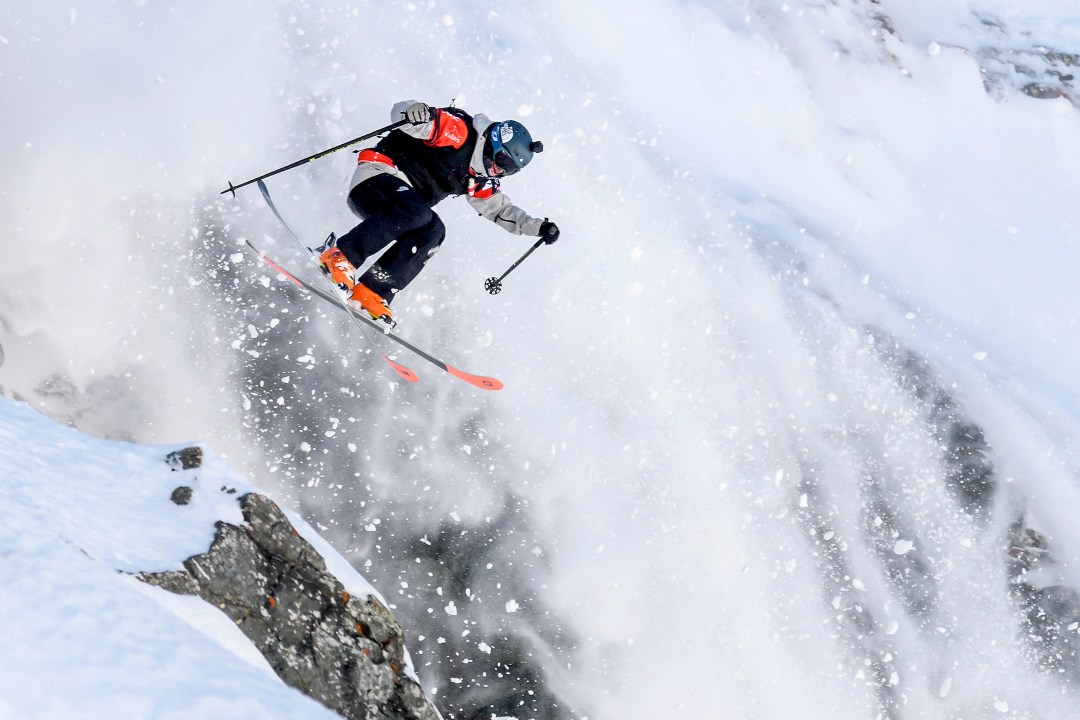
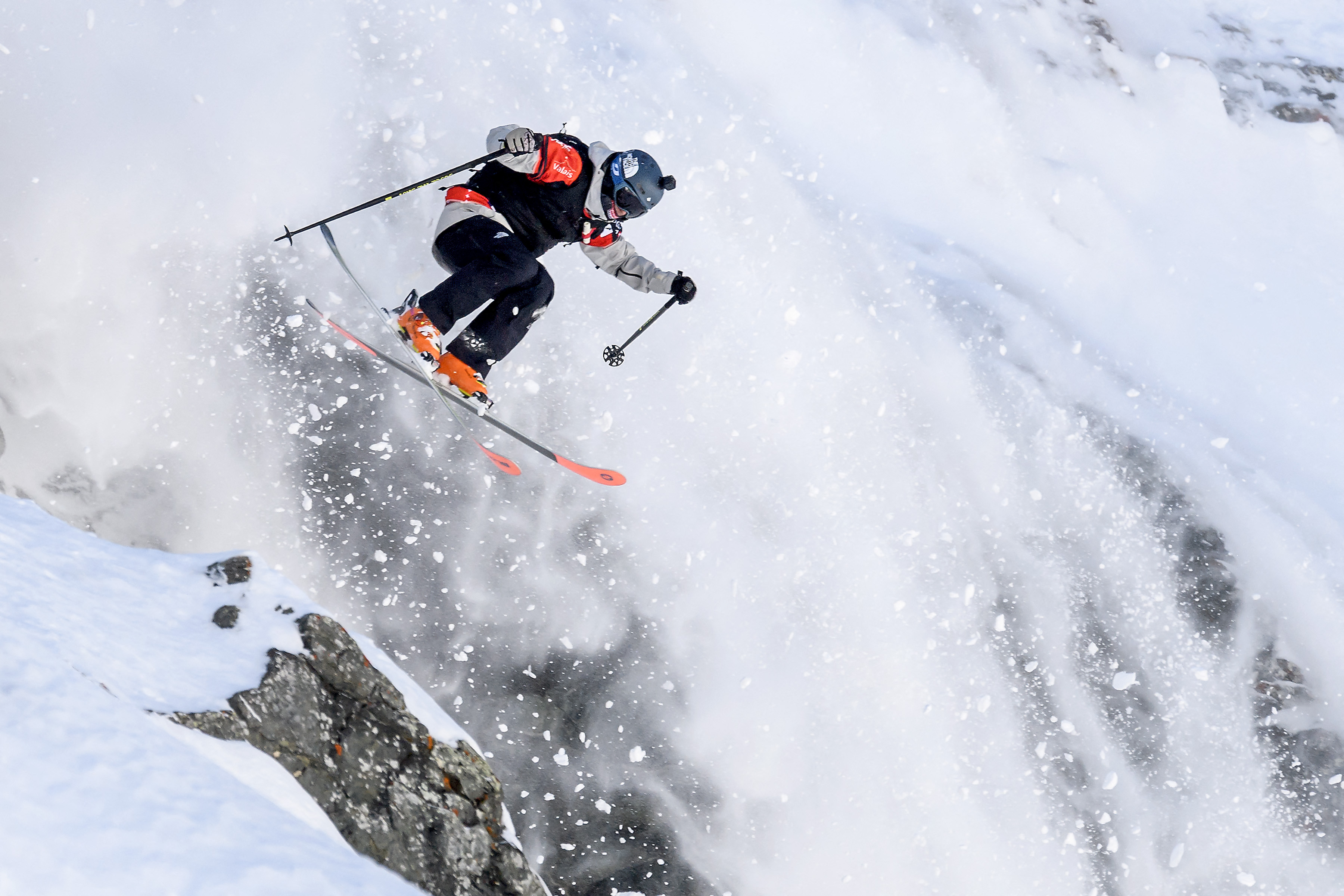
An avalanche in the French Alps claimed the lives of two skiers this week. In total, 30 skiers have lost their lives in one of the most deadly Alpine winters in memory. Like the majority of victims this season in France, the skiers had ignored avalanche warnings and ventured off-piste.
Among the fatalities are two British skiers who were caught in an avalanche earlier this month in Val d’Isère. Twenty-four hours before their deaths, the avalanche warning in the resort had been raised to red for only the second time this century.
One of the dead Britons was in the habit of posting clips of his off-piste adventures on social media. He described going off-piste as entering ‘our own world’ and last year captioned one video: ‘Exploring the Alps with my ski team… no need to go on the piste ever again.’
In an op-ed last week one Telegraph journalist said the ‘lure of untouched snow remains impossible to resist’ and therefore off-piste skiing ‘is worth the risk’.
Skiing, certainly in Britain, is a middle-class sport, a chance for white-collar workers to escape the office and blow off some steam. In our safety-obsessed world, off-piste skiing is one of the few opportunities for excitement and danger.
The number of fatalities this season in the Alps is attributed in part to the specific metrological conditions. In a recent interview Stéphane Bornet, director of the National Association for the Study of Snow and Avalanches, likened the snowpack to ‘an increasingly unstable millefeuille’ – the layered vanilla patisserie. The first heavy snow fell early this season in November but this was followed by a period of fine weather, which created ‘angular grains’ within the snowpack. Since the middle of January, there have been short, sharp bursts of snow, often accompanied by strong winds.
Most tourists who head off-piste see only virgin snow; they have little understanding of its composition. According to a report last year by the Swiss Council for Accident Prevention, 85 per cent of fatal winter sports accidents occur off-piste.
Consequently, some in France are calling for better regulation of off-piste skiing, even mooting a ban. It is a question being asked by journalists, who point to the US and Japan where local authorities have the power to close the slopes if the conditions are hazardous.
Last month, France’s Minister of Sports, Marina Ferrari, visited Courchevel to express her gratitude to mountain rescue teams. She arrived after a weekend in which six skiers lost their lives in avalanches.
In our safety-obsessed world, off-piste skiing is one of the few opportunities for excitement and danger
One of the people Ferrari met was Frédéric Bonnevie, president of the Association of Ski Patrol Directors. He described a ‘difficult’ winter for his colleagues, made all the more frustrating because of the attitude of many skiers. ‘It’s always infuriating because we do a lot of education, information and prevention work,’ he said, referring to their warnings not to ski off-piste. Unfortunately, said Bonnevie, not only are he and his colleagues frequently ignored but increasingly they are insulted. ‘People say to us, “I don’t care, I’ll do what I want”. Everyone needs to take responsibility, to really realise that this doesn’t just happen to other people.’
That includes ski instructors and guides who take tourists on off-piste routes. One of France’s most celebrated mountaineers, Marc Batard, spoke recently of his exasperation at the number of deaths this season. ‘I am very angry about the training [of instructors],’ he said. ‘There is a real problem with basic training. Professionals are not taught enough about when to call it off.’
Some instructors may come under pressure from clients to take them off-piste; tourists travel a long way and pay a lot of money to reach the French Alps and experience – like the Telegraph journalist – the ‘lure of untouched snow’.
Off-piste skiing for many is not just about thrill-seeking but also publicity-seeking. Many post clips of their exploits online. TikTok and other social media platforms are awash with off-piste videos; some are shot by proud parents of their children.
It is a similar recklessness to the hundreds of people who have died in pursuit of the ‘ultimate selfie’, most of them drowning or falling from a great height. Steve Cole of the Royal Society for the Prevention of Accidents blames the ‘allure of social media recognition [that] often drives individuals to take these unnecessary risks, underestimating the potential dangers’.
It is unlikely that off-piste skiing will be banned in France. ‘It is not the spirit in France to prohibit a space for practice,’ says Blaise Agresti, the head mountain guide at Chamonix for 15 years. ‘Constitutional law guarantees freedom of movement, as the mountains are freely accessible. And it is not really part of the culture.’
What needs to stop is the culture of irresponsibility. Some of those who go off-piste do so without taking an avalanche transceiver, a probe or a shovel. When their bodies are dug out from under the snow, it is the rescue teams who have to inform distraught families and friends waiting at the resort. ‘Recovering a body is terrible,’ said one. ‘But dealing with the families afterwards is even more painful.’
Those skiers who risk going off-piste do so because, to paraphrase Frédéric Bonnevie, they think avalanches happen only to other people. Right up until the moment they hear the deep roar behind them.



Comments