In the regretful days that followed England’s World Cup exit last week, a video was played on repeat on social media. Someone had edited red and white into greyscale over a clip of England’s footballers linking arms and swaying, singing along to Oasis’s ‘Wonderwall’.

At this tournament it became a tradition. England won a game, then a few more. The pundits finally fell silent. Ian Wright or Gary Neville whispered: ‘Drink it in.’ That famous guitar started up; the camera panned along the players’ line. We all knew the opening words: ‘Today is gonna be the day…’ No more ‘Sweet Caroline’. ‘Three Lions’ was played but the crowd only cursorily joined in. ‘Wonderwall’ became this tournament’s anthem, last week topping the global Spotify chart for the first time since its release 31 years ago. England may not have made it to last night’s final but in some ways that didn’t matter. The real winner of this World Cup wasn’t a nation at all: the tournament has made it the summer of Oasis once again.
Of course, many will be irked by this. We had a lot of Oasis last year, starting with the band’s comeback gig in Cardiff on 4 July. Through five months and 41 performances worldwide, our screens were filled with newsreels of rollicking, bucket-hatted figures. From Manchester to Mexico City, devotees materialised out of thin air: Gen X ravers in original tour shirts together with bourgeois youngsters unborn in the band’s heyday. Both threw themselves and their beer around as the catchy strains of ‘Hello’ started up at each concert.
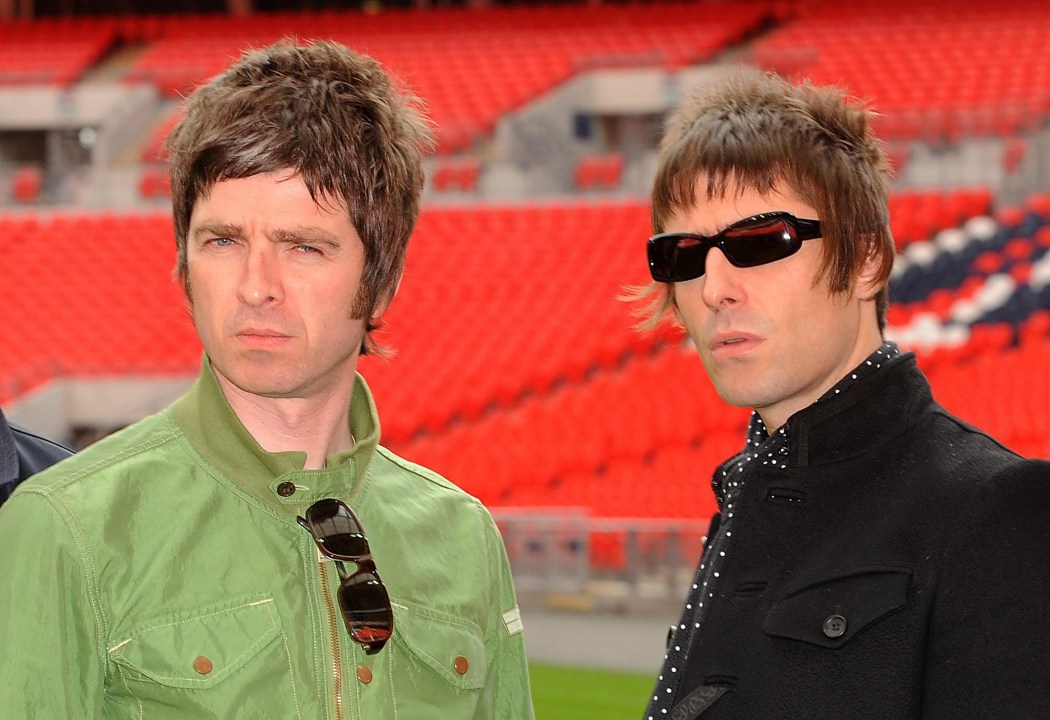
It is a point laboured to banality, but there is some truth to the notion that these past few months have recaptured a moment. Whatever you think of Noel Gallagher’s repetitive chord progressions or Liam’s rasping vocals, the band is forever associated with the cool ‘Britpop’ era of the 1990s, retrospectively cast in a wistful, golden light. That was the decade where we seemed like participants in the titanic clashes of Oasis vs Blur and Blair vs Brown. A Walkers ad campaign put fivers in occasional crisp packets to encourage people to feel lucky. Turkey Twizzlers emerged as a favourite primary school snack. Britons were supposedly indulgent, hip and optimistic, spurred on by Oasis’s electric sound. Curated nostalgia has brought the band back into our national psyche. Unsurprisingly, this summer, England as a nation wanted to imbibe some of that potency.
And, of course, we’re not just seeing that through sport: Andy Burnham is another Briton who has sought to profit. When our new Prime Minister launched his Makerfield by-election campaign this year, he did so with a video that was soundtracked by Oasis. Shots of grey Mancunian suburbia faded into lyrics that went: ‘Some might say, we will find a brighter day.’
The song hardly reflects the romping attitude that wins you a World Cup – even if it won Burnham the premiership
Our Andy is very keen that everyone should know he is optimistic and that he is northern. He wants this ‘to be a new era about hope’, rooted in the so-called Manchesterism that Oasis has come to define. Thirty-five years after its formation, the band still represents northern working-class culture. Some of the Gallagher brothers’ best tracks (‘Rock ’n’ Roll Star’, ‘Cigarettes & Alcohol’, ‘Champagne Supernova’) are built upon the images of dreamy (drunken) aspiration that Burnham hopes to reimagine.
For the England team too, ‘Wonderwall’ revitalised touching memories. The track was released in October 1995, less than a year before the months of fanaticism that became Euro ’96. English football had only just emerged from a few years of misery. The national team didn’t even qualify for the 1994 World Cup. But those Euros will always be associated with a headiness that overlooked the semi-final exit to the Germans. And a couple of months later Oasis held two concerts at Knebworth in front of a combined 250,000 people.
Up until Wednesday’s semi-final, the nation was similarly intoxicated by an ecstatic, poignant obsession. The past 30 trophyless years have seen England fall, fall, and rise again. People were really very excited. But perhaps the Oasis allusions already bore dark portents. ‘Wonderwall’ is a perplexing song. Like the ghastly ‘Sweet Caroline’, it can be overplayed to the point where no one wants to hear a guitar strummed that way ever again. Yet that is where the comparison ends. ‘Wonderwall’ lacks a saccharine chorus. It is a pensive, melancholy hit that never quite commits to either major-key resolution or minor-key gloom. The subject matter is inscrutable and reflects the mentality of a small child, hoping for protection from the end of the world: ‘Because maybe, you’re gonna be the one that saves me.’
The song hardly reflects the romping attitude that wins you a World Cup – even if it won Burnham the premiership. Its anthemic effects are too much about loss, regret, and many things left unachieved. The fresh frenzy stirred by the Gallagher brothers will endure in the short-term, largely because they seem set on a further money-spinning tour next year. But, with no new music imminent, their hold on this summer’s zeitgeist probably won’t last. For now, they’re the nostalgia-fuelled champions of this sporting and political season. But people can only live in the past for so long.






Comments