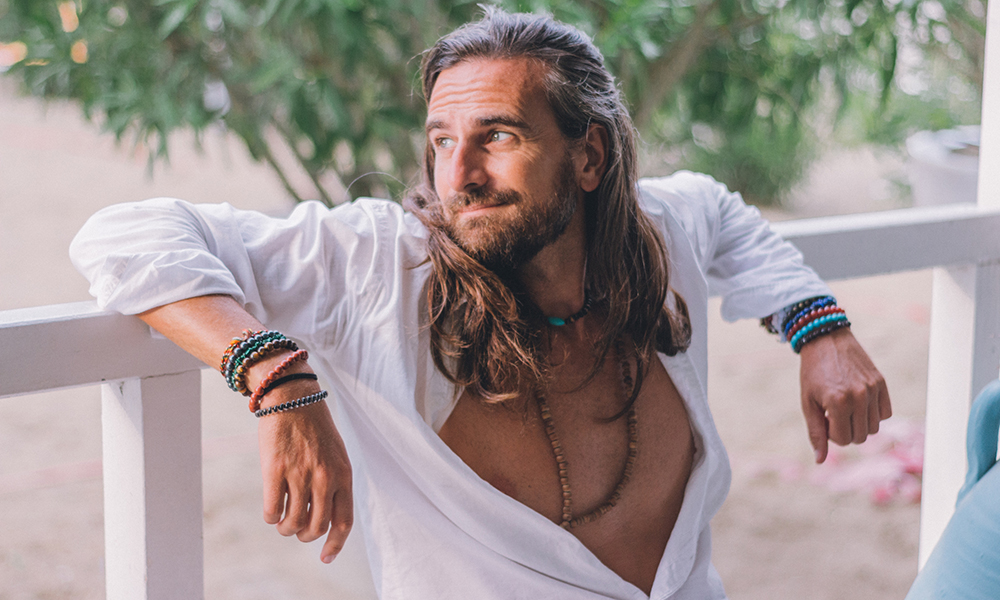


Dante’s Beach, Ravenna
When I was still beautiful, a famous Italian TV art historian and politician chose me to be a candidate in the elections to the European parliament for his Partito della Bellezza (Party of Beauty). The idea – as Dostoevsky told us in The Idiot – was that beauty will save the world. The highlight of my brief attempt to enter politics was a trip to Venice where I went by vaporetto along the Grand Canal to the 16th-century Court of Appeal to lodge my candidature amid the echoes of its vast marbled interior. I got 54 votes.
Casanova, who was from Venice, claimed in his Histoire de ma Vie to have slept with 122 women. A paltry sum. I beat him hands down, though to my shame cannot remember the names of most of them. Or even their faces.
I beat Casanova hands down, though to my shame cannot remember the names of most of the women
But I digress. The Partito della Bellezza was not a Partito del Sesso (Party of Sex) even if its charismatic founder, Vittorio Sgarbi, was a notorious lothario. He used to say: ‘Beauty will save the world if the world saves beauty.’ I loved the idea. It was a bit like what Sir Roger Scruton tried to do with his crusade against the cult of ugliness in art and architecture, and the cult of utility in life which treats beauty as an optional.
Which brings me to my friend Paolo Gambi, who identifies as ‘a post-contemporary multimedia artist, poet and performer’. Apparently he has 40 million certified visits a month to his social media channels, which sounds like the entire adult population of Italy is tuning in to watch his short videos about what is wrong and what is to be done. It makes him ‘a massive, top-tier mega-influencer or celebrity’, AI tells me, yielding ‘millions in potential annual ad revenue and sponsorship deals’. Yet he does not cash in. For all that matters is his mission.
He’s been in touch because he has -created a manifesto about the importance of beauty which he hopes will become a battle cry. It is written in the style of the Manifesto del Futurismo, by the poet and founder of the Futurist movement Filippo Marinetti, published in 1909 in Le Figaro. Paolo tells me: ‘Just as Marinetti published his manifesto in France to get more reach, I’d like to publish mine in Britain in the world’s oldest continuously published magazine.’ Groovy baby, groovy.
Called Manifesto di un’Alba Futurista (Manifesto for a Futurist Dawn), it starts: ‘Here begins the post-contemporary.’
Scruton, unsurprisingly, is in Paolo’s opinion ‘molto avanti’ (very avant-garde). They share similar enemies: Paolo calls his ‘the contemporary’, otherwise known as ‘il morbo’ (the disease), whose cause is not a virus but Satan. The rot began to set in with Milton and his depiction of Lucifer as a fallen hero. All is lost by the time we get to the 20th century, via Byron, Baudelaire et al. According to Paolo, Picasso’s ‘Les Demoiselles d’Avignon’ (1907) depicts nothing short of a Satanic ritual.
Most popular
Steven Edginton
Invented claims of lynchings and racist violence are irresponsible — and dangerous

Paolo’s manifesto is a lot shorter than Marinetti’s and does not have the lengthy preamble of the original, just the ten statements of intent and the closing proclamation. It promises that out of ‘the meeting between we humans and the products of our ingenuity’, once we throw off the ‘ideological encrustations that stop the soul becoming flesh’, there will emerge ‘a strong, healthy and magnificent new civilisation’. If only!
A key difference between the two manifestos is that Marinetti saw the past as the enemy and the future as the saviour, whereas Paolo sees the past as vital to the creation of a beautiful new future. And whereas Marinetti exalted ‘the punch and the slap’ and war as ‘the only hygiene in the world’, Gambi sounds like a passive-aggressive reincarnation of Gandhi.
So Marinetti concludes: ‘It is from Italy that we launch through the world this, our violently overwhelming and incendiary manifesto.’ And Gambi: ‘It is from Italy that we launch through the world this, our manifesto, without violence or revolution. Ours is a sacred evolution.’
The Futurist manifesto had a huge impact on art and literature and also on politics. It was an important element in early fascism and Marinetti was a founder member of Benito Mussolini’s fascist movement in 1919.
My dear friend’s manifesto, whose spirit is essentially conservative, feels to me much more like a manifesto of anti-Futurism than a ‘Futurist Dawn’. But he disagrees: ‘If Marinetti were alive today I don’t believe he would be among those who want to continue to deconstruct the soul of the West, which is what the Establishment is doing in such a tired and conformist way. To be avant-garde today is to reconstruct.’
As for why so many people follow him, Paolo, who is a devout if difficult Catholic, says: ‘I’ve given a voice to those who do not have one. I’m among the first in Italy to warn about woke and declare openly my Christian faith and to try to apply critical thought to what is happening. All I wanted to do is create poetry! I don’t know if that’s what I’m doing or not.’
Beauty is truth, truth beauty, or so they say.




Comments