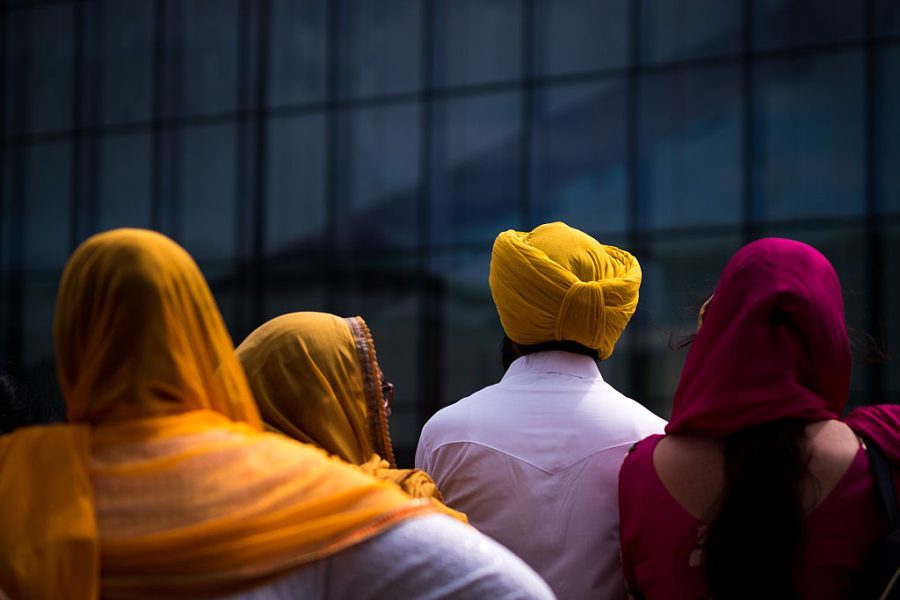
I was keen to watch the BBC documentary Being Muslim After 9/11 not least because I anticipated reference to the first person killed in retribution for 9/11, Balbir Singh Sodhi, a Sikh gas station owner from Mesa, Arizona. His murderer, Frank Silva Roque, was clear on his intent when he told a waiter, ‘I’m going to go out and shoot some towel heads.’ The Sikh turban and beard are conflated by ignorant bigots with the attire of Osama bin Laden and the black turban-clad misogynists of the Taliban.
Muslims have indeed suffered since 9/11, but sadly, non-Muslim victims of the post-9/11 backlash were remarkably not mentioned once in the hour-long documentary, which aired on BBC Two this week. The documentary by film-makers Mobeen Azhar and Masood Khan includes their personal reflections 25 years on from 9/11, featuring interviews with friends such as Baroness Warsi and Salma Yaqoob. They reflect on how things have changed for British Muslims since the attack on the Twin Towers.
Going into archived footage, the documentary touches briefly on grooming gangs, focusing attention on (amongst other things) Tommy Robinson, the proscribed group Al-Muhajiroun and the Finsbury Park terror attack. However, the filmmaking duo missed a golden opportunity: to show solidarity with others who suffer the negative reverberations of violent jihad and public anger about predominantly Muslim grooming gangs.
The BBC has failed to grasp the concept of ‘perception-based’ hate crime
A few years ago, I co-authored a book – Racialization, Islamophobia and Mistaken Identity: The Sikh Experience. Since 9/11, and particularly in recent years, Sikhs, like other minority faiths in Britain, have faced some horrendous incidents due to prejudice but also ignorance fuelled by religious illiteracy. Innocent Muslims and Sikhs have been targeted. Last year, a Sikh heritage woman from the Midlands was raped by a man described by a judge as a ‘deeply unpleasant racist and Islamophobe’. The rapist had assumed his victim was a Muslim. In 2016, a former soldier was jailed for threatening his young female Sikh neighbours, calling them ‘Isis bitches’ and ‘Isis slags’.

Prior to this, in 2015, there was the attempted beheading of a Sikh heritage dentist from Wales, Sarandev Singh Bhambra – a ‘revenge’ attack for Fusilier Lee Rigby, by a member of the since proscribed neo-Nazi group National Action. The incident was referred to by the BBC’s flagship news programme Newsnight as ‘Islamophobia’.
Then there’s the macabre story involving former Labour minister, Parmjit Dhanda. Just as he lost his seat as MP for Gloucester in 2010, he had a knock on his door: a frightened lady on his doorstep with her dog trying to pull away from her towards something in his driveway. The thing in question was a decapitated pig’s head. ‘After nine years’ service,’ notes the blurb for his book, My Political Race, ‘people didn’t even realise [he] was actually a Sikh and not a Muslim.’ Fortunately, most people who know anything about Sikhism are Sikhophiles.
The Labour government is currently embroiled in controversy following the MP Nick Timothy’s allegations of a ‘cover-up’ concerning evidence submitted to the ‘Working Group on Anti-Muslim Hatred/Islamophobia Definition’. He said:
Labour’s ideological agenda of stifling criticism of one particular religious community – one that votes overwhelmingly for them – stinks of sectarian politics.
On the face of it, Labour does appear to have little interest in ensuring a level playing field for people of all faiths and none. If it did, we would have seen efforts to develop government-backed definitions of anti-Christian, anti-Hindu and anti-Sikh hatred. Former Muslims also argue that doctrinally-inspired hostility and incitement against them is not treated on a par with ‘Islamophobia’. Some are marking ‘Ex-Muslim Awareness Month’ and using the term ‘apostophobia’. A hierarchical policy approach has regrettably been adopted by successive governments; moreover, Labour shamefully did not even respond to my charity’s request to have a Sikh representative join the said working group.
The BBC’s documentary is just another institutional expression of this myopic, self-serving and insular worldview. It reminds me of Shakespeare’s writing in The Merchant of Venice: ‘If you prick us, do we not bleed?’ More depressing still, Being Muslim After 9/11 demonstrates that the BBC has failed to grasp the concept of ‘perception-based’ hate crime. At the end of the documentary, the latest Home Office hate crime statistics are presented as follows:
Anti-Muslim hate crimes in England and Wales rose by 15 per cent in the year to March 2026; 46 per cent of religious hate crime targeted Muslims.
The claim is both inaccurate and misleading: the 46 per cent figure refers to offences recorded as targeting people perceived to be Muslim. That does not necessarily mean they are all Muslim. Freedom of information requests I previously submitted to the Metropolitan Police revealed that non-Muslims, and people whose faith was not recorded, were the victims in 28 per cent of recorded ‘Islamophobic’ hate crimes in 2015 and 25 per cent in 2016. These figures unsurprisingly included Sikhs, but also Christians, Hindus, Buddhists, Jews, Atheists and Agnostics.
I have requested that the BBC correct this fundamental error. Moreover, if our public broadcaster has any commitment to fair and equal treatment, it might consider commissioning a documentary entitled Being Sikh After 9/11.



Comments