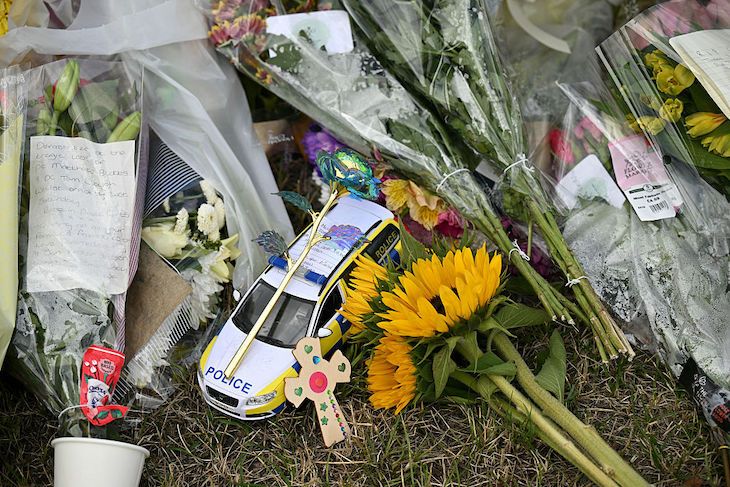
The ugly scenes in Middlesbrough over the last week would not look out of place in a war zone. In the early hours of Saturday, five youths and two police officers died in a head-on crash on the A66 on the outskirts of the city. The collision, and the events leading up to it, have shone a light on a murky world of organised crime and lawlessness in Middlesbrough.
Locals are, understandably, terrified by what is unfolding on the streets that they call home
Before the crash, another car was seen ramming properties. One of the houses that was targeted belonged to the father of a teenager, Cole Worthy, 17, who died in the accident on the A66. Since the crash, nine men and three women, aged between 18 and 61, have been arrested across Teesside. They were held on a range of alleged offences, including possession of a firearm and being part of an organised crime group.
On Wednesday, a murder investigation was launched in the city after two people died in a house fire about two miles from the A66 crash. The blaze in Grangetown broke out just before 5.30am yesterday. Cleveland Police said it was investigating what had happened and was ‘keeping an open mind’. The force said that it ‘cannot rule out any links to wider organised crime at this time’.
Locals are, understandably, terrified by what is unfolding on the streets that they call home. But this lawlessness has not emerged from nowhere; it has been bubbling away for some time. A local councillor, speaking anonymously because of the danger in being named, has told how criminality, from joy-riding to shoplifting to drug-dealing, is out of control in the area.
Police patrols have been stepped up to ‘reassure the local community’. But people living in Middlesbrough and its neglected suburbs are far from reassured. Soon the spotlight of media attention will turn away. Shamefully, the authorities appear to have effectively ceded authority to those intent on violence.
Locals feel let down by Anna Turley, the MP for Redcar, who also serves as border security minister. In the hours after the crash, Turley paid tribute to the five joyriders who died. The MP said of Makai Saddington, 18, Theo Rae and Cole Worthy, both 17, and Michael Cahill and Jacob Matusiak, both 23, who crashed into the car of PC Matthew Blades and PC Tom Clough, as they drove the wrong way down a dual carriageway: ‘This morning I went down to South Bank to lay flowers and pay my respects, on behalf of our whole community, to the seven people whose lives were so tragically cut short yesterday. There really are no words for the heartbreak their families, friends and loved ones will be feeling today. May you all rest in peace.’
Nick Timothy, the shadow justice secretary, spoke for more than just himself when he responded to that bizarre tribute by saying: ‘Anna Turley is a Home Office minister. She wants to ‘pay her respects to the seven people whose lives were tragically cut short’ in the Middlesbrough crash this weekend. I can’t be the only one for whom this statement jars. We may live in an age of emoting, but we should be able to see the difference between right and wrong.’
Timothy is right, of course. No society can continue thus.
Middlesbrough has the highest crime rate in the country, excluding central London. The former industrial town recorded a crime rate of 150 incidents per 1,000 residents, based on recent Home Office data. Over 23,400 crimes were recorded during a 12-month period.
This is a genuine social emergency. The government must commit to providing whatever it takes in the way of intelligence gathering and extra police resources to bring those intent on criminality to heel. Ordinary citizens in Middlesbrough deserve to be reassured that they have the right to go about their business in peace.
Open lawlessness, of the type that has broken out in Middlesbrough, is a symptom of a broken society. When a city suffers from such endemic criminality, the people who suffer are not the professional and administrative classes that ministers and MPs hobnob with. It is the working class and those living in precarious comfort just above it, little touched by what prosperity remains in Middle England. These people seek only quiet streets and the ability to bring up their children decently. They are the ones now facing vandalism, drug-dealing, urban dystopia and threats against their modest homes if they dare complain.




Comments