
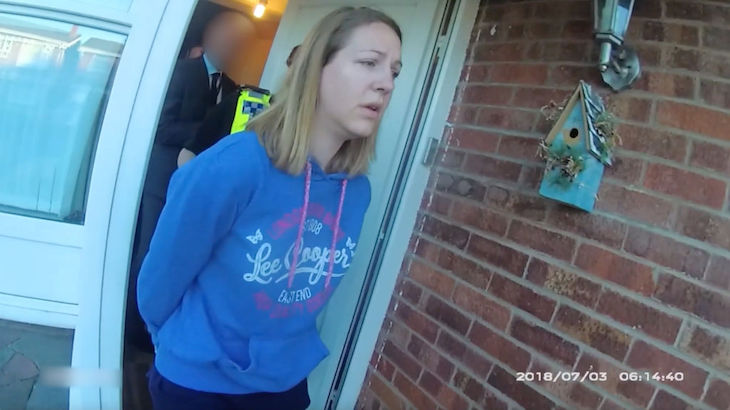
The parents of Lucy Letby, the nurse currently serving a sentence after being convicted of child murder, have complained to Netflix after seeing the trailer for a new documentary about their daughter’s case. In the first statement they have made publicly since her 2023 conviction, they say that the footage front and centre in the trailer – previously unreleased police video of Letby being arrested in her pyjamas in her bedroom at home – is a “complete invasion of privacy”.
These days, true crime is having a vogue not seen since the days of the Victorian penny blood
“Why is [senior investigating officer] Paul Hughes, with whom we always co-operated fully, allowed to show the world what took place in our house that morning and Netflix not even have the decency to tell us?” they ask. “We had no idea they were using footage in our house. We will not watch it — it would likely kill us if we did.”
Do they not have a point? On the face of it, admittedly, “invasion of privacy” may seem like a pretty milquetoast complaint in the context of the deaths of children. And it is. But the two issues stand separate, just as the seriousness of the Lucy Letby case stands separate from the frivolousness of the way broadcasters recycle it as a form of entertainment.
For entertainment it undoubtedly is. Even the trailer drips with prurience. It boasts, over poundingly melodramatic background music: “The following footage has never been released publicly.” As footage is deftly spliced, Hollywood-style, to create maximum tension and impact, another portentous title-card promises: “An unprecedented look into one of the most controversial cases of our time.” It’s not a bid for careful consideration: it’s a bid for excitement, for eyeballs.

These days, true crime is having a vogue not seen since the days of the Victorian penny blood. Have a flick through the documentary offerings on Netflix: almost everything that isn’t gastroporn (ziggurats of artery-busting hamburgers and Texas BBQ, mostly) is murder porn. The crimes of Ed Gein, Jeffrey Dahmer and Aileen Wuornos, retold over and over, vie with the shabby murders of suburban no-marks; something like the distinction between high-end filth featuring named “porn stars” and the “amateur” variety.
That pornographisation of tragedy, that implicit celebration of the murderer and sidelining of the victims – the murderer is always the headline – is probably unavoidable. It has been with us, pretty much, since the invention of moveable type. Our forebears loved a pirate or a highwayman; we love a baby-killer. There’s always going to be an audience for this stuff and there will always, therefore, be people happy to make it. Nor is there a simple legal fix that preserves the freedom of the press that will prevent it. But I can’t see why the arms of the state, in the form of the police, should be colluding in it by handing out exclusives like sweeties to multinational streamers.
Is there any good reason that police forces should be free to release the footage taken in the course of their investigations to entertainment companies? If someone in a position of authority thinks the public good is served by making footage public, should it not be systematically made available to all media rather than arbitrarily dispensed to one streamer or another? Are the homes of those accused of a crime, and the homes of their families – who have not been accused of any crime – public property on conviction? When you’re accused or even convicted of a crime, do you and your family forfeit the ordinary rights, protections and decencies in all other areas of your and their lives? Let us not forget the grotesque incident a few years when a celebrity-crazed BBC used a helicopter to cover a police raid on Sir Cliff Richard’s home after he was falsely accused of sexual abuse.
Ah, but this is journalism, Netflix will say. And perhaps some of their programme, if it isn’t simply a cuttings job as many of these things are, would qualify as journalism. But I’m confident footage of Letby being dragged out of her house in her jim-jams wouldn’t fall into that category. It doesn’t advance our understanding of her guilt or otherwise. It’s spectacle, titillation, “human interest”. It’s entertainment for ghouls.
That her claim to have been taken to the police station in her pyjamas was ridiculed at trial by the prosecutor – he said she’d made it to curry sympathy – arguably makes reporting the existence of that footage germane; but that’s not the same thing as sanctioning its broadcast for profit. The proper venue for its release is the court system, not a television documentary. (It seems kind of amazing, incidentally, that given this footage existed nobody thought to mention it when this ding-dong was taking place in the courtroom.)
No question, the operation of the criminal justice system is a subject of public interest and deserving of scrutiny. No question, too, that serious journalism has been and continues to be done about the Letby case – Private Eye’s “M.D.” column has done patient and careful work exposing troubling aspects of the handling of the evidence – and even now it is under consideration by the Criminal Cases Review Commission.
Which is more reason, I think, why treating the criminal justice system as a branch of the entertainment industry – or, worse, as no more than a feeder industry for it – is just wrong. Let the police do what the police do, and let ghoul TV get on with its own thing. And let the blameless Mr and Mrs Letby, whatever the status of her daughter’s conviction, keep the inside of their home to themselves.




Comments