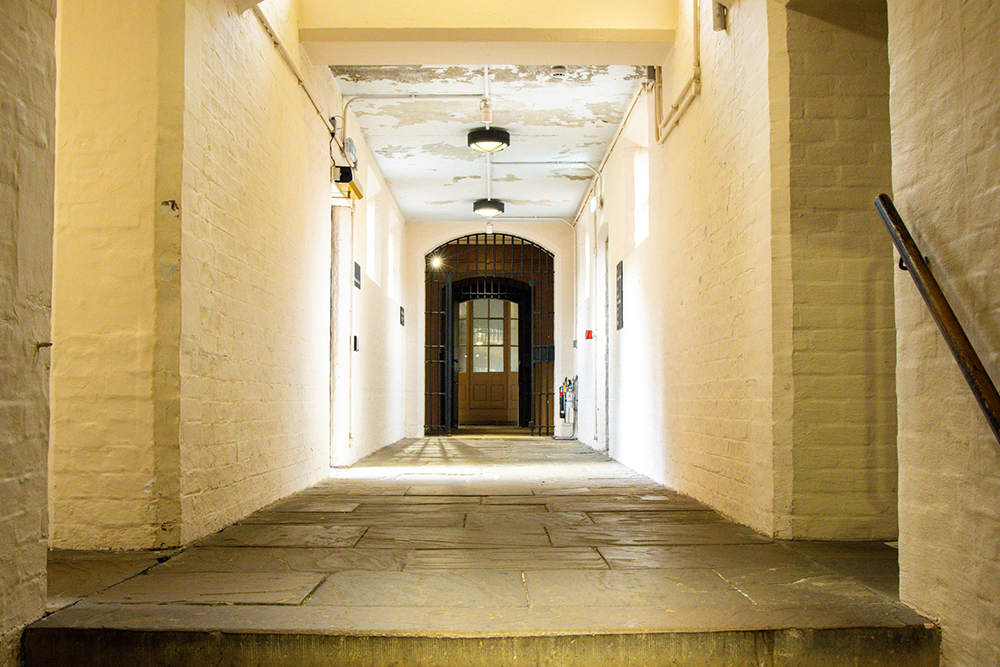
Locked in
Sir: Most prisons are awash with illegal drugs, much of which gets in via drones dropping off packages that can weigh up to 10kg (‘Criminal neglect’, 7 November). Prisoners can often choose from a menu of drugs and other contraband. The response from the prison service, the police, the National Crime Agency and the Ministry of Defence has been uncoordinated and desperately slow.
Just a handful of prisons have effective drug recovery programmes, and homeless addicts leaving prison are often back in jail within days of release.
In 2016 Dame Sally Coates produced a highly critical review of prison education. Depressingly, recent cuts of up to 50 per cent have led to even lower standards than she found ten years ago.
When Michael Howard said ‘prison works’, he was surely not envisaging jails in which organised crime bosses were making a fortune selling drugs in prison while being able to maintain their operations in the community. At a cost of £57,000 per prisoner a year, he certainly would not have expected to see untreated addicts spending their sentences taking drugs and lying on their beds watching daytime TV.
Prison is supposed to deter crime, protect the public, punish criminals and rehabilitate offenders. Despite the efforts of hard-working governors and their staff, many of the jails I inspect do none of these.
Charlie Taylor
HM Chief Inspector of Prisons
London W11
First out
Sir: The prison crisis, as Max Jeffery cogently points out, is worsening as a result of a misguided early-release policy. If prisoners are to be released early, surely the first out should be those least likely to reoffend – who have a home to go to, a means of financial support, and an existing support network. Not the fairest system but, in the circumstances, the most sensible.
Andrew Leslau
Henley Park, Oxfordshire
The problem of Trumpism
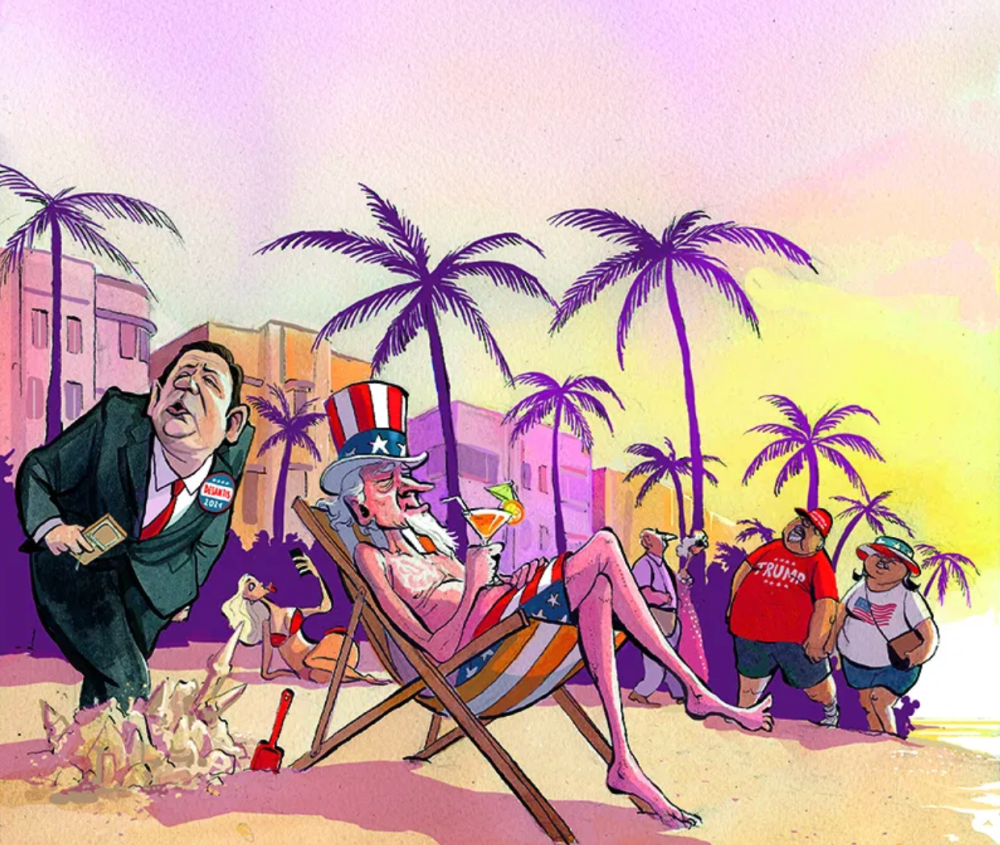
Sir: Freddy Gray may be right that America is tiring of Donald Trump (‘After Trump, the deluge’, 7 November), but confusing exhaustion with the man for rejection of his movement would be a mistake. Trump did not invent America’s anger at its political establishment, its economic anxieties or its distrust of institutions. He gave it a voice – albeit an increasingly incoherent one. Ron DeSantis may offer a sharper edge, Jon Ossoff a more reassuring smile. But neither offers a cure for the deeper disillusionment that has fuelled the past decade. Trump may be the problem of the moment. Trumpism is a problem that will outlast him.
Federico Forni
London SW15
Sculpted nature
Sir: Thank you for Luke Shore’s plea against the closure of Southwell Minster (‘Holy relic’, 7 November). Above all, its chapter house is a place of national importance. This Gothic treasury of sculpted nature is unique in Europe, dating from the turn of the 14th century, a brief period when English artists broke free of religious imagery and went into the wild. They were medieval Attenboroughs, revelling in a wonderland of trees, birds and above all leaves. They drip from every capital and cornice. Pevsner wrote an entire book on Southwell’s leaves. They simply must remain on view.
Simon Jenkins
Author of England’s Cathedrals
London W8
The Pope’s dilemma
Sir: Charles Moore questions the Pope’s wisdom in letting it be known that he voted in the US midterm elections (Notes, 7 November). As a fellow Catholic, so do I. What I would like to know is what the Pope’s advice is when having to choose between a politician whose secular policies he prefers, and another whose policies he dislikes except on questions such as abortion and birth control where they are consistent with Catholic teaching?
Did the Pope confront such dilemmas when deciding to vote against (presumably) the Republican candidate and, if so, how did he resolve them?
Richard Ritchie
London SW18
Frankfurt views
Sir: The Frankfurt School would not have endorsed the current mayhem on western university campuses (Leading article, 24 October). Max Horkheimer, one of its principal founders, wrote in 1967 that ‘being radical today means being conservative’. Theodor W. Adorno, for his part, would have called the police on today’s campus rioters, just as he did in 1968.
Markus Wagner
Vienna
Made in China
Sir: Martin Vander Weyer writes persuasively in favour of a protectionist approach to Chinese EVs (Any other business, 24 October). It has long been suspected that the Chinese government unfairly subsidises the manufacture of electric cars and, although many western governments also subsidise their domestic car industries in one way or another, the end result for UK consumers is that they can get hold of a Chinese EV for £5,000-£10,000 less than comparable western models. In effect, this is a large export of value from China to Britain. UK consumers benefit, and the consequences of joining ‘Made in Europe’ will clearly be to their detriment.
Dan Watkins
Kent
Salmon lives
Sir: I was amused to read Peter Fineman’s letter about seeing the name Courtenay Salmon in a fishing lodge visitors book (Letters, 31 October). I would like to reassure your readers that he does exist and was at school with my children.
Alexandra Elletson
Huish, Wiltshire




Comments