Latino voters played a decisive role in the 2026 midterm elections, sending an unequivocal message to leadership in both parties: their support is earned, not guaranteed.
“We may not always march, but we are the silent majority – and that is exactly what we demonstrated on Tuesday night,” said Maria Teresa Kumar, President and CEO of Voto Latino.
An analysis of voter trends by the New York Times found that Latino voters shifted 29 points toward Democrats between 2024 and 2026 – the largest movement of any major demographic group. The shift was even more pronounced among younger Latinos, who moved 43 points toward Democrats, and Latino men, who shifted 31 points.
In Texas, the change was especially visible along the southern border. In counties where Latinos make up at least 75 percent of the citizen voting-age population, the total number of votes increased 39.5 percent compared with the 2022 midterms, outpacing the statewide increase of 25.6 percent. Several heavily Latino border counties – including Starr, Zapata, Maverick, Hidalgo, Webb and Cameron – shifted between approximately 34 and 58 points toward Democrats compared with the 2024 Senate election.
Strategists, elected officials and community organizers across the political spectrum point to deep disappointment with the Trump administration’s handling of the economy and immigration enforcement as primary drivers of the unprecedented swing. But experts caution against viewing the outcome as a permanent partisan reorientation.
“The early analysis doesn’t mean that Latinos embraced Democrats as much as they were sending a strong message that the current path of the country is not sustainable,” said Erica Bernal-Martinez, CEO of the National Association of Latino Elected and Appointed Officials Educational Fund.

For many Latino families, economic pressures trumped ideological disputes. “Who is harmed most by increases in housing and energy costs?” asked Daniel Di Martino, a fellow at the Manhattan Institute. “It’s young people – and Hispanics more than almost any other group.”
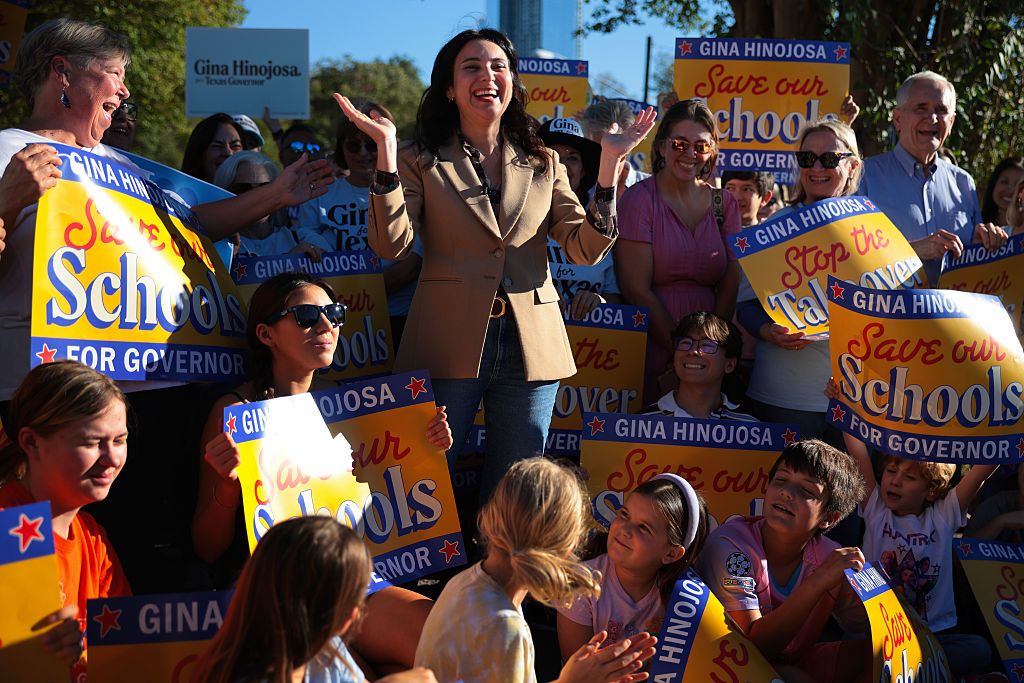
And for many Hispanics, job security is tightly linked to immigration enforcement tactics. Carlos Eduardo Espina, the billion-view social media influencer whose Spanish-language coverage amplified Democratic candidates such as Gina Hinojosa, James Talarico and Bobby Pulido among young voters, argued that the Trump administration squandered a major political opportunity.
“Donald Trump had a golden opportunity to secure the Latino vote for generations if he had focused strictly on popular border measures,” Espina noted. Instead, he argued, aggressive enforcement created a backlash.
Di Martino noted that among Hispanics, the President’s greatest achievement – border control – has been overshadowed by the handling of deportations. “He closed the border, but people forgot about it,” he said. “The main thing they remember is chaotic ICE enforcement that disrupted lives and dominated negative headlines.”
Espina added that the aggressive social media presentation of deportations made a mockery of mixed-status family separations. “Republicans could have won the Latino vote again this midterms. Instead, they took a different route – and voters punished them for it.”
The political fallout among Hispanics was seen on full display in South Texas. Mayra Flores, a former Republican US Representative for Texas’s 34th congressional district, said she was caught off guard by the margin of Republican losses in the Rio Grande Valley. “I expected us to lose ground in South Texas, but not by that kind of margin. That’s what really struck me,” she said.
Flores describes how though many of her district’s local voters and former supporters were in favor of border security and legal deportations, they strongly opposed how enforcement was executed. “A lot of ICE agents in South Texas were going directly into worksites,” she explained.
Those workplace actions created commercial fallout, according to Chuck Rocha, founder and President of Solidarity Strategies. Rocha recounted conversations with conservative small-business owners in construction who found themselves unable to complete projects due to labor shortages.
“They voted for Trump, but then couldn’t get workers to help build homes because everyone was terrified of ICE raids,” Rocha said. Business owners who voted for Trump were “being forced to shut down projects. Many said, ‘Now I can’t get any workers to actually help me build these homes… and I’m having to shut my business down. I’m voting Democrat because we can’t have this if I’m going to have my business.’”
In an interview with 60 Minutes that aired Sunday night, the President admitted that the deportation policy went too far. “I think it was too tough,” Trump said. “I think it might be too tough, yeah.”
Rocha’s firm invested over $20 million in Spanish-language advertising across key House, Senate and gubernatorial races. That strategy bore fruit in Texas’s 15th congressional district, where Democratic challenger Bobby Pulido unseated Republican incumbent Representative Monica de la Cruz – flipping a district redrawn in 2025 specifically to favor Republicans.
Despite the wins, Rocha warned Democrats against complacency, writing in a recent New York Times essay that voters did not return to the party out of blind loyalty.
For voter mobilization groups, the focus now turns to legislative results. Voto Latino, which has registered over 1.8 million young Latino voters nationwide, plans to ensure newly elected officials deliver on campaign promises.
“We have clear receipts on what these voters expect: accountability from ICE, realistic pathways to citizenship for their families and tangible economic relief,” Kumar said. “Democracy requires accountability for government overreach and injustice.”
Meanwhile, the Republican party sits at its own strategic crossroads. Flores warned that failing to listen to conservative Latino voices could cause lasting damage. “The Republican party has no future without Hispanics,” she said.
The election results coincide with President Trump’s decision to name Stephen Miller – a chief architect of his administration’s immigration agenda – as White House chief of staff, replacing Susie Wiles.
Kumar urged the administration to rethink the direction: “His worldview isn’t aligned with free and fair democratic leadership on the global stage. It harms local communities and jeopardizes American leadership abroad.”
While Flores expressed support for Miller – noting he had invested in her 2024 campaign and had always been respectful – others view the appointment as a signal that enforcement policies will not soften.
“I don’t know what they’re aiming for by placing radicals in such high positions,” Espina said.
“In Spanish, it’s called el voto del castigo,” the punishment. He explained the meaning, “We punish Republicans, basically, like, make them enter into reason about the stuff they’re doing wrong and recapacitate and kind of change direction. But instead, they’re doubling down. I don’t see how that ends up any better for them.”






Comments