
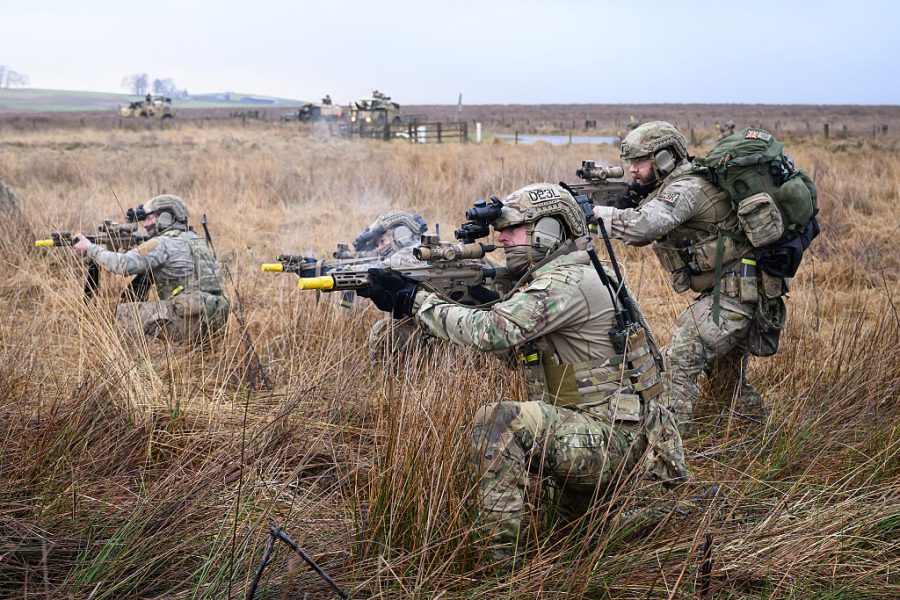
A French soldier was killed on Thursday evening in the Erbil region of Iraq. In announcing the death of chief warrant officer Arnaud Frion, President Emmanuel Macron said he ‘died for France…engaged in the fight against Daesh [Islamic State]’.
France has deployed hundreds of soldiers to Erbil – the Kurdistan region of Iraq – as part of an international coalition to fight Islamist terror groups. It is believed a French base was struck by a drone, killing Frion and wounding several other soldiers. ‘France stands with them and their loved ones,’ declared Macron in a social media post.
In the fortnight since America and Israel launched their attack on Iran, much has been said and written about the respective merits of France’s and Britain’s military. A headline in this week’s Daily Telegraph – regarded as the newspaper of the officer class – asked: ‘Britain spends billions more than France on defence, so why is the French military superior?’
For a military to be effective, it requires money, and it also requires morale
French military procurement – while not perfect – is more efficient than its neighbour’s and France still has a strong defence industry. When Macron was elected president in 2017 he soon fell out with the chief of his defence staff about the military budget. General Pierre de Villiers resigned when he learned Macron intended to slash military spending by €850 million (£733 million), saying if he remained he would not be able ‘to guarantee the protection of France and the French people’.
Macron got the message. Military spending has increased during his presidency and last year he announced plans for a further investment of more than €6.5 billion (£5.6 billion) over two years. The left were furious, claiming that the ‘increase will be at the expense of public services, thereby weakening social cohesion’.
For a military to be effective, it requires money, and it also requires morale, which is another reason why France’s military is now superior to Britain’s. It was disclosed this week that 242 former or serving members of Britain’s special forces are under legal investigation by human rights lawyers. The enquiries are connected to Special Air Service (SAS) and Special Boat Service (SBS) operations in Northern Ireland, Iraq, Afghanistan and Syria.
A former SAS officer told the Daily Mail that the mood within the regiment ‘is vociferous, everyone has had enough’. He added that ‘the American special forces guys sympathise and they’re also dismayed’.
France’s special forces are also dismayed. During the second world war, the SAS Brigade included two regiments of French soldiers which served under British command. France’s highly regarded equivalent of today’s SAS is the 1er Régiment de Parachutistes d’Infanterie de Marine; their motto is ‘Qui Ose Gagne’ – ‘Who Dares Win’, the motto of the SAS.
Earlier this year, a French magazine asked me to write an article about the British government’s witch-hunt against its veterans (which isn’t just confined to special forces). I quoted the seven former senior officers in the SAS who last year warned the government in a letter that they must ‘defend our defenders fairly, firmly, eyes open to war’s moral mess…a democracy that won’t back its warriors won’t long endure’.
A former member of the SBS who served in Iraq and Afghanistan confirmed to me that morale within the special forces has deteriorated. ‘The leaving rate has increased and the lads have asked the obvious questions regarding political/legal protection,’ he explained. ‘The answer appears to be less than certain and the atmosphere is a little awkward…because, as they say, it’s “not worth the risk”.’
I spoke to a serving officer in France’s special forces who expressed his incredulity at the treatment of British soldiers. He emphasised that allegations of the execution of civilians or prisoners, or the use of torture, should always be investigated and punished if there is conclusive proof of war crimes. But there is a difference, he said, between a war crime and what he called ‘war’s moral disorder’, where soldiers ‘often have to make decisions in a matter of seconds, under threat of death, with incomplete information, in a chaotic environment’.
There have been allegations of civilian deaths levelled at French soldiers serving in Africa in the last decade, accusations that stemmed from war’s moral disorder. It was the word of insurgents against the word of French soldiers. In such cases France – to paraphrase Emmanuel Macron – always stands with its soldiers.
The French special forces soldier told me that ‘in a democracy such as France, soldiers accept to risk their lives’. In exchange, he said, the state has a moral obligation ‘to protect them in the event of accusations related to the performance of their duties. This moral contract is at the heart of military loyalty and discipline.’
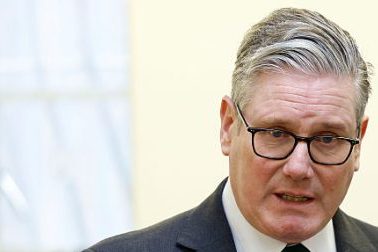
Keir Starmer’s government has broken this contract, and in doing so it has broken the morale of the British military.

Comments