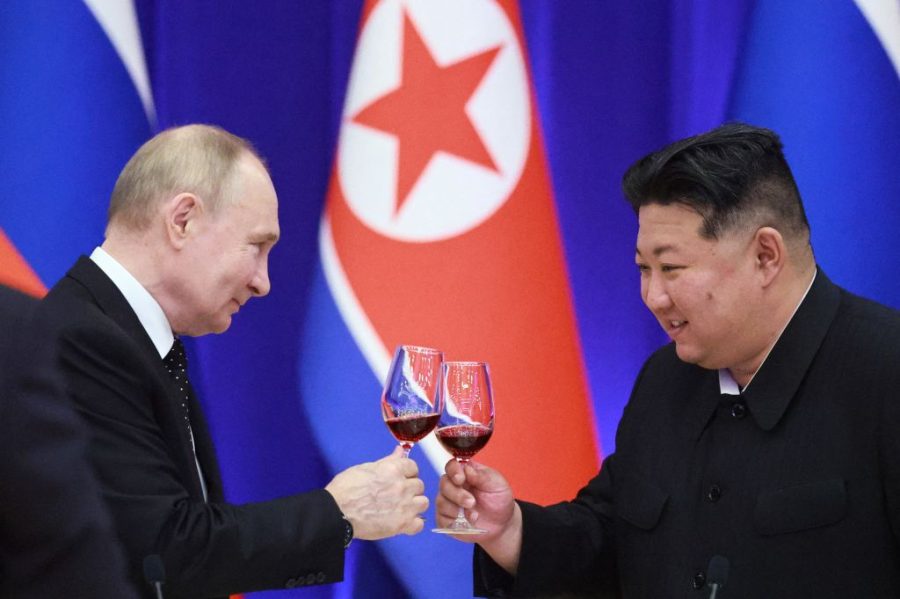
As Kim Jong-un himself announced at a New Year’s Eve event in Pyongyang, 2025 was an ‘unforgettable year’ for North Korea. During the final weekend of the year, the Supreme Leader supervised a ‘nuclear-capable’ long-range strategic cruise missile test, which he termed an ‘exercise of war deterrence’ against the ‘security threats’ facing Pyongyang.
The test followed a week of oily letters between Kim and his new best friend, none other than Vladimir Putin. The Russian leader lauded the ‘heroic dispatch’ of North Korean troops to assist Russia’s war against Ukraine as an example of the ‘militant fraternity’ between Pyongyang and Moscow. Even if dynamics in the Ukraine war change this year, the West cannot afford to overlook the mounting security threats the ties between these two ‘invincible’ allies present.
Seven years ago, Kim and Donald Trump were in the throes of exchanging what the US president infamously called ‘love letters’. Fast forward to 2026, and Putin has taken Trump’s place. In response to Putin’s missive, the North Korean leader gushed that Pyongyang’s relations with Moscow had become a ‘sincerest alliance of sharing blood, life, and death in the same trench’. It was a not-too-subtle reference to North Korea’s deployment of approximately 14,000 to 15,000 troops to the Kursk region, which, Kim added, would be ‘eternally recorded’ in the history books as a ‘great biography of the alliance’.
Moscow and Pyongyang know that developing a nuclear programme does not come cheap
To welcome the new year, Kim praised North Korean troops serving in Russia for ‘heroically’ preserving his country’s ‘dignity and honour’. Last year marked a significant juncture in Russia-North Korea relations, being the first time since Russia’s invasion of Ukraine that both countries referred to each other as ‘allies’.
Kim wants to keep his relations with a client who has so far sent over 12 million rounds of artillery, several hundred missiles, and troops, engineers, construction workers, and deminers to aid Russia’s war machine. At the same time, the North Korean leader’s quest for recognition as a de facto nuclear-armed state has intensified, in no small part owing to remuneration from Russia in the form of military and (likely) missile technology and, at the very least, knowledge. Only last week, Kim inspected factories producing short-range missiles and rockets. Slowing down missile and nuclear development, let alone denuclearising, is one New Year’s resolution the North Korean leader will not be making.
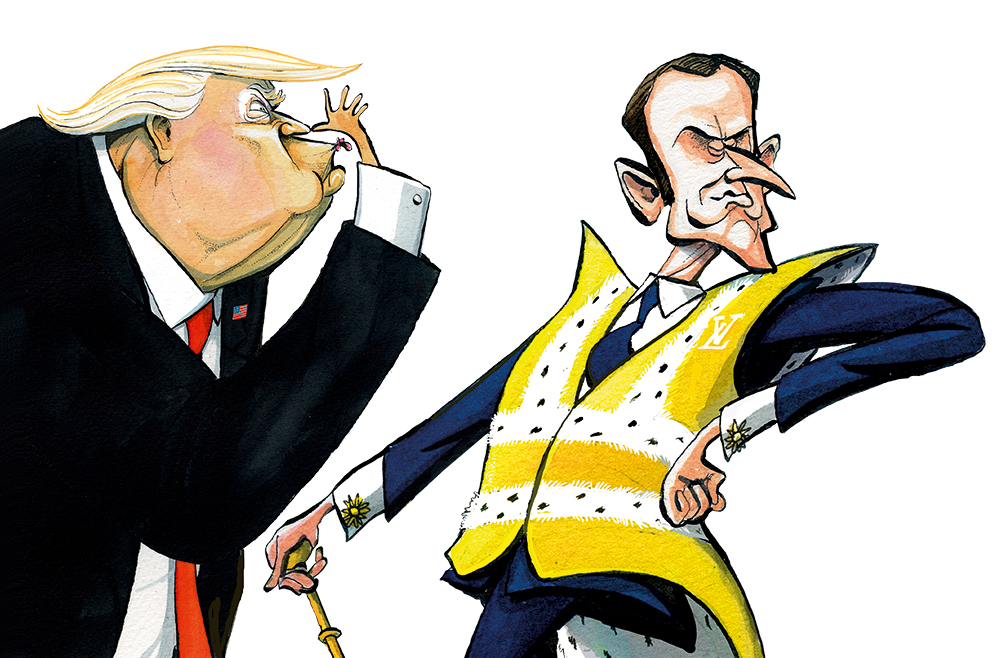
North Korea’s last nuclear test – its sixth – was in 2017. Only Kim can decide whether 2026 will see the long-awaited seventh test. On the one hand, there is no better time than the present. The impotence of the United Nations security council means that Pyongyang can escape sanctions-free. On the other hand, Kim may choose to hold off and, instead, pursue a meeting with Donald Trump to bolster the North Korean leader’s legitimacy, all the while offering vacuous concessions and persuading the man who offered to take him to a baseball game to give him and his country his much-craved recognition.
Trump and Kim failed to meet last October prior to the Asia-Pacific Economic Community (APEC) summit in Seoul. With the American president now focused on negotiating an increasingly elusive peace in Ukraine, a tête-à-tête with ‘Little Rocket Man’ may not be high on the White House’s agenda.
What we can be more certain about, however, is the widening and deepening cooperation between North Korea and Russia. Moscow’s end-of-year gift to Pyongyang of a portrait of Kim Yo-jong, the vitriolic sister of Kim Jong-un, was more than a mere gesture. Earlier in the year, Moscow pledged to bankroll films praising North Korean soldiers for ‘liberating’ the Kursk region, highlighting Moscow’s indebtedness to its Cold War client.
Both countries also know that developing a nuclear programme does not come cheap. Last year, North Korea stole over £2 billion in cryptocurrency, an increase of over 50 per cent from its earnings in 2024. With comparably fewer attacks last year (than in 2024), Pyongyang’s ability to steal exorbitant sums of cash through new means is only improving. North Korea may be known as a hermit kingdom, but when it comes to funding its weapons of mass destruction programme and filling the Supreme Leader’s slush fund, rapid adaptation is essential. We should not rule out Pyongyang cooperating with Moscow in the cyber domain.
As North Korea prepares for the year ahead, Kim will want to write the next chapter of his ‘great biography’ by strengthening ties with Russia. With Pyongyang underscoring its intention to deter Seoul, Washington, and their allies, the West cannot sit idly by. In Great Britain, one of our own New Year’s resolutions must be to show greater resolve in combatting these strengthening ties between Moscow, Pyongyang, and Beijing. The next time North Korea tests a ‘new’ missile or unveils a ‘new’ weapon, the prospect of Russian involvement in their design or creation is likely to be higher than before.
Before we combat these expanding threats, however, we must get our own house in order. As Keir Starmer, Yvette Cooper, and the Labour party try and patch over their initial praise for the return of Alaa Abd-el-Fattah to our shores, a worrying question remains. If Britain in 2026 openly embraces someone like him, how will it respond to Russia, North Korea, and China, who will do all they can to exploit Britain’s weaknesses?

Comments