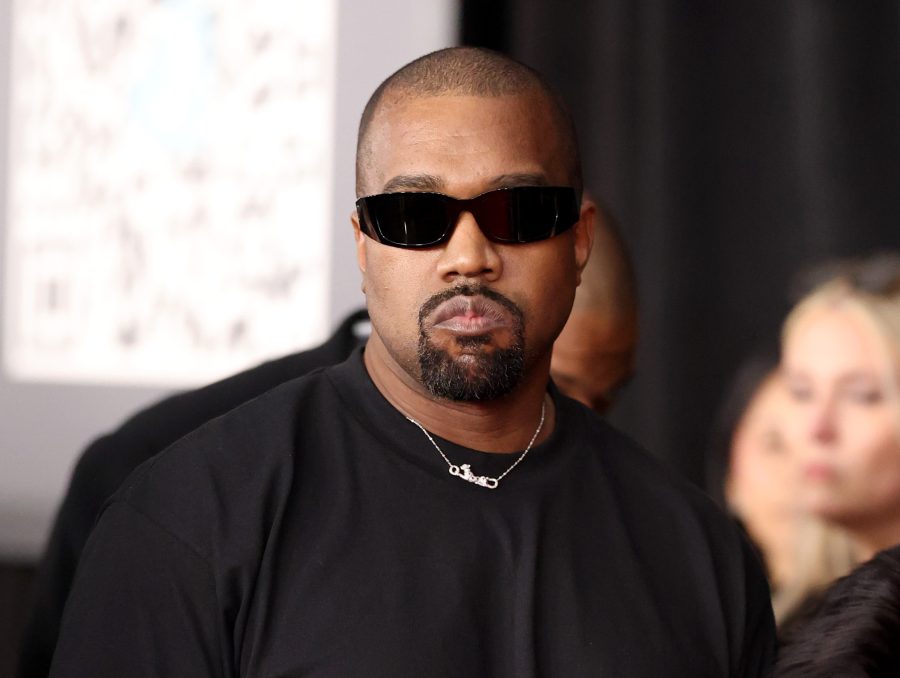
When one of the 21st century’s most acclaimed music artists takes out a full-page advertisement in the Wall Street Journal to apologize for his anti-Semitic behavior, deny that he is a Nazi and ask for understanding as he works on himself, what do we owe him? Mercy, punishment, or neither?
In his letter, titled “To Those I’ve Hurt,” Kanye West, now legally known as “Ye,” writes that he is “not a Nazi or an anti-Semite” and that he “loves Jewish people.” He attributes his anti-Semitic remarks, offensive use of Nazi symbolism and erratic conduct to an undiagnosed frontal-lobe injury from a 2002 car accident and to bipolar type-1 disorder that went largely untreated until recently.
Kanye describes how a four-month manic episode early last year “destroyed my life” and led him to make statements that he now deeply regrets. He frames his apology as part of a process of accountability and healing, saying he is committed to treatment, therapy, medication, and positive creative work, and asks for patience and understanding as he “find[s] my way home.”
This public letter follows a highly publicized meeting with Rabbi Yoshiyahu Yosef Pinto in November, where West sought forgiveness in person for his anti-Semitic remarks. “I feel really blessed to sit here and take accountability,” West said, clasping Pinto’s hands. He again attributed much of his behavior to his struggles with bipolar disorder and impulsivity.
Kanye’s illness explains much but justifies little
Together, the meeting and this letter form the latest chapter in a familiar sequence of scandal, apology and public reckoning for Kanye. If one were to compile a list of his anti-Semitic episodes over the years, it would fill this entire column. Just a few of the lowlights: in 2022, Kanye made posts that appeared to praise Hitler and deny aspects of the Holocaust; he later sold t-shirts bearing a swastika design. Last year, he released a song titled “Heil Hitler.” Each episode sparked predictable outrage and real consequences. Adidas, Balenciaga, GAP and CAA all severed ties with him, and his comments provoked a sustained backlash.

Following his initial outbursts, Kanye also issued a written apology in Hebrew on Instagram in December 2022. That apology, like so many celebrity confessions, was buried quickly in the constant churn of social media and offered little indication that genuine remorse had taken root.
Now Kanye’s full-page letter forms the latest peak of this cycle. This time the apology is not a caption under a photo but an extended, formal statement published in one of the world’s most influential newspapers. It is carefully worded, expansive and clearly crafted with the help of advisors. Yet, despite the reach and more formal nature of the apology, the question remains as to whether it is sincere.
Mental health is undeniably part of this story. Ye’s acknowledgment of his bipolar disorder and the way he connects it to episodes of mania and detachment from reality takes courage. It opens space for deeper conversation about illness. Those who have seen the manic energy behind his music know it fuels both his creative genius and his self-destruction. The world has watched a truly brutal illness take its toll on him.
But compassion is not the same as absolution. Illness may explain impulsivity; it does not fully explain, nor excuse, hatred. While we can contextualize Kanye’s manic outbursts and acknowledge his desire to take accountability, forgiveness demands more than an explanation.
There is a crucial difference between asking for forgiveness and earning it, between expressing regret and sustaining positive change. How many times can we accept the same apology? True contrition, like good art, has a consistency to it, a pattern that endures beyond a fleeting emotional moment.
Augustine wrote that forgiveness requires repentance, and Dostoevsky thought it required suffering. Kanye has gestured toward both, naming his struggles and linking them to genuine personal hardship. But repentance, like genius, is measured over time. His apologies feel like a loop – verse, chorus, verse – with no bridge. Even with his letter’s breadth and depth, it might be read as another iteration in a cycle of controversy.
In moments of apparent humility, when Kanye stands before a rabbi or writes directly to the public, we get a glimpse of his vulnerability. But the world has witnessed his oscillation between creative brilliance and furious self-destruction; words alone cannot undo the harm of repeated transgressions.
Kanye’s carefully constructed letter stands in stark contrast to his still-echoing hateful statements. We may read that he loves Jewish people and wants to make amends, but we cannot unread the animosity he has unleashed. The Jewish community, and other communities he has hurt, have suffered real consequences as a result of his words and actions. Such rhetoric cannot be overlooked, particularly now when anti-Semitic sentiment is rising dangerously.
In Jewish tradition, repentance (teshuva) is not a public relations exercise but a private, sustained, moral reckoning. It must be sincere to have weight. Ye’s letter may be a step on that path, but he has not reached its destination. What he demonstrates most clearly here is apology – but not true remorse. Only through consistent, long-term change can the communities Kanye has harmed begin to believe the words he now writes.
Kanye’s illness explains much but justifies little. If he wants forgiveness rather than mere acceptance, he must stop testing the limits of the world’s patience. If he can break that cycle – and the next scandal never comes – then perhaps we can forgive him. Until then, the music and the man must be heard separately – one brilliant, the other broken and too often destructive.




Comments