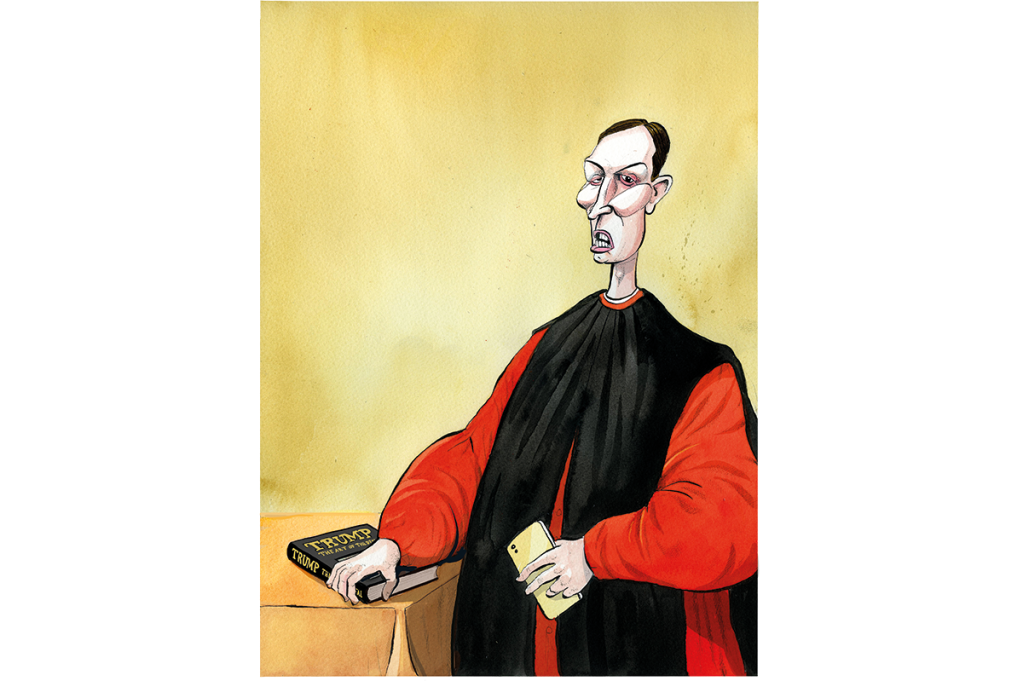
In 1998, the conservative intellectual and moralist Bill Bennett published a book, The Death of Outrage: Bill Clinton and the Assault on American Ideals. Bennett had to rush the book out after “I did not have sexual relations with that woman” changed to: “Indeed, I did have a relationship with Miss Lewinsky that was not appropriate.” But the Death of Outrage is almost too quaint a title to capture the age of Donald Trump, especially now that his son-in-law Jared Kushner is back as his closest foreign policy advisor.
Trump told reporters who questioned Kushner’s role: “I have Jared. Find anybody more capable.” Perhaps there really is no one better at diplomacy in the entire federal government, and beyond, but that still ignores Kushner’s seemingly in-your-face conflicts of interest. One minute, he’s twisting arms on behalf of the United States of America, the next, his hand is out to the very same people as a private businessman.
On December 2, he sat face-to-face with Vladimir Putin for a five-hour meeting in the Kremlin on Trump’s peace plan for Ukraine. As the Wall Street Journal had reported under the headline “Make Money Not War,” the idea was to turn a peace deal into opportunities for American companies. We must hope that won’t include Kushner’s own. But even if that’s not the case, his investment fund is awash with Saudi cash, and the Saudis work with Russia to fix oil prices on the world market. Kushner is a walking conflict of interest.
The Middle East is where the real problem lies. In effect, Kushner is back working as the special envoy to the region, a role he held during Trump’s first term – just without the West Wing office. His defining relationship in the Middle East is with Crown Prince Mohammed bin Salman, the ruler of Saudi Arabia. As is well-known, a few months after leaving the White House, Kushner got $2 billion of Saudi money for his private equity fund. This was the prince’s personal decision, a favor to his old friend Jared. MbS, as he’s known, was not the power he is today when Kushner and Trump arrived in the White House in 2016. They acquiesced when MbS won a vicious power struggle to replace the then-crown prince, Mohammed bin Nayef, at the time a seemingly indispensable American ally. They went along when MbS reportedly imprisoned some of the kingdom’s richest men in the Riyadh Ritz-Carlton and tortured them to reveal their hidden billions. The men’s families and human rights groups said they had been beaten, whipped, hung upside down and given electric shocks. The Saudi government denied it. Kushner and MbS texted back and forth. Trump was quoted as saying it was “insane” how often the two spoke. There were claims that Kushner fed intelligence from the President’s daily brief to MbS, to help him deal with his enemies. Kushner’s attorney denied it.
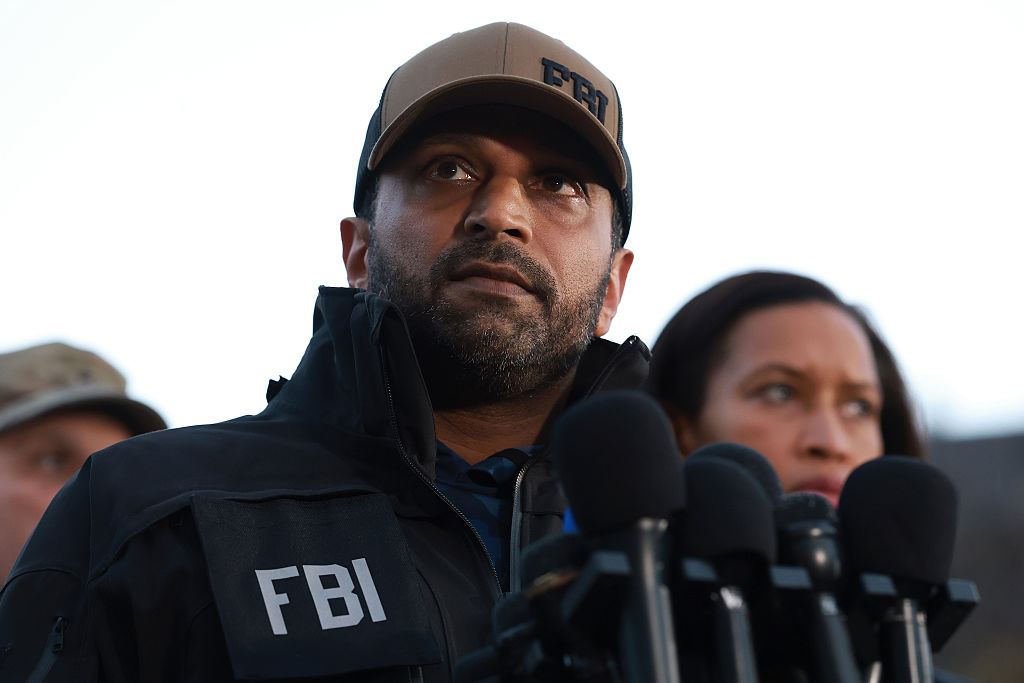
Then the dissident journalist Jamal Khashoggi was killed and MbS was widely accused of being responsible. He denies any involvement. Trump likes to cast doubt on whether MbS was to blame, but revelations by the CIA and Turkish intelligence were damning. MbS was said to have put one of his most trusted aides, Saud al-Qahtani, in charge of the operation to grab Khashoggi in Istanbul. Al-Qahtani ran the prince’s Twitter account, of all things – his nickname at court was “Mr. Hashtag.” He allegedly directed Khashoggi’s murder at the Saudi consulate in Istanbul over Skype and, after the journalist was suffocated, said: “Bring me the head of the dog.”
Khashoggi was dismembered, his body stuffed into five suitcases. MbS was apparently in constant contact, sending a dozen messages to his henchman. Human rights groups say al-Qahtani is MbS’s enforcer, a combination of secret policeman and torturer. He has never responded to these allegations, though before he was kicked off Twitter, he posted that he was “a faithful executor of the orders of my lord… the crown prince.”
Despite being told all this and more by the CIA, Kushner offered MbS advice on how to “weather the storm,” as the New York Times reported. The White House denied it, saying “Jared meticulously followed protocols” in dealing with MbS and other foreign officials. If he had been helping the Crown Prince, at least that could be defended as hard-headed realpolitik: it doesn’t matter if we like the Saudi regime, we need it. It would have been less hypocritical than Joe Biden’s approach: calling MbS a “pariah” on the campaign trail, then fist-bumping him as president when he wanted the oil spigots opened.
But the US national interest is one thing, the interest of the Trump family is another. The committee of advisors for Saudi Arabia’s sovereign wealth fund told MbS not to give money to Kushner. He was a bad bet: he didn’t have the experience to manage such a large amount of money. An investigation by the Senate Finance Committee found that, as of last year, the Saudis had received zero return on their investment, not a cent.
It was astonishing how little astonishment this arrangement caused. Most just shrugged. One exception was former New Jersey governor Chris Christie, whose magnificent indictment of this epic self-dealing is worth revisiting now that Trump is once again dispatching Kushner to the region. In 2023, Christie alleged that the whole point of sending Kushner instead of a secretary of state was so he could “cash in on those relationships when he left the office.” Had Kushner received the $2 billion because “he’s some kind of investing genius” – or was it because he had been doing favors for the Saudis “while sitting next to the President for four years?” The US had become a banana republic, he said. “The grift from this family is breathtaking. It’s breathtaking.”
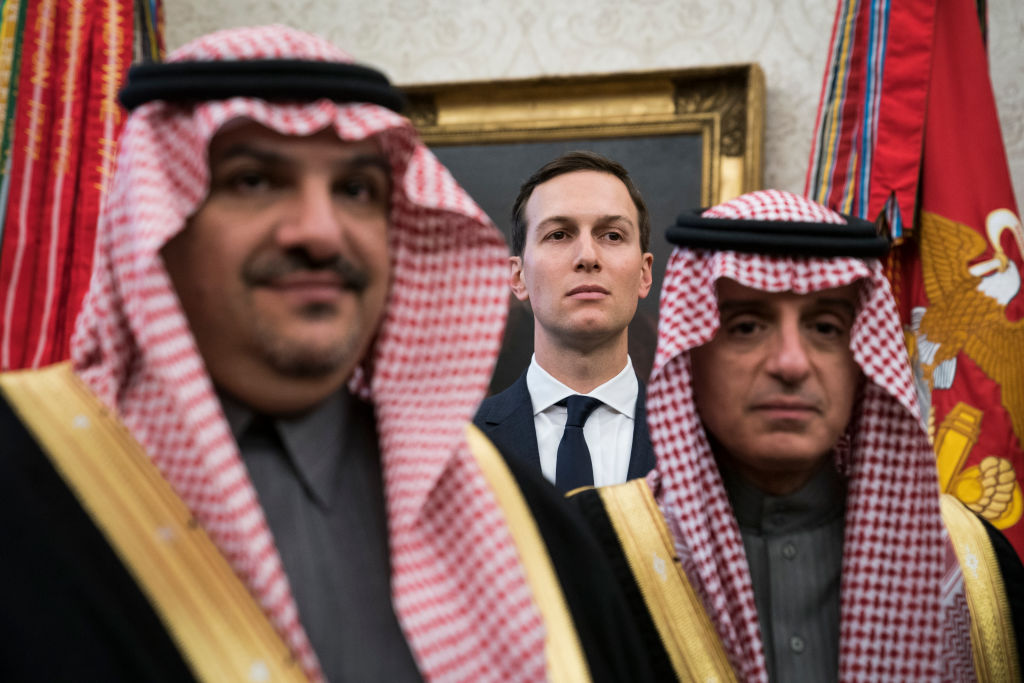
More cash has poured in, including another billion-and-a-half from Qatar and the United Arab Emirates. The fund now stands at $4.8 billion, most of it from the Gulf monarchies, and Kushner gets up to 1.25 percent a year to manage it. It may be historically unprecedented for the President’s son-in-law to take tens of millions in guaranteed fees every year from foreign autocracies while shaping US policy toward them. So far, he’s personally received $157 million in fees from foreign governments, $87 million from Saudi Arabia alone, according to the Senate Finance Committee. The chairman, Senator Ron Wyden, called it “a compensation scheme designed to circumvent the Foreign Agents Registration Act.” He’s a Democrat, and partisan, but that doesn’t mean he’s wrong. MbS has denied reports of boasting that Kushner is “in his pocket.” A spokesman for Kushner’s lawyer said some media stories were “so obviously false and ridiculous that they merit no response.” And Kushner has never directly addressed the fact that, so far, he has generated no returns for his investors. After all, he’s still a private citizen, not a government official. He did tell the New York Times that he’d been slow to deploy capital because of “market conditions.” He said that calls from Democrats for a special prosecutor were a “silly political stunt.” Still, for both Kushner and MbS, this remains a friendship with benefits.
It would be churlish to ignore Kushner’s – and Trump’s – successes where others have failed in the Middle East. In the first term, the Abraham Accords brought peace between Israel and Arab states, including Bahrain and the United Arab Emirates. Perhaps there’s something to the story that Kushner was being tutored by that master of realpolitik, Henry Kissinger. Now there’s the Gaza ceasefire, and the prospect of Saudi Arabia joining the Accords, even of a Palestinian state and a permanent settlement of the conflict with Israel.
That would mean the chance to rebuild what Kushner calls Gaza’s valuable “waterfront real estate.” It may end up costing at least $50 billion: Saudi, Emirati and Qatari money, funneled through Israeli companies – the kind of thing that Kushner’s fund already excels at doing. He told CBS’s 60 Minutes: “What people call conflicts of interest, Steve and I call experience and trusted relationships.”
This is the Kushner Doctrine: a deal can always be done, if the price is right. What’s good for the US is good for the Trump family, and vice versa. It’s not surprising that Trump and Kushner are so close to the Gulf Arab monarchies. Trump’s former attorney, Michael Cohen, once said Trump admired Vladimir Putin because he ran Russia like a private company, skimming off the top of the national income. The Gulf royals don’t have to skim: it’s Saudi Arabia, named after the Saud dynasty. They don’t have to explain themselves to anyone, at least domestically, and they’re not going anywhere. The whole country is a family business. Trump can only dream of that. So he’s making money while he can. Gone is the reluctant agreement from the first term that there would be “no foreign deals.” If a foreign government wants to pay Trump, they can simply buy his meme coin, akin to a Ponzi scheme that may already have made the Trump family a billion dollars. Or they can offer to build a Trump tower. Vietnamese officials noted the “special attention” given “personally by President Trump” when the Trump Organization applied to build a luxury resort there. After permission was granted, Vietnam’s 46 percent tariff was – coincidentally – cut to 20 percent.
And if you want to build with Trump, Jared’s fund is the perfect vehicle. An Emirati investor put up $500 million for Kushner to build a Trump hotel in the Serbian capital, Belgrade. The hotel will be on the site of the old Yugoslav Army headquarters, bombed by NATO in 1999, a historic and sensitive location. The Serbian parliament rushed through a bill to allow it, something scarcely imaginable for any investor who isn’t the US President’s son-in-law.
Trump himself may be the beneficiary of deals worth billions just in the past year of this administration. Forbes says Kushner became a billionaire after leaving the first Trump White House. It’s like something in post-colonial Africa or a newly liberated Soviet republic – there have never been business dealings by the first family on this scale under any US president.
As Bennett said in The Death of Outrage: “The Commander-in-Chief sets the moral tone of the nation.” President Trump has normalized so much – “Quiet, Piggy!” – that Kushner openly monetizing US diplomatic relationships is just business as usual, not influence-peddling and a brazen disregard for ethical standards. As Bennett wrote about Clinton, Trump and Kushner are “immune to shame.”
This article was originally published in The Spectator’s December 22, 2025 World edition.


Comments