The Roman god Janus is about to play his annual trick on us. 31 December, the last day of the year, will be followed by 1 January, the first day of the year. We’ve ended up right back where we started. Frustrating, but at the same time reassuring.
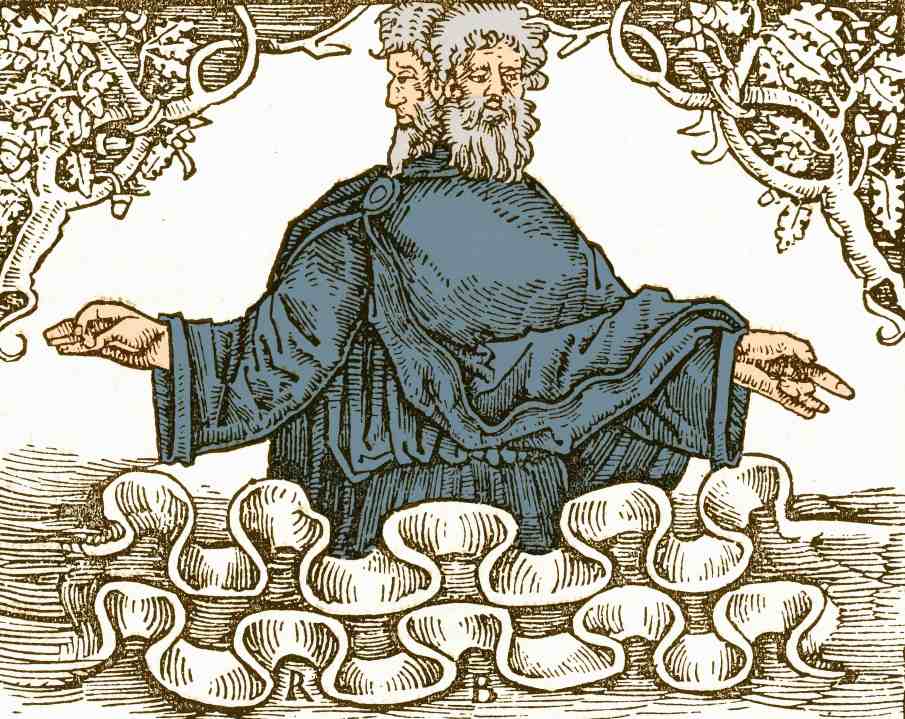
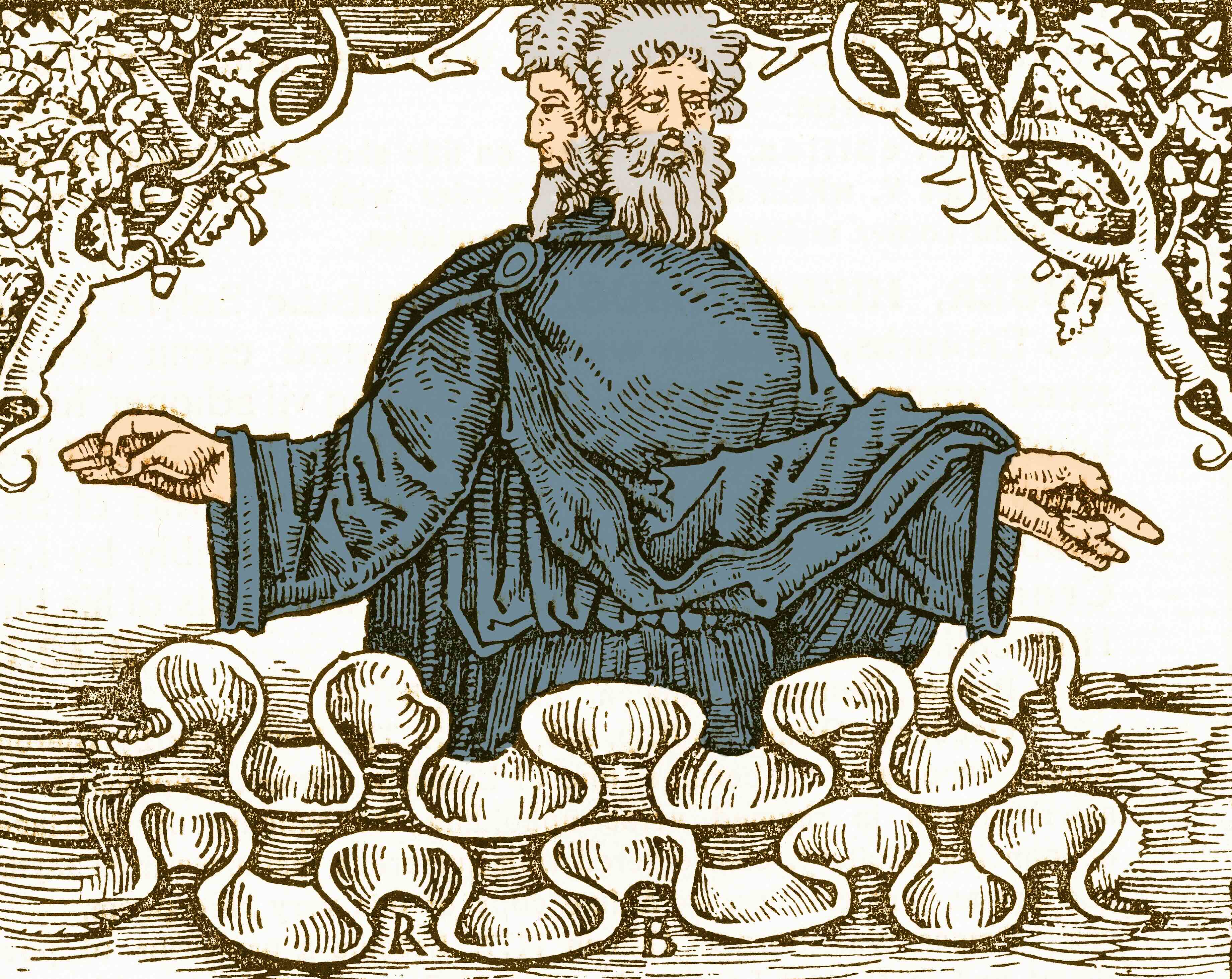
Janus, after whom the new month is named, was always pictured with two faces, one looking forward, the other back. He is the god of both beginnings and endings. The notion of returning to 1 January has always bothered me slightly, as though all that effort last year was for naught. Indeed the fact that each day of the year is a ‘copy’ of all the equivalent days in previous years seems troublesome too. It’s the only reason we can have birthdays, of course, and wedding anniversaries and Halloween and all the rest – but still, a little groundhoggy.
I like the idea of numbering the days that pass, with the number always going up. Start it whenever you like, maybe backdating it to year zero in the calendar we use now, although that risks igniting the old debate about why there wasn’t a year zero, why it went straight from 1 BC to 1 AD. But wherever we start, each day would have a different number. Say you’d been born on day 685,374, and it was now 703,281, you would have a sense of how much life you’d lived. A lifetime of 80 years is just under 30,000 days.
Of course I’m not being serious. Not only would the maths get tricky, but each year being the same as the last is a symbol of the seasons, of the eternal truths of life, of the cyclical nature of our existence. As T.S. Eliot said in the Four Quartets: ‘In my beginning is my end … We shall not cease from exploration / And the end of all our exploring / Will be to arrive where we started / And know the place for the first time.’ Many of the men who walked on the Moon said that, as great as the experience was, the most mind-blowing moment was looking back at Earth. It made them appreciate their home.
Life keeps throwing you back towards the start. Shakespeare knew, with his seven ages of man, the ‘big manly voice turning again toward childish treble’. Older people might not remember what they had for breakfast, but they can remember the noise the hinge on the back door made when they were five.
Janus is there when we become a parent – you’re looking forward to beginning the new adventure, but also remembering your own childhood. Reliving it, in fact – that child is physically part of you, half of its genes being yours. Chances are that some of your child’s traits will remind you of your own, possibly making you re-evaluate them. Sometimes the process can be profound, sometimes it just makes you laugh. As Karl Marx pointed out: ‘History repeats itself, the first time as tragedy, the second time as farce.’ That’s one of the things I love most about getting older – you just don’t take life as seriously.
Life keeps throwing you back towards the start. Older people might not remember what they had for breakfast, but they can remember the noise the hinge on the back door made when they were five
The messiness of parenthood was highlighted by Philip Larkin, with his poem ‘This Be The Verse’ and its famous first line about what your mum and dad do to you. But less well-known is the poem’s ending: ‘Man hands on misery to man. / It deepens like a coastal shelf. / Get out as early as you can, / And don’t have any kids yourself.’ A typically cheery contribution from Larkin. But even though Old Grumpy Chops obeyed the last instruction (never becoming a father), he couldn’t bring himself to obey the one before that: he didn’t take his own life. Very few people do, compared with the number who think about it. The same genes that kept themselves alive by giving us the urge to have a child also keep themselves alive by making it so hard to end it all.
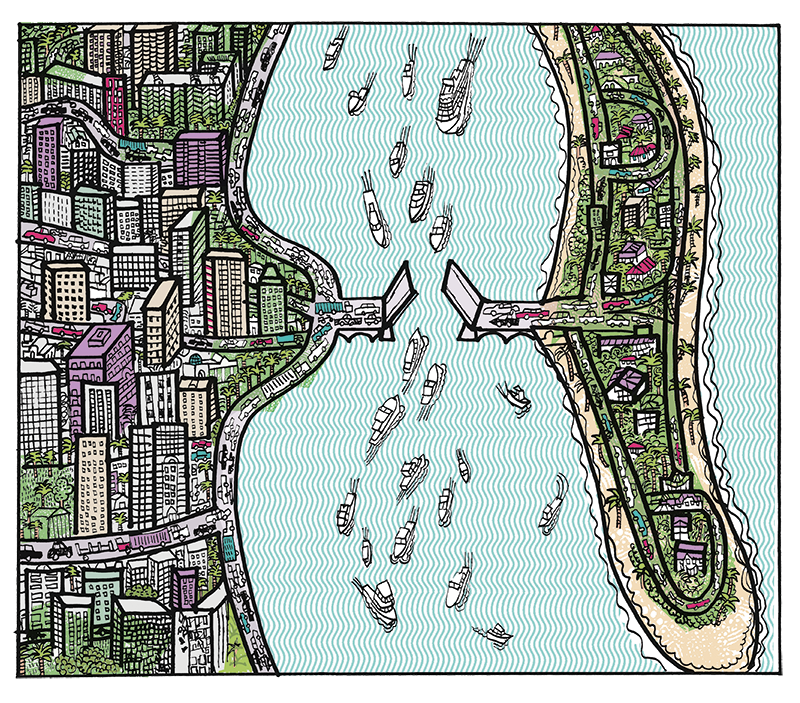
Janus should also be the god of the Bering Strait, that little stretch of water separating Russia from America. On the map the two countries seem as far apart as it’s possible to be, the very definition of east and west. But of course in reality they meet ‘round the back’, another case of getting to the end only to find yourself at the beginning. The strait is home to two islands, Big Diomede (owned by Russia) and Little Diomede (owned by America). They’re only two miles apart, but the international date line runs between them, meaning that Big is 21 hours ahead of Little. Because of this they’re nicknamed ‘Tomorrow Island’ and ‘Yesterday Island’. Just like the first day of the year being next to the last.
I’d always assumed that Janus was female, partly because the only other one I’d heard of was the actress Samantha Janus, but also because, by looking forwards and backwards, the god is doing two things at once, something we men find tricky. (These days I struggle to do one thing at once.) But no, Janus is masculine, his name literally meaning ‘door’, as in the thing that helps us pass from the old to the new. That’s also where we get the word ‘janitor’.
So this New Year’s Eve, raise a glass to the god who takes you right back to the beginning. In the coming year you’re going to visit new places, have new experiences, meet new people. And then when it’s all over, you’re going to meet Janus, yet again.



Comments