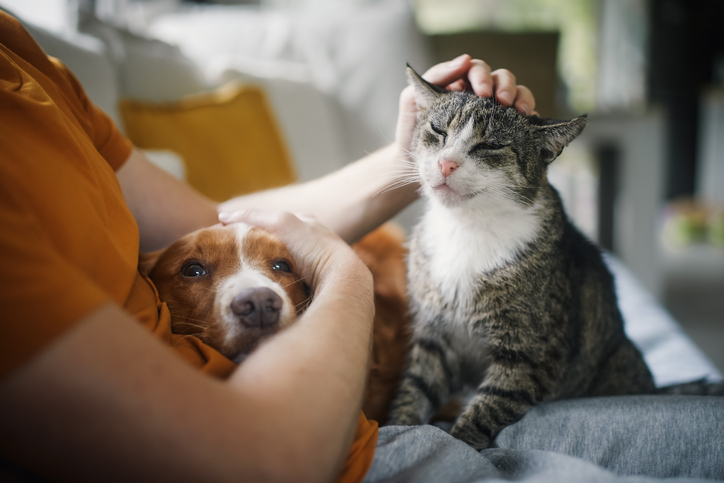
When a pet dies, grief doesn’t arrive alone. It brings with it an awkward entourage: embarrassment, self-consciousness, the creeping suspicion that our sorrow might look disproportionate or self indulgent. So we lower our voices when we speak of our loss. We apologise for being ‘silly’. We add the expected caveat: I know it’s not the same as losing a person.
But the truth resists such polite disclaimers: when a pet dies, the pain can be at least as sharp as that of any human bereavement. In a new study of 975 British adults, among those who had lost both a pet and a person close to them, more than one in five said the death of their pet was the most distressing loss they had ever experienced.
The researchers suggest that medical guidelines on extreme grief need to catch up with this reality. People mourning pets can develop prolonged grief disorder – a state of enduring anguish that doesn’t politely fade after a few weeks. For some, the loss reverberates through months or even years, echoing with an intensity comparable to losing a partner or family member.
To lose such a presence is to lose a rare experience of being accepted without negotiation
Yet grief for pets is often minimised or dismissed. Previous studies show that bereaved pet owners frequently feel embarrassed or invalidated, a phenomenon known as ‘disenfranchised grief’. But this response reveals a misunderstanding – not of grief, but of love. Because what we share with our pets is not a lesser bond. It is, in many ways, a purer one.
We form a uniquely deep connection with our pets. They offer constant companionship and unconditional affection, free from judgement. Human relationships, however profound or loving, are inevitably tangled with compromise, misunderstanding and acts of selfishness.

Pets, by contrast, come without small print. They do not care about our careers, our social awkwardness or our political views. Whether we’ve triumphed magnificently or merely survived the day, they greet us with the same undiluted joy. To lose such a presence is to lose a rare experience of being accepted without negotiation – something more often associated with childhood, or perhaps with god’s grace.
Pets, particularly dogs, also occupy an enormous physical space. They are there when we wake, there when we return home, there beside us on walks. They become a constant, shadow-like presence, so their absence leaves a vast and devastating void, felt in every ordinary moment. Suddenly, it is a silence that follows us from room to room.
Then there is guilt, the most corrosive companion to grief. When a person dies, we can usually take some comfort in knowing the death was neither our fault nor our choice. With pets, the situation is often more complicated. Many owners must make the decision to euthanise a beloved animal out of mercy. Even when it is clearly the kindest option, the decision can haunt them. Did they wait too long? Or not long enough?
Pet grief is socially awkward in a way human grief rarely is. There are established rituals for mourning people: funerals, condolence cards, casseroles left at the door. There is shared language to hold the weight. When a pet dies, however, there is often an unspoken shrug from others: sad, yes – but it was just a dog.That word – ‘just’ – lands like a dismissal of love itself.
I still remember when our cavalier King Charles spaniel, Barnaby, passed away more than ten years ago. For weeks, life felt not only unbearable but absurd without his luminous, tail-wagging presence – a presence that had quietly anchored 12 years of ordinary days. For months, every dog on the street reopened the wound. It took over a year to fully accept he was gone. And when we eventually welcomed another dog, Harry, that new beginning initially tore at the old grief rather than soothing it.
None of this is to suggest that grief should be ranked on some macabre league table of suffering. Grief does not submit to neat hierarchies. I have lost pets. I have lost people. I feel no need to elevate one pain above another.
But when a pet dies, we are reminded not only of mortality but also of dependence – of how much emotional stability we entrusted, quietly and without ceremony, to a being who asked for almost nothing in return. If that loss devastates us, it is not because our priorities are confused. It is because we have glimpsed, perhaps with painful clarity, what it means to be loved without condition – and what it costs when that love disappears.


Comments