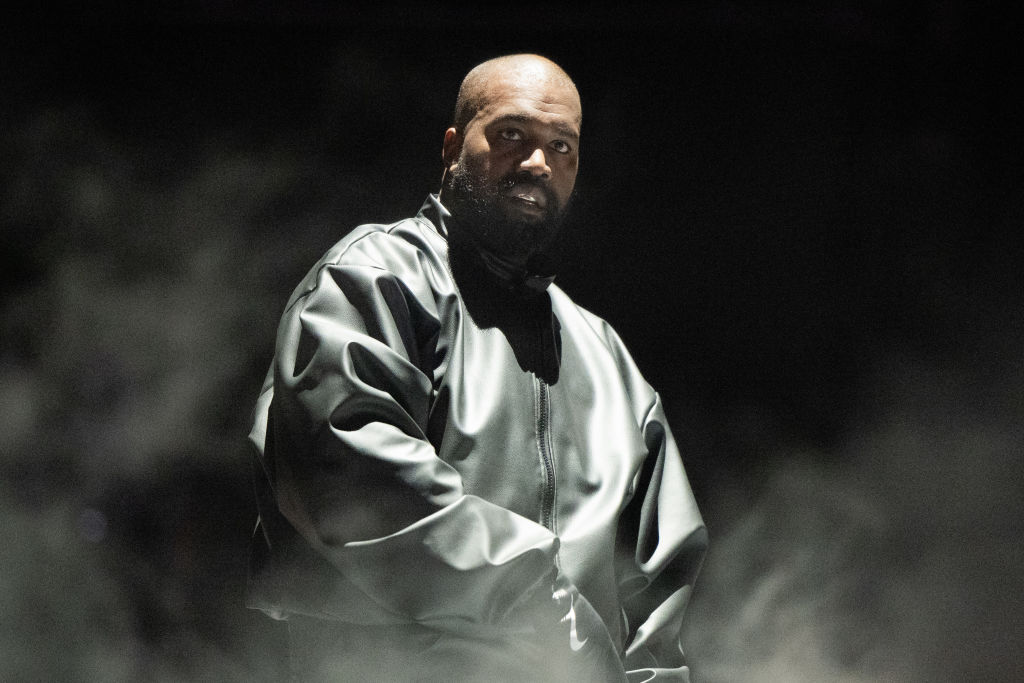
Kanye “Ye” West has been barred from appearing at London’s Wireless Festival by dint of having his temporary visa withdrawn. The move has generally been met with approval, save by those disappointed fans of his music whose pre-ordered tickets will now be refunded. “Kanye West should never have been invited to headline Wireless,” said Prime Minister Keir Starmer. “This government stands firmly with the Jewish community, and we will not stop in our fight to confront and defeat the poison of antisemitism.”
Fair enough, many might say. Last year Ye released a single entitled “HH” (Heil Hitler) and declared himself a Nazi on social media. Ye has now made a series of groveling public apologies. But it has been noted that these apologies – made via a full-page advertisement in the Wall Street Journal and in various statements expressing his desires to “reach out” to the Jewish community – read a lot like previous apologies that he made, most recently in 2023. Sincerity might therefore be absent from them.
Still, if Ye is taking cues from anyone, it’s a dead white man from South London. David Bowie’s ability to reinvent himself – both in terms of music and public image – blazed a trail that many others, including the artist formerly known as Kanye, have followed.
Bowie’s public reputation stands as high as it ever has a decade after his death from liver cancer. He won millions of followers by refusing to give into pressure to “give the fans what they want,” instead finding a position outside the mainstream that could be frustrating, confusing and intoxicating – often all at the same time. Bowie allowed the fanbase to come to him, in time, rather than vice versa.
Fifty years ago, Bowie also faced his own Nazi-related controversy, which doubtless would have been the end of his career had he made similar remarks today. He said in a Rolling Stone interview to promote his Station to Station album that “I believe very strongly in fascism” and “Adolf Hitler was one of the first rock stars …[he was] as good as Jagger at working an audience.”. This statement in isolation may not have been as incendiary, or blunt, as Ye’s remarks, but it followed on from a press conference that Bowie gave in Stockholm in early 1976 when he declared, “As I see it, I am the only alternative for the premier in England. I believe Britain could benefit from a fascist leader. After all, fascism is really nationalism.”
And when Bowie arrived back at London Victoria station in in May 1976, he directed what might – or might not – have been a Nazi salute to his waiting fans from a waiting Mercedes (of all inappropriate vehicles). Some waiting photographers took and distributed the damning image. At a time before both crisis PR and social media, Bowie’s sensible solution was to keep quiet, before giving another interview a few years later where he said he had been “out of my mind totally, completely crazed” on drugs and saying that, while he understand the accusations of racism “quite inevitably and rightly” leveled at him, they were unjust. In other words: nothing to see here, let’s move along. Such was Bowie’s standing with the music press that they were quite willing to take him at his word.
It is unlikely that Bowie was a paid-up fascist Instead, as the result of too much cocaine, self-aggrandizement and a desire to push boundaries, he said some remarkably provocative things that had the desired effect in terms of creating a “Bowie myth.” So it has been with Kanye, who is regarded, in some circles, every bit as significant a figure in hip-hop and rap music as Bowie was in art-rock.
He has always been a polarizing artist, even before the recent eruption in controversy. The creation of this audience-baiting Ye character – surely as much a persona as Bowie’s icily fascist Thin White Duke – might have worked a little too well, given that there now seems to be little if anything to choose between him and his creator.
To call Kanye West “the David Bowie of his age” is not a lazy comparison, but a real understanding of two men who sought to challenge and provoke, and, when they got it wrong, got it spectacularly wrong. Bowie ended his life beloved, a secular saint of sorts, with his previous wrongdoing all but forgiven. Who knows if the same fate awaits Ye?






Comments