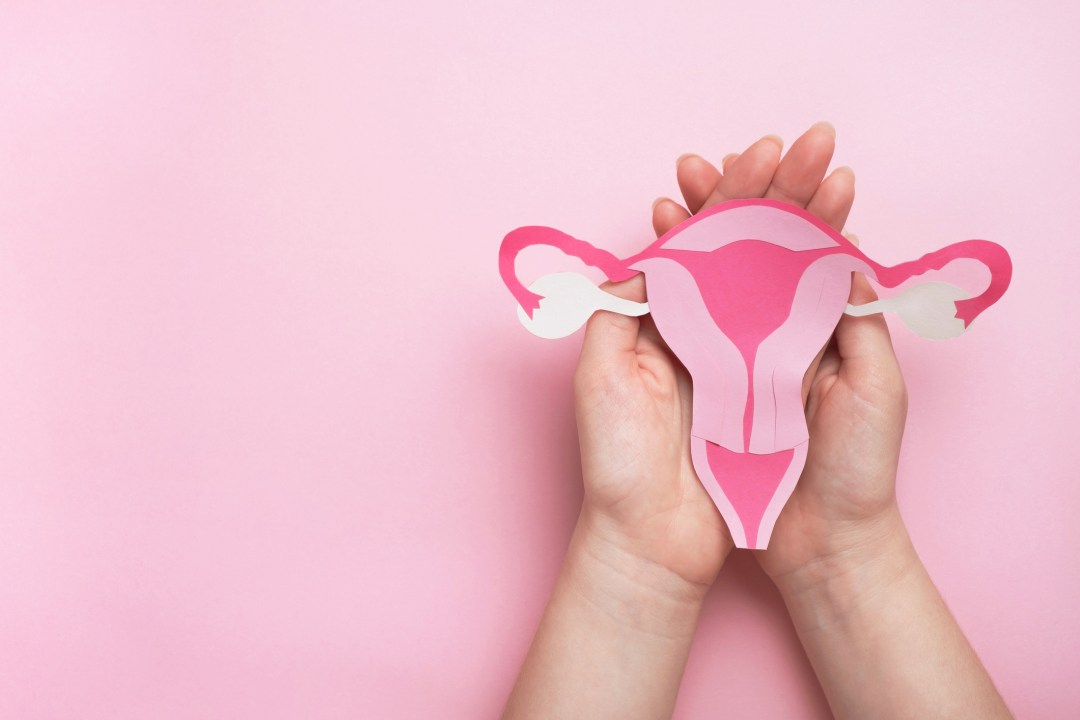
I was born in London in 1982 and my parents were neither hippies nor part of the Women’s Liberation Movement. As a result, frank talk about body parts, functions and sexual development was generally non-existent. The arrival of my period was not something I remember having any feelings about whatsoever, and it certainly wasn’t something the womenfolk in my family celebrated. Hormones were rarely invoked in the culture more widely apart from in a general ‘raging’ way to explain the wildness of teens.
Flash forward 40 years and the cultural tides have turned in quite a startling way. Now it often feels like women talk about nothing but their periods, or the dwindling thereof. Menopause is the giant in the manger – albeit one with a sizeable body of proper science around it. Just last week, scientists from Cambridge released data about the loss of grey matter during menopause and the possible link to increased female vulnerability to Alzheimer’s disease and dementia.
But proper data is not really where the lady-hormone vibe is at for the under-fifties. Instagram is full of reels about ‘seed-cycling’ – which literally means eating different seeds according to which stage of your ‘cycle’ you are in: follicular (the fertile bit before the blood), menstrual (the blood, out comes the egg), luteal (post egg-release, after the blood). It seems to be women in their twenties who are most obsessed with this practice and it is my belief they should step away from the ground flaxseed and get out more.
Meanwhile, there is an increasing drive to make menstruation-related discomfort a reason to get off work. This is called ‘menstrual leave’ and, one imagines, could well be used by lasses in situations of bad hangovers, who do not actually suffer from (relatively rare) crippling period pain nor the shocking (and rare) period-related psychosis for which this kind of leave was intended.
If the trend among younger ladies is towards a cycle-eyed view of the world, then for women over 40 but under 55, the prism has become entirely perimenopausal. The perimenopause defines us and explains everything. It is acceptable to seek to connect with strangers at parties over which state of perimenopausal dishevelment – physical and mental – they too are in. There is meant to be a kind of sisterhood of suffering, suggesting that ‘peri’, as it’s fondly called, is both a hormonal disability and a badge of feminine pride. Mature, professional, balancing-the-world-on-her-shoulders women are perimenopausal, OK? They will have mood swings, hot flashes, night sweats, depression and a brave sense of ‘Fuck it!’.
The We Do Not Care Club, a mostly American sisterhood of millions of women defined as ‘perimenopausal, menopausal, and post-menopausal’, has the fascinating mission statement of ‘putting the world on notice that we simply do not care much any more’. These ladies boast that they wear sweatpants and glasses, won’t always pluck their chin hairs and won’t care when men insult or appraise their bodies.
It’s meant to be feminist to speak plainly about women’s health… but one begins to suspect a bit of regression
‘Are perimenopausal teachers getting enough support in schools?’ wondered Tes, formerly the Times Educational Supplement, recently. What, might you ask, actually is perimenopause? The technical definition is: the phase between a woman’s regular period era and her menopause. Not very technical, really. Rather, it’s a liminal phase. The beginning of an end. A murky hinterland of hormonal drawing-down. It is a period of hormonal fluctuation. Oestrogen goes up and down. This is about as nondescript a state of flux, and of being, as there must surely be on God’s great earth.
Which is why the discourse about perimenopause is sprawling. There is even a discourse about how big the discourse is, with psychologists writing about how many women in their mid-thirties are already trembling and fearful with self-diagnosis of alleged possible symptoms of the omni-symptomatic hormonal flux instead of getting on with their lives and enjoying their youth.
Well, for a whispery cadre of 40-something women like me and my friends, there is a sense that – for all that we are meant to be in the eye of the storm – perimenopause is perhaps more of an excuse than a real thing.
Some of us even go so far as to doubt its existence. Something that vague and shape-shifting sets off alarm bells among those of us who prefer our sources of medico-sexual complaint to have firmer outlines.
There is also a feeling that the ambient insistence on perimenopause defining and interfering not just with temperature regulation and mood, but also the intellectual clarity (‘brain fog’) of women who are just reaching their professional peak is a bit insulting.
It’s meant to be feminist to speak plainly about the realities of women’s health and experience, but when feminism mainly takes the form of chalking our every mood and thought glitch down to our tempestuous bodies and their ‘clouded meanings’ – as the feminist poet Adrienne Rich put it – then one begins to suspect a bit of regression. I’d like to think my lady friends and I are as capable as any given 43-year-old man of thinking critically and logically. Yet Queen Peri, as she is referred to online, would say otherwise.
Does perimenopause even exist? Perhaps, in the sense that all sorts of things exist if you define them as states of flux causing various effects. Is it a useful heuristic for what happens to women once they hit 40? Not unless you are desperate for a baroque, medicalised explanation for the ups and downs of life. Women of 40 and above know what’s what and suffer fools far less gladly than before. This would create disturbance in any sentient, sensitive, mature adult. Surely, sweeping it into Mary Poppins’s handbag of women’s hormonal states is as infantilising as it is boring and really, rather embarrassing.





Comments