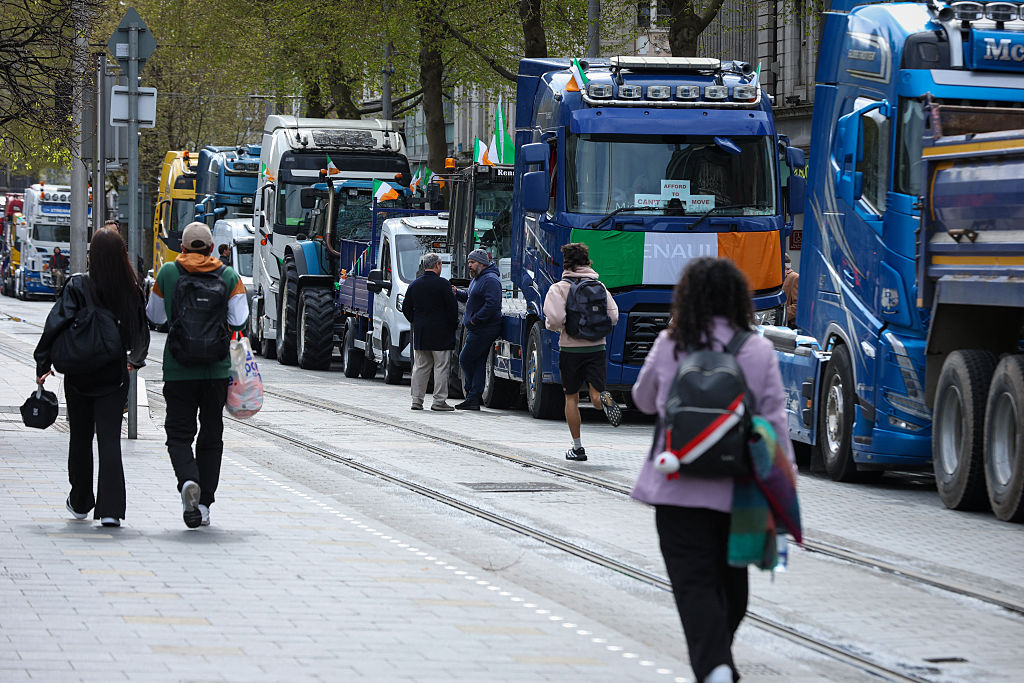
When a government’s answer to protesting truckers is to send in the army, something has gone badly wrong. At present, truckers and farmers in Ireland are blocking roads around the country as part of a protest against the cripplingly high cost of fuel and the lack of government action to fix it.
Sending in the army to remove blockades should have been a last resort, after all other attempts to diffuse the situation have been exhausted
Truckers, school bus drivers and farmers have parked their vehicles on both sides of Dublin City’s busiest thoroughfare, O’Connell Street. Protesters and understandably frustrated commuters have, in some cases, come to blows. National motorways are at crawling pace. People trying to get to Dublin airport on time have abandoned taxis and pulled suitcases along the edge of motorways. As the third day of chaos drew to a close, more than 500 petrol stations reportedly ran out of fuel. HGVs with the tippers raised have blocked the Whitegate oil refinery.
After three days of chaos, the government decided to send in the army, which has deployed four heavy-lift recovery trucks to help police remove blockading vehicles. Heavy Garda reinforcements have also been sent in to Whitegate. As of writing, this has not prevented the protests from continuing. It is though the mark of a deeply dysfunctional political system.
Sending in the army to remove blockades should have been a last resort, after all other attempts to diffuse the situation have been exhausted. Yet as the country ground to a halt, Taoiseach Micheal Martin steadfastly refused to meet with the protest organisers. He instead repeatedly cited meeting with the Road Haulier’s Association, conveniently overlooking the fact that they were not involved. His government also rejected calls to interrupt parliament’s Easter holidays and recall the Dail to discuss the crisis.
The Irish are not, generally, a nation of protesters – pro-Palestine demos in recent years notwithstanding – so both the scale of the protest and the fury behind it caught the government off-guard. Yet Martin and his cabinet made a serious miscalculation if they believed the protest would blow over in a few hours.
Their decision to send in troops with orders to forcibly remove blockades represents a spectacular failure of the political imagination. To the man in the cab, waiting for a military recovery vehicle to bear down on his livelihood, it looks less like the maintenance of public order and rather more like the state applying the boot to his throat.
Banners with the slogan ‘RIP Ireland’ began appearing on bridges over Dublin’s river Liffey as the news broke that the army was being deployed on ordinary citizens exercising their right to protest.
The political mood is incendiary. Martin has accused protesters of ‘national sabotage’. Opposition leader Peadar Tóibín called the decision to deploy the army an insane act of ‘political aggression.’ One government minister reached for the ‘far right’ trope and blamed the UK immigration activist, Tommy Robinson, for stoking the flames. Radical left politicians who appeared on O’Connell Bridge were roundly heckled by furious protesters and accused of prioritising identity politics over the livelihoods of working men and women.
An opinion poll on the handling of the protests offered the government scant comfort: 69 percent disapproved of the government’s handling while 60 per cent of those polled supported the protests.
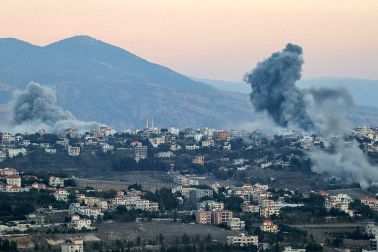
The war in the Middle East has been the catalyst for the current protests but in reality, they are the logical endpoint of a punitive tax regime that has bled hauliers, farmers and households dry for years. The government takes 60 per cent of the price of a litre of fuel in taxation. It collected €4.3 billion in fuel tax last year with another €1.17 billion in carbon tax on top. It has room for manoeuvre here. If people can no longer afford to run their businesses or heat their homes, then at the very least, the carbon tax – beloved of the (thankfully near defunct) Green party – should be suspended.
The indepenent TD Carol Nolan captured the national mood of frustration. It was deeply galling, she observed, to watch the government sign blank cheques for overseas development and immigration accommodation ‘yet when its own people come knocking, they are told the well is dry and all they get is the army removing them from the streets.’
Two weeks ago, with the air of a benevolent uncle who had found a fiver in his coat pocket, the government announced a derisory relief package: a reduction of 15 per cent for petrol, supplemented by a discount in levies for hauliers – in total, a 22 percentage point reduction at the pumps. Households in receipt of benefits received extended fuel allowances but everyone else received nothing.
The protesters demands are not unreasonable: cap fuel at €1.75 a litre and suspend the carbon tax. Without that, many will be out of business within weeks. The government’s response, before it settled on the army, was a masterclass in the ostrich school of crisis management. It is well past time for it to wake up and deliver.
Comments