For the past fortnight, Rozita (not her real name) has been out on the streets of Tehran, calling for an end to the Islamic Republic. The 37-year-old witnessed the anti-riot police shooting indiscriminately at her fellow citizens. ‘They don’t think about who or where they are shooting. I’ve been beaten up by them many times before,’ she tells me.
Fortunately, Rozita’s quick on her feet. She learned her lesson from the Woman, Life, Freedom protest in 2022. Rozita was hit in the face with tear gas and she needed medical treatment, which she still takes to this day. She was also shot with plastic bullets. She would have been hit with real bullets had it not been for the quick-thinking of a young man nearby, who bore the brunt.
Despite the real threat to her life, Rozita has been demonstrating regularly since the age of 18, because ‘we don’t want this regime,’ she says. ‘These brutal creatures are not even humans, they are aliens to us and they are pure evil.’
The mullahs, weakened by war, corruption and a water crisis, are scrambling to maintain control
Rozita is not alone in her thinking. Across 26 of Iran’s 31 provinces, brave Iranians are back in the streets, confronting armed security forces, chanting ‘death to the dictator’ and waving the pre-revolution flag. The mullahs, weakened by war, corruption, a water crisis, and high inflation, are scrambling to maintain control.
The current unrest erupted on 28 December, when Tehran’s Grand Bazaar, whose merchants helped bankroll the 1979 revolution, closed its shutters in protest, after the Iranian rial plunged to 1.45 million against the US dollar. Demonstrations spilled onto Jomhuri (‘Republic’) street and within 72 hours had spread to cities like Shiraz, Isfahan, Qom, and beyond, including to traditionally quiet areas.
Crowds have been confronting police, chanting ‘death to Khamenei’ – the Supreme Leader. A powerful image showing a lone Iranian man defiantly sitting in front of armed security forces has drawn comparisons to the unidentified man standing in front of tanks at the Tiananmen protests in 1989.
Over the past week I’ve received graphic photographs of dead or injured protesters. ‘It’s chaos at the moment,’ an activist tells me after sending across the latest round. ‘People just dump videos [online] and go to find a doctor, or go into hiding.’
So far, at least 17 deaths have been confirmed, though activists have accused the regime of undercounting casualties. Over 500 arrests have been reported. One woman in Tehran tells me that she saw a young man being shot in the eye. At a metro station the following day, she claims tear gas was deployed against unarmed citizens.
When Shireen (also not her real name) watches such footage, she’s reminded of the time she ran for her life through the streets of Tehran during the Green Movement in 2009. Millions peacefully protested Mahmoud Ahmadinejad’s contested election, chanting, ‘Where is my vote?’ The state’s response was swift and brutal. Shireen recalls the anti-riot police – ‘dogs’, she calls them – massive, armed, and terrifying. ‘I shat my pants!’ she tells me. She ran without stopping, narrowly avoiding arrest.
Others weren’t so lucky: thousands were arrested, and human rights groups estimated at least 80 deaths. But if Shireen were in Iran now ‘I would go out to the streets,’ she insists. ‘What would I have to lose?’
The regime has faced sustained pressure and recurring protests following the death of a young Kurdish woman, Mahsa Amini, in 2022. She was killed while in police custody for ‘improper hijab’. This triggered the Woman, Life, Freedom movement, largely driven by Generation Z. It is now common to see images of Iranian women openly flouting the mandatory hijab law.
Then there’s the cost-of-living crisis. Over a third of Iranians now live below a poverty line of just £295 a month. A third of teachers, for example, earn barely the equivalent of £185. A retired teacher in the Kurdish region tells me his £148 pension covers only ten days for his large family. ‘Prices change daily,’ he says. ‘Many people have eliminated meat from their diet. Many families can afford to buy meat only once a month, if at all.’
Iranians feel emboldened
When Shireen spoke recently on video call with her family in Iran, her mother was wearing heavy layers inside, as she couldn’t afford to put on the heating. ‘Iran has oil, it’s a rich country. It shouldn’t be like that,’ she says. Furthermore, drought cycles are becoming more frequent and severe. The country’s hydrologists say Iran is on the verge of ‘water bankruptcy’.
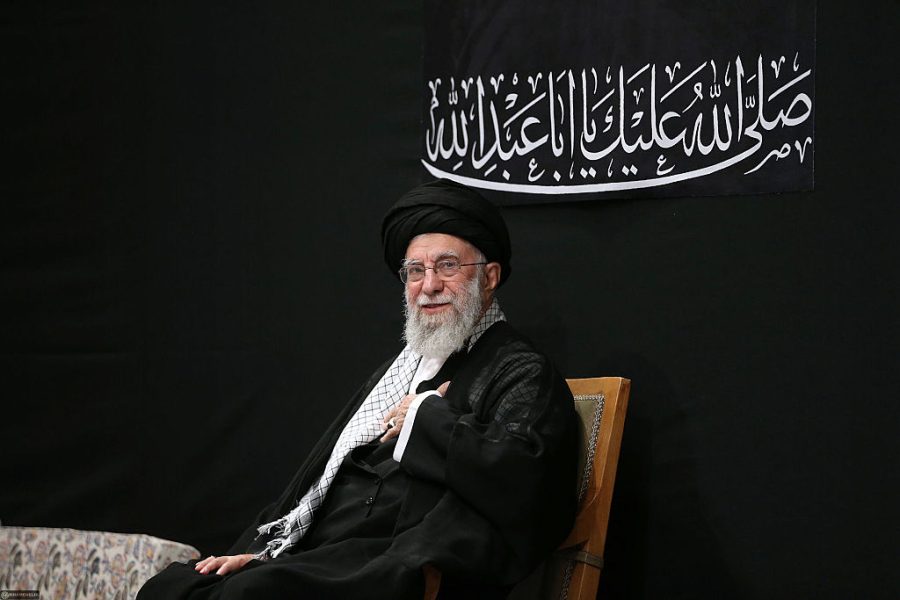
The regime has sought to project control. President Masoud Pezeshkian, often touted as a ‘moderate’ abroad, acknowledged protesters’ ‘legitimate demands’ and called for economic relief. But ultimate authority rests with Supreme Leader Ayatollah Ali Khamenei, who recently broke his silence to call the demonstrators ‘rioters’ who must be ‘put in their place’. He blamed foreign powers like Israel and the United States (par for the course) for fomenting unrest.
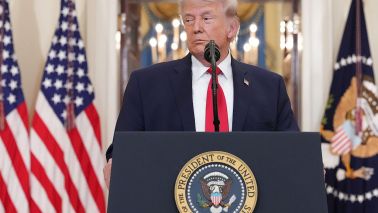
But Iranians feel emboldened. One of the reasons, they tell me, is down to Donald Trump. The US president took to social media to warn that ‘if Iran violently kills peaceful protesters’ then the US will ‘come to their rescue’.
The mullahs would be ‘wise to take Trump’s threats seriously’, says Behnam Ben Taleblou, senior director of the Iran programme at the Foundation for Defense of Democracies (FDD) in Washington, DC:
Should Tehran treat Trump’s threat as bluster, they would have to risk that the man who pulled the trigger against Qassem Soleimani, against the regime’s nuclear programme, and just successfully ousted Maduro, would not be willing to strike at the security forces of a regime which cannot protect its own skies.
Even minor concessions at home are tactical. The less rigorous enforcement of hijab in certain areas is designed to placate protesters without ceding control.
The Islamic Republic is far from defenseless. Its security apparatus – the Islamic Revolutionary Guard Corps (IRGC), Ministry of Intelligence, and Basij – is embedded across politics, the economy, and society. The regime has learned the lessons of the 1979 revolution and is now a highly centralised, professional security state that can put down dissent with precision.
Seasoned observers, therefore, urge caution against assuming protests alone will translate into regime change. Jonathan Hackett, a retired US Marine interrogator and author of Iran’s Shadow Weapons, notes that revolutions require more than just anger and mass desire. While demonstrations span much of the country, they remain fragmented, driven by different grievances in different provinces. ‘Once more than 5 per cent of the population is protesting, there’s usually a revolution,’ Hackett explains. ‘Here, a lot of the opposition isn’t united.’
Though it’s more common now to hear chants of ‘Javid Shah’ (‘Long live the Shah’) – a reference to Prince Reza Pahlavi, the son of the deposed Shah who is popular with dissidents and activists abroad, he still lacks leadership and broad popular support inside Iran itself.
The current unrest, Hackett insists, is overwhelmingly economic. Such protests can swell rapidly, but they can also ebb if pressure eases or fatigue sets in. ‘If the regime solved some of these things locally, it could calm down some of the protests,’ says Hackett. ‘Unless there’s a foreign invasion, the economy is where the regime is the weakest. It affects everyone’s pockets.’
The other option Iranians have is to wait it out. At 86, looking increasingly frail in public, Ayatollah Khamenei and the main founders of the revolution will be dead in the coming decade.
What happens next? Given that the economy is largely controlled by the IRGC, when the clerics die, says Hackett, ‘and you’re left with these pragmatic IRGC, the most likely outcome is that someone from the IRGC or connected to them takes over. In the next ten years, that’s probably going to happen.’
But many Iranians cannot wait and they continue to take to the streets, fully aware that they may pay with their lives, because they believe they have no other options. ‘Of course we are scared, but we hate them more,’ says Rozita. ‘Every birthday I blow out the candle on the cake wishing for an end to this regime. They’ve taken our lives more than any war could.’

Comments