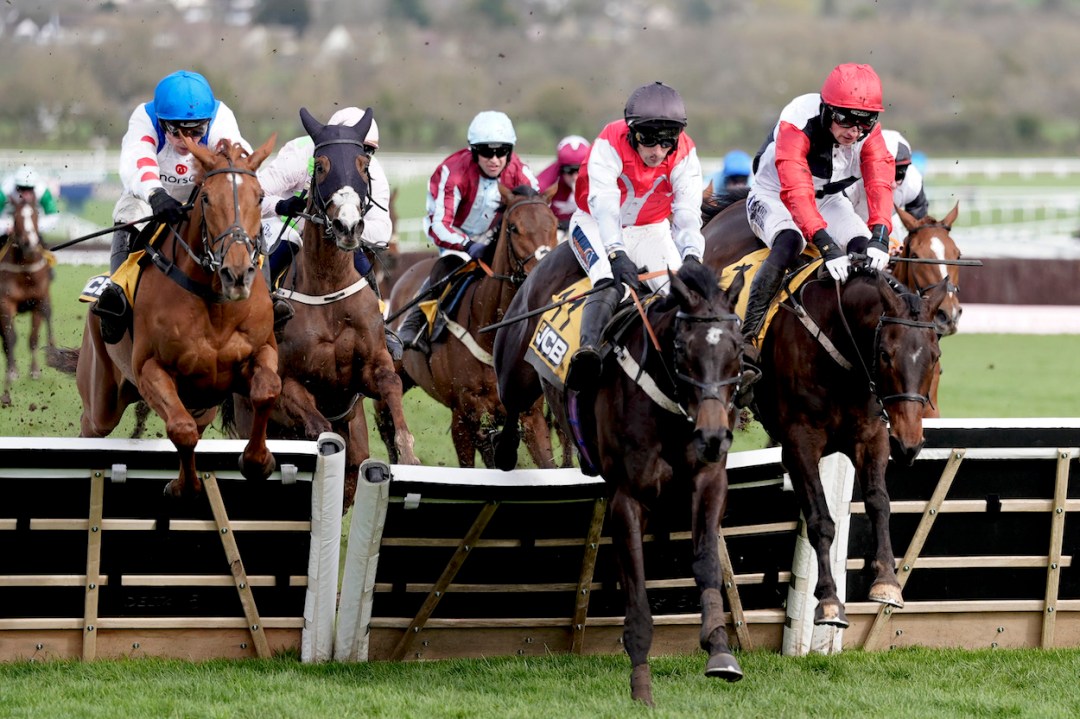
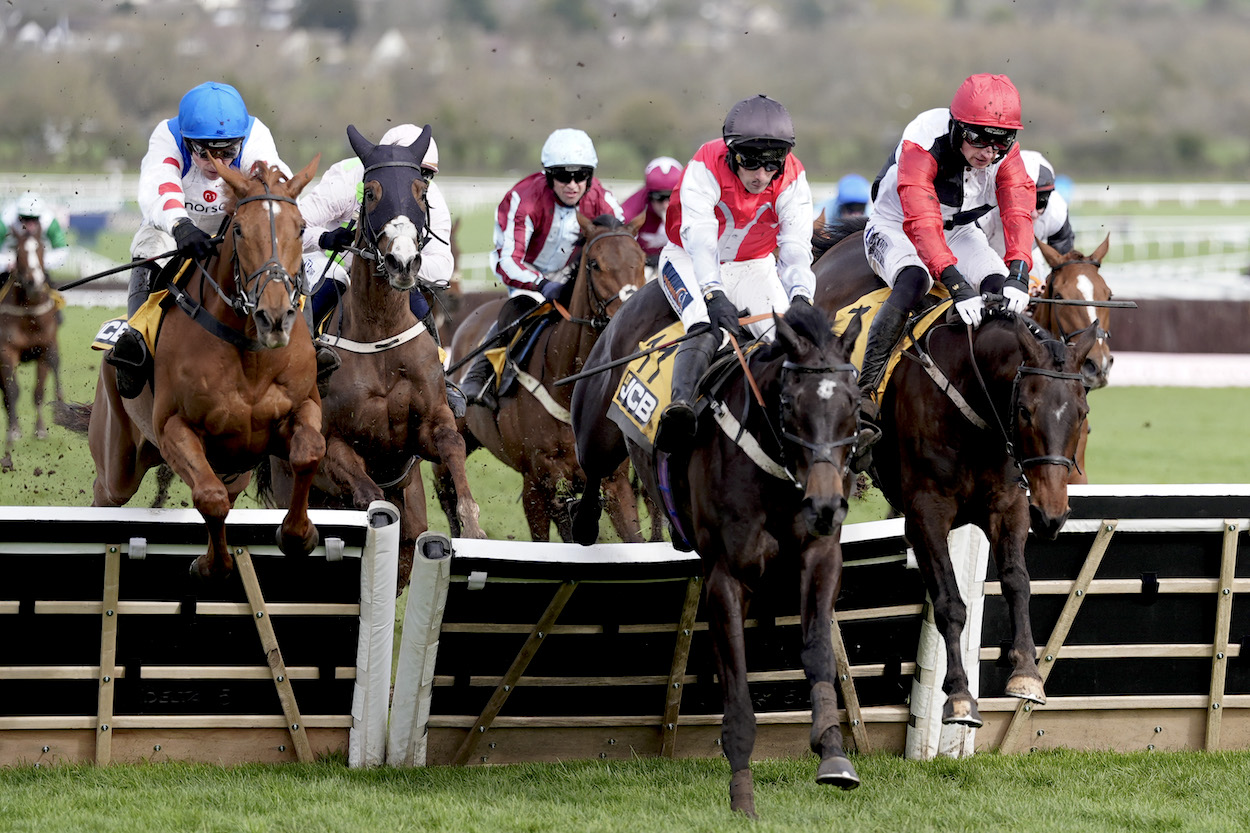
After six turbulent months as chair of the British Horseracing Authority, Lord Charles Allen felt he had no choice but to walk away from the sport. The Labour peer, a former CEO of Granada Television and executive chairman of EMI, was brought in to shake up and modernise a sport wary of change – but he was unable to unite racing’s many factions. His parting words earlier this month were brief: ‘Horseracing is an amazing sport with great potential… I have met some incredibly passionate people, who believe to survive and prosper that change is needed… I wish the sport well for the future.’ He didn’t need to add that he wanted no part of it.
Racing is in a deeply precarious position. The foal crop is dwindling, meaning there are fewer horses in training, and smaller field sizes. The money is running out, too. Labour’s tax rises on the gambling industry kick in on 1 April, leading bookmakers to pre-emptively withdraw race sponsorship. Meanwhile, the clamour from the anti-gambling lobby for affordability checks (which would force punters to disclose personal financial information before making a bet) is persistent. If these checks, which could be introduced as soon as May, drive punters to the unregulated black market, racing will again lose out, since a percentage of the profits made by licensed bookmakers on horseracing bets – the levy – are reinvested in the sport. This is currently a little over £100 million a year but is predicted to decline sharply if punters move to the black market.
And yet, against this gloomy backdrop, Lord Allen’s swift exit represents a turning point, for it has ignited a civil war in racing. His abdication could lead to racing’s ‘Brexit moment’, when this dysfunctional family finally breaks apart. ‘This is heading for a massive blow-up,’ says Charlie Methven of the Business of Sport podcast. ‘It’s going to play out over the summer and it’s going to get very ugly.’
To understand why this civil war has broken out, you have to go back to March 2025 and a meeting in London of the National Trainers Federation, which represents the interests of British racehorse trainers. William Haggas, son-in-law of Lester Piggott and trainer of the King’s horses, put a simple question to the room: who runs racing? The answer was unanimous: the racecourses. ‘If you are looking for a problem with governance, I’d start there,’ said Haggas. Lord Allen soon reached the same conclusion.
The Racecourse Association (RCA), which sits on the BHA board, represents nearly all of Britain’s 59 racecourses. It is immensely powerful and owns the fixture list, but it is not united. Of those 58 racecourses represented by the RCA, the Jockey Club owns 15, including Aintree, Cheltenham and Newmarket; Arena Racing Company (ARC) owns 16, mostly smaller courses such as Lingfield and Wolverhampton; the rest, including Ascot, Goodwood and York are independently owned. Each racecourse has one vote but because significant decisions require a 75 per cent majority, the numbers dictate that ARC, with 16 votes, effectively has a veto.
This is a problem because the Jockey Club and ARC have conflicting interests. Put crudely, the Jockey Club, which is governed by Royal Charter and reinvests all profits back into the sport, puts on a smaller number of high quality fixtures, attracting large crowds; ARC, a commercial enterprise, hosts hundreds of lower grade, less well-attended fixtures and sells the media rights to broadcasters and bookmakers.
So while many in racing would prefer a stripped back fixture list – i.e. more prize money for fewer races – ARC depends on the opposite. As Tom Morgan reports in the Telegraph: ‘For ARC, media rights are worth an estimated 60 per cent of their business model. For world-famous venues such as Ascot, media rights are around 10 per cent.’
Lord Allen wanted the BHA to be an independent board, so it would have more control of the fixture list, and ‘a seat at the table’ in selling media rights. For the reasons outlined above, ARC, and therefore the RCA, could not agree to this – so Lord Allen walked away. And here you have the opening shots of the civil war. The Jockey Club and independent racecourses, furious that the RCA essentially blocked Lord Allen’s proposals, are now demanding radical change.
‘The plan had been that, as an independent body with an independent board, the BHA would be empowered to make some of the tough decisions and lead our industry forward,’ Jockey Club chief executive Jim Mullen wrote recently in the Sunday Times. ‘Sadly, the status quo has won again.’ Lord Allen’s departure, he added, was an ‘emergency warning light on our dashboard… A strong, independent, progressive board at the BHA is worth fighting for, because the alternative is inertia and a dwindling product.’ The subtext was obvious: we can no longer be beholden to the smaller racecourses.
Racing, then, could become a two-tier structure, similar to football where you have the top 20 clubs in the Premier League and the other 72 in the Football League. A better example might be Formula 1, which has a super-league of racetracks. A gambling industry source tells me: ‘We could be on the brink of the biggest shake-up to the sport ever – think Sky and Premier League football. But we could, given British racing’s track record, be right back where we are now in five years’ time.’
ARC’s chief executive Martin Cruddace was quick to try and cool tensions, saying that ‘we should be careful not to talk ourselves into a crisis’. But Ascot has already threatened to walk away from the RCA – one racehorse owner told the Telegraph that the racecourse ‘has pulled a pin on the grenade’ – and a senior industry source confirms that ‘there is the possibility that the Jockey Club will go its own way’, leaving a ‘split racing infrastructure’. The source adds that the mutiny has effectively ‘fractured one of the things [the RCA] holding the sport back’. Their message to the BHA is clear: ‘Here’s the nettle; grasp it.’
Methven, a former executive of Sunderland and Charlton Athletic, also believes this is racing’s chance to save itself. The number one priority, he argues, has to be reducing the fixture list. This is a view shared by the National Trainers Federation, which stated after its AGM this month: ‘Historic attempts to manage volume have been constrained by unresolved fixture ownership issues that are of no relevance to the consumer.’ Dan Skelton, on track to be champion trainer this year, put it even more starkly in an interview on The Paddock podcast: ‘You have to concentrate on the top end because that’s what sells the sport… You’ve got to cut the amount of races because then you can increase the productivity and thus the prize money goes up.’ He concludes: ‘This feels like the last chance to get it right.’
Do elite racecourses have the stomach for a long fight?
Methven explains how this might look: ‘You say to people, “Right, there are only 40 fixtures in the year you need to pay any attention to: the Cheltenham Festival, Grand National, Glorious Goodwood etc.” You’ve then got to market those 40 meetings very aggressively and you’ve got to market betting on them very aggressively… The vast majority of betting turnover comes from those meetings anyway. But this only works once you’re focussing on those 40 meetings; it doesn’t work when you’re focussing on 1,500.’
And what about the lower grade horses, which aren’t good enough to compete at these meetings, and which for the most part run at ARC’s racecourses? ‘If ARC wants to put on races for slow horses because they think there is a market for that,’ says Methven, ‘and if the bookmakers want to sponsor those races because they think there is a betting market there, fine, they can do that.’ But these fixtures, he says, should not be funded by the levy. ARC was approached for comment.
The question now is whether the elite racecourses have the stomach for a long fight with ARC that could very easily end up in the courts. ‘Here is a sport,’ says Methven, ‘which is the second biggest in the country, erupting in civil war because it cannot agree on whether it is a high-quality, narrative-driven, internationally competitive sport, or basically a pile-it-high-sell-it-cheap product, like the greyhound industry.’
Lord Allen’s BHA reign may have been short-lived but, in an ironic twist, his legacy is secured. His unseemly, early departure has forced racing, just a few weeks out from the Grand National, to confront a choice it has long tried to ignore: change or die.



Comments