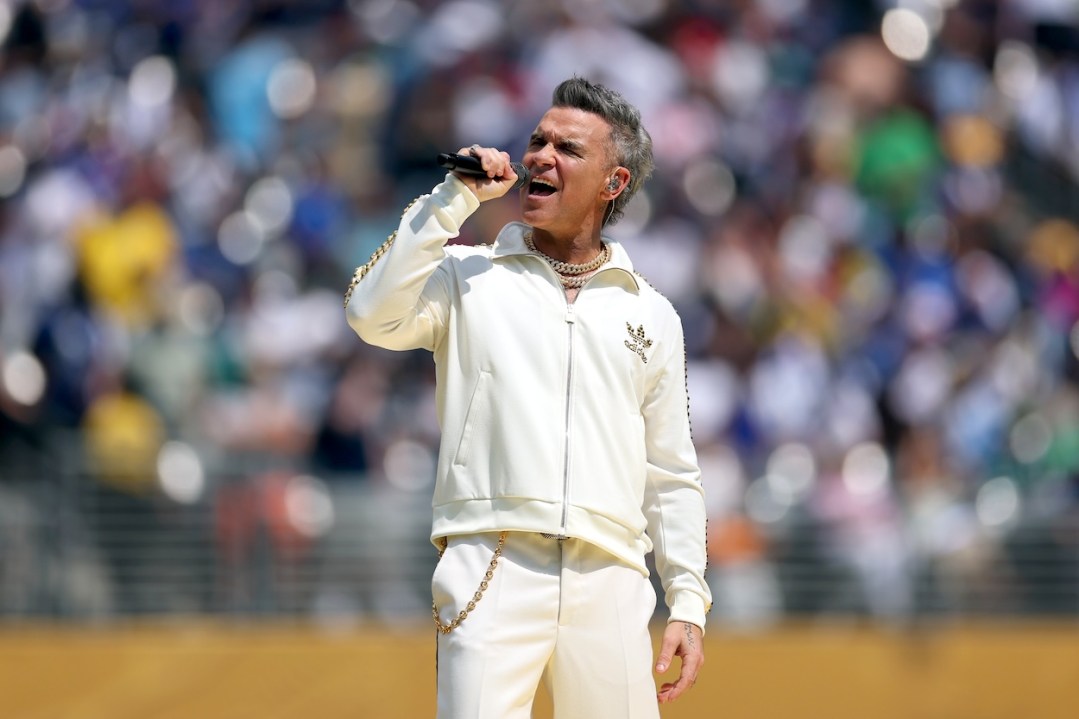
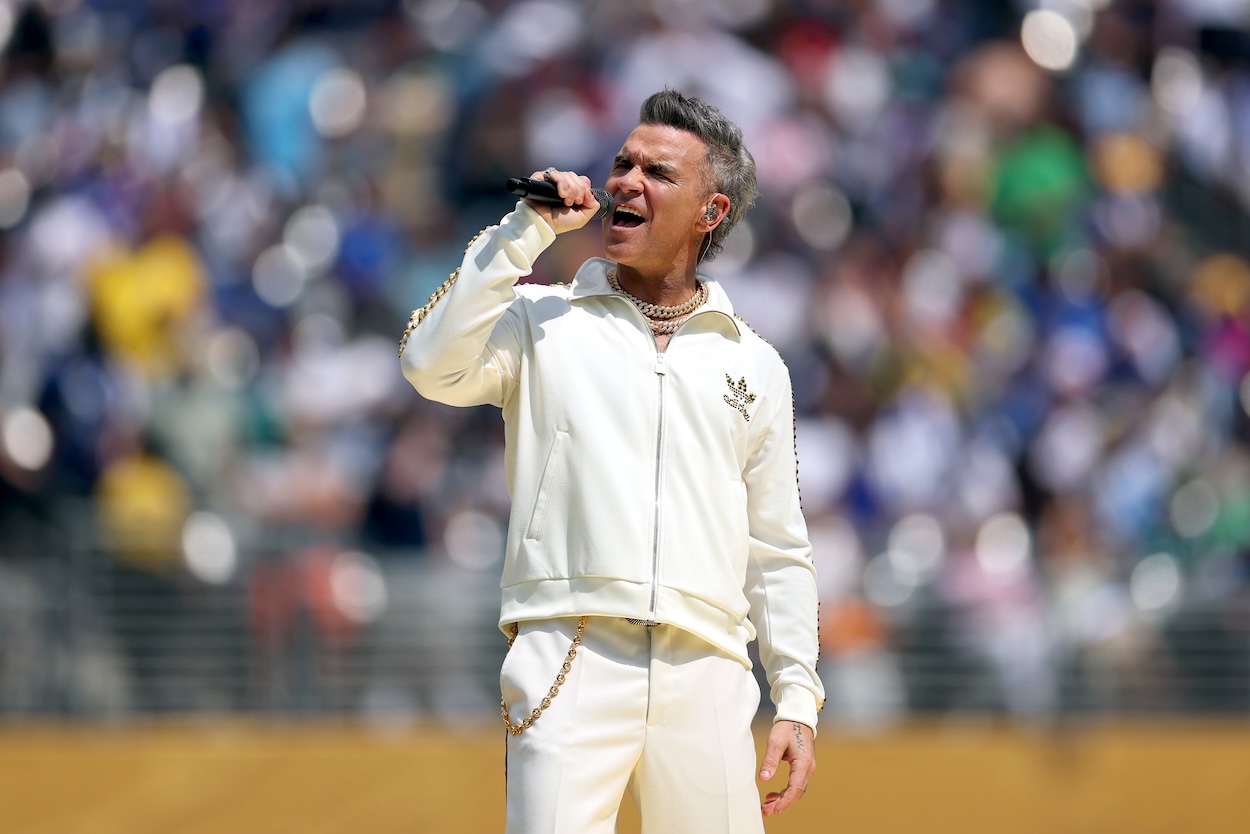
I write this piece while listening to an album that I suspect will be widely regarded as one of the best of the year. That it is by Robbie Williams may come as a surprise to many. After all, Williams has often been mocked as a cruise ship entertainer who got lucky, a Butlins redcoat who has somehow become Britain’s most successful solo pop star. If his new album, Britpop, goes to number one in the charts – and he deliberately delayed its release from last autumn so that it could avoid being trampled by Taylor Swift’s The Life of a Showgirl – it will be his sixteenth chart-topper, thereby setting a record that even the Beatles were unable to equal.

The reason for Williams’s continued glory, however, is not some sort of national delusion that has lasted for the best part of three decades. It is because he is one of the finest musicians that this country has ever produced. Finally, he is starting to be recognised as such. While early albums of his such as Life Through a Lens, Let Me Entertain You and Sing When You’re Winning sold millions and millions of copies, they were looked down on as somehow being ephemeral and even naff.
‘Angels’, a ballad that has taken a place in our collective consciousness, has often been sneered at for being obvious, saccharine and basic. To which the only comment is, ‘yes, but it works’. Williams has never been someone who has tried to be at the cutting edge of fashion. (The one time that he attempted this, 2006’s baffling Rudebox, was his first artistic flop.) He is, instead, the anti-David Bowie, someone who is content to offer a single, consistent image throughout his career.
And what an image that is; the cheeky chappie beset by self-doubt, that same Butlins redcoat but playing Hamlet. This allows him to take audacious risks which, more often than not, land. The recent biopic made about the star, Better Man, made the extraordinary decision to depict him as a CGI monkey. It perplexed many, who stayed away from cinemas, and it was a commercial flop in consequence. Those who saw it, however, were struck with admiration for the film’s daring and boldness. Compared to any number of identikit music biopics, it sang with energy, vitality and wit, all of which remained true to its subject.
The wonderful thing about Robbie Williams is that he has long since ascended to true heights of ‘don’t-give-a-fuckdom’, in a way that his peers could never manage. So, for instance, his new album includes a song about Morrissey, co-written with his one-time frenemy and Take That bandmate Gary Barlow, told from the perspective of an obsessed stalker. That the song is a perfectly crafted slice of electro-pop that would make the Pet Shop Boys weep with envy is a reflection of Williams’s often-overlooked skill as a great songwriter. That it is hilariously funny (the chorus contains the line ‘Morrissey is talking to me in code’) is a testament to his status as a true original: an oddball in an industry long since homogenised into focus-grouped blandness.
He is one of the finest musicians that this country has ever produced
It has long since become de rigueur for stars to talk about their mental health issues, their anxieties and depression. Williams, of course, got in ahead of the curve by writing a top five single about his own self-loathing as far back as 2003 – ‘Come Undone’ – which remains probably the only stirring, anthemic ballad to contain the lyrics ‘I am scum/And I’m your son’. But that is the joy of Robbie, who once declared to his listeners that he was ‘the only man who made you come’. A combination of the wholly unexpected and the hilariously inappropriate has seen him retain a place in the pop firmament for far longer than any of his peers, and long may it last. He once suggested on a pensive B-side that he would be ‘nobody someday’. On current evidence, that day looks as if it will never come.





Comments