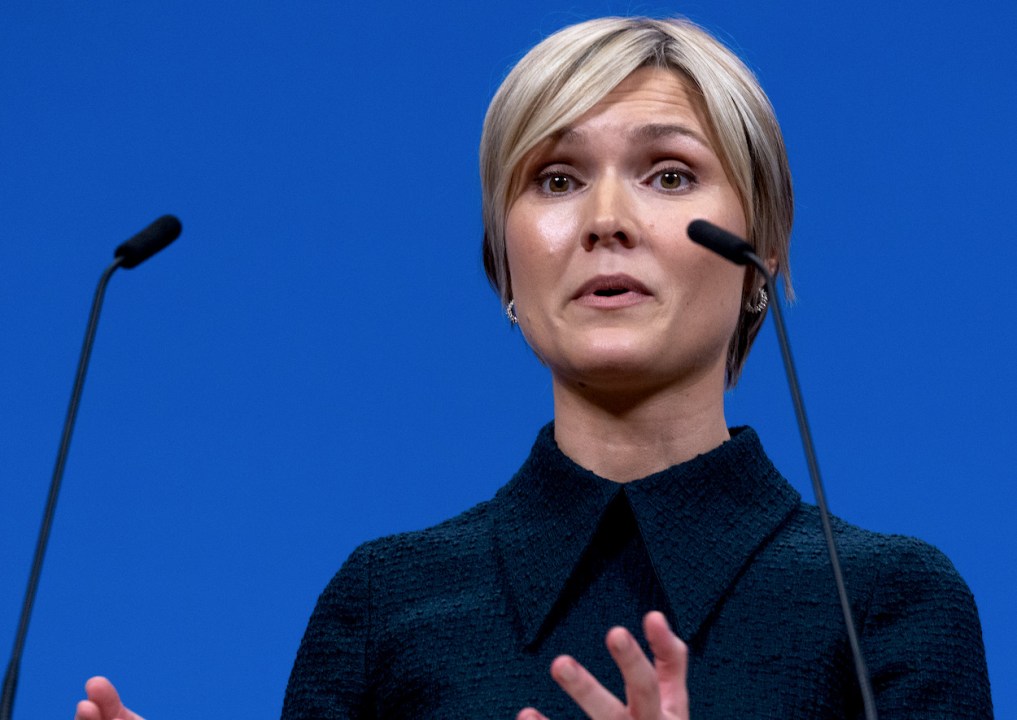
A few weeks ago, Icelanders were busy worrying about tax increases, growing inflation, unemployment and immigration. The government was worried about the newest opinion polls. Normal stuff. Then stories started appearing in foreign media, such as the Telegraph, about Iceland being on a fast track to EU membership. The reporting was based on sources within the EU bureaucracy in Brussels.
Soon, social media was flooded with posts from various pro-EU outlets celebrating either Iceland’s pending membership or a proposed referendum. Reports suggested a poll would be held as early as August this year.
All of this came as a surprise to the Icelandic public and most members of our parliament, including me and other members of the foreign affairs committee.
One of the three ruling coalition parties, the Reform party (no relation) has since its founding in 2016 been an enthusiastic supporter of EU membership. It had, however, been very reluctant to discuss its EU ambitions before the 2024 general elections. The current social democratic Prime Minister had claimed that an EU application was off the table for the foreseeable future. Fixing the economy was more important and she saw no reason to divide the nation with a heated EU debate. Also, an application would be futile without strong support in society and in parliament. The third party in government, the People’s party, was firmly against membership – as were all the three current opposition parties.
But lo and behold, last Friday the government gave a surprise press conference stating that it intended to propose a referendum in August. But not a referendum on EU membership. It would only be a referendum on whether to go through the accession process to see ‘what is on offer’.
Iceland is the only country where EU enthusiasts have managed to convince people that the accession process is simply a negotiation where the EU gets a chance to offer the applicant country a deal. To bid for a new country, if you will.
This is reflected in the fact that opinion polls often show majority support for applying for EU membership while at the same time showing firm opposition to joining the EU.
Indeed, the Prime Minister has now announced that she will ‘sell Iceland at a very high price’, while the Foreign Minister has repeatedly stated that no deal will be accepted if it does not guarantee Iceland full and indefinite control and management of its resources, including fisheries.
We’ve been through this before.
I started politics and became party leader at the beginning of 2009, during the height of Iceland’s banking crises. After an April election, Iceland got its first entirely left-wing government consisting of the social democrats and the Left-Green Movement. The Left-Greens immediately recanted on their election promise not to apply for EU membership and explained that they would support an application even though they were most definitely against joining.
As a result, the only pro EU party at the time managed to get parliament to apply for membership with the intention of finding out what was on offer.
The process lasted for over three years. During that time, I was a member of the foreign affairs committee and various bodies involved in the proceedings. I still get shivers when I think of all the times when EU representatives were told that we were applying not because we necessarily wanted to join the EU but because we wanted to take a peek and see what was on offer.
Often, they simply didn’t understand what we were talking about. When they did, they were usually flabbergasted and then tried to explain to us, as though they were talking to children, that this was not the way an EU application works. But if a country applies for EU membership it is because the applicant country wants to join. The accession process is only designed to allow the applicant to convince the EU that it can fulfil its criteria and start doing so.
The EU representatives spoke in this manner publicly. That included the commissioner for enlargement bluntly correcting the Icelandic foreign minister at a press conference.
I found this degrading for my country. It looked like we had no idea how the EU worked or what we were doing. It seemed as though we were no longer a proper nation.
Needless to say, this approach did not yield success, and the government formally gave up on the process in early 2013, before the upcoming election.
After the elections I formed a government, and we formally withdrew the application. When the EU was late in confirming the withdrawal, I went to Brussels to meet with Jean-Claude Juncker and Donald Tusk to make it clear that Iceland was no longer an applicant country. They understood this and Juncker explained that it sometimes takes time for the EU to update its websites.
After that, the EU confirmed that Iceland was no longer an applicant and formally removed it from its list of applicant countries.
We did extremely well in rebuilding our economy after the financial crises by making use of our independence and ability to make decisions and arrangements that suited our situation.
Previously we had to get in because we were in a weak position, now independence has made us strong, we apparently have leverage
For years, EU membership was a non-issue in Iceland. It felt good to stand outside of the EU’s burgeoning problems and the woes bestowed on the UK by the EU and its own establishment after Brexit made us relieved to never have entered in the first place.
Norway agrees. Earlier this month, their parliament rejected a proposal to look into EU membership by 72 votes to 29. A proposal to look into increased co-operation on defence and other issues was rejected by 91 votes to seven.
But in Iceland, with a government wishing to divert attention from domestic problems and calm internal quarrels, it turns out no theory is bad enough for it not to be rehashed during our post-truth times.
Now it is even claimed that the 2009 application was never really withdrawn – hence we can pick up where we left off in 2013. At the same time, we are told that we are in a much stronger negotiating position than last time. Whereas previously we had to get in because we were in a weak position, now that the fruits of independence have made us strong, we have leverage when it comes to ‘selling the country’, as the PM put it.
Any attempt to quote facts about how the EU really works – as explained by the EU itself and witnessed by history – is simply met with superficial phrases: ‘don’t you trust the people?’; ‘won’t you let the people decide?’
But decide on what? According to the government, only whether to continue (the non-existent) negotiations so we can find out what the EU is willing to give us. They even pretend to have no idea what might be on offer.
All this because the government needs a distraction, and because Iceland’s only committedly pro-EU party (polling at around 10 per cent) has spotted a chance to circumvent reality.


Comments