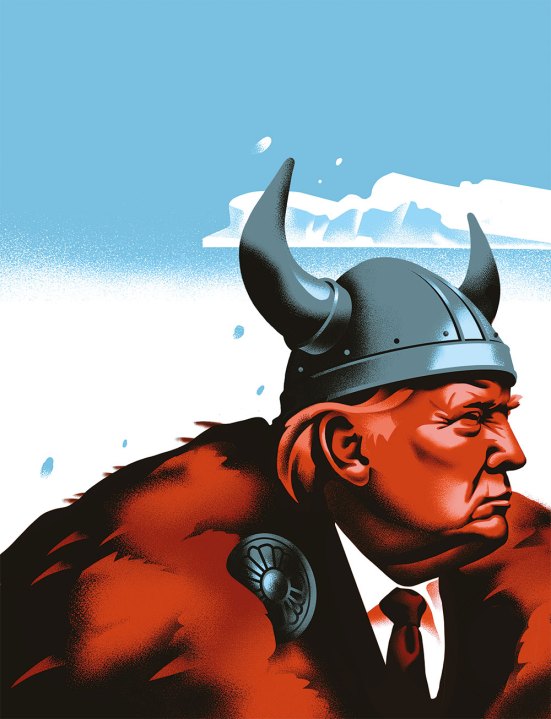
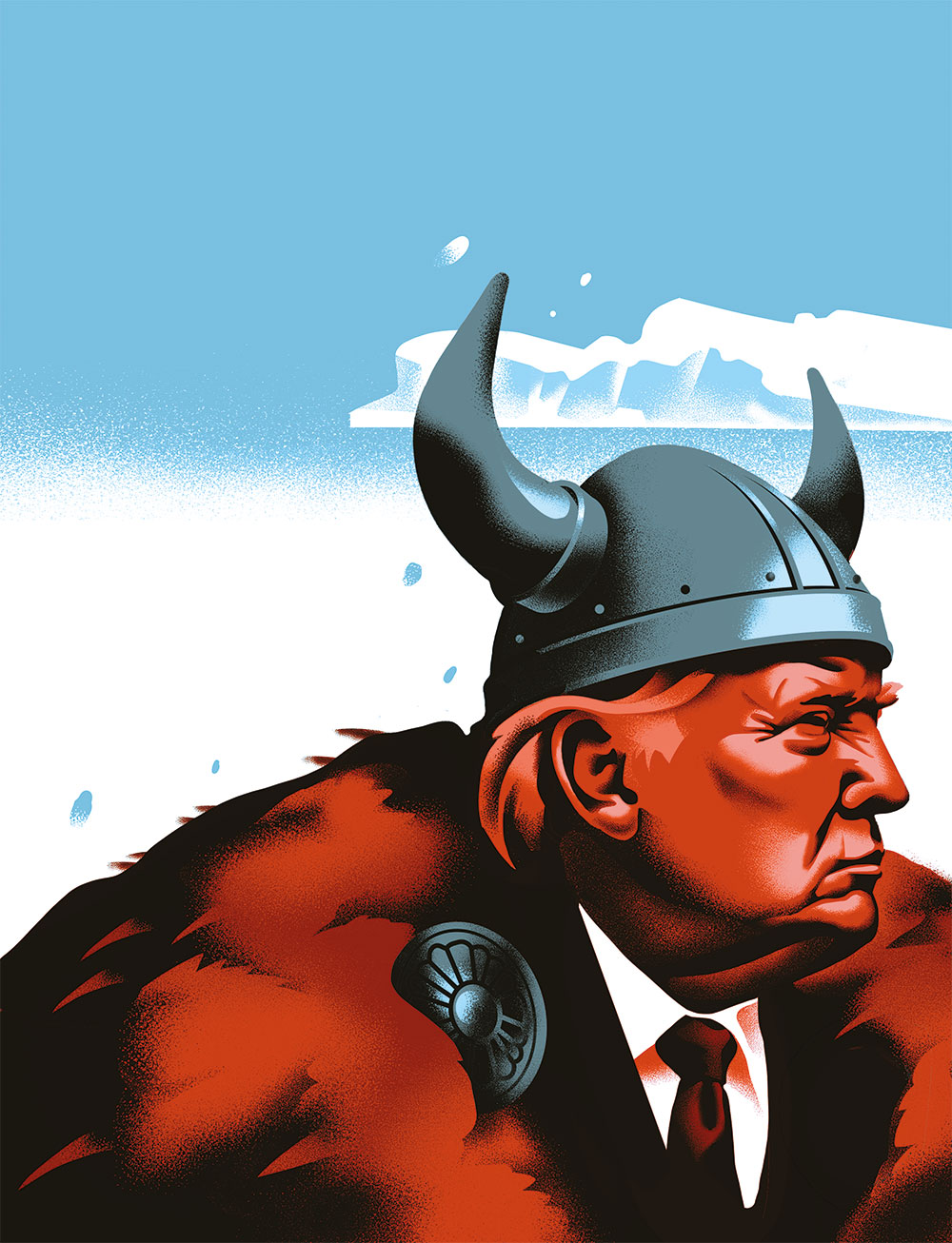
I left the Greenlandic parliament – the Inatsisartut – last year and walked to the Hotel Hans Egede to grab my swim trunks. I came here to explore one of the last frontiers on Earth. Greenland is a quasi-communist country that prohibits land ownership and depends on Danish aid. Perhaps the US will change that, someday. I met my team in the lobby with towels.
I’m the CEO of Praxis, a new kind of political project we call a “digital nation.” It’s a community of more than 150,000 people who want to help build a better future for western civilization. In 2020, we launched as a transgressive group chat interested in Greek literature, cryptocurrency and New York’s art scene. We hosted events and were antagonistic to our woke counterparts. We grew quickly. Citizens created a flag, an anthem and an embassy. We set our sights on building a new city as a demonstration of the power of digital nations, and to fulfill a Faustian impulse lying dormant in the European spirit. We’ve looked across the world for places to build this metropolis. Our search led us from North Africa to Argentina – and now Greenland.
As we walked down the road, bright red houses on either side, we looked at the sea. Between icebergs, we saw a large yacht. People in town said it was J.K. Rowling’s. I wondered how many billionaires would soon be chased out of so-called civilization to places like this. Ray Dalio wrote a book about what happens to countries that lose their reserve-currency status (definitely not about America, of course) and set up a family office in the United Arab Emirates. I wondered how many other billionaires were thinking about second passports and hard assets. Probably most of them.
There are minerals here in Greenland. Uranium, copper, gold – but extraction is expensive. Labor is scarce, the weather is brutal and shipping infrastructure is almost nonexistent. But critical minerals, among other capital assets, may become all that is valuable as artificial intelligence drives the cost of labor to zero. We got to the edge of the grass and started hopping across the rocks that jut out into the bay. Tiny waves crashed gently.
My colleague C.J. jumped first. The fish hovering nearby darted between the crags before the splash. They saw his shadow. Charlie was next. He looked down at the water. No icebergs were nearby, but they loomed in the distance. Before I jumped, I cataloged the things I had to do before sleep. I stepped off the two-foot ledge and my mind went blank before my feet touched the water.
I scrambled out of the sea and up the rocks with a surge of adrenaline, which turned into testosterone as I stood upright. I looked across the bay, and the subrational instinct that propels Praxis felt legible. We were here to explore, to build, to rehearse small acts of courage until fate tests us and our developed will reveals who we are. C.J., Charlie and I were standing on these wet rocks for the same reason our ancestors stood on wet rocks in Ireland, England and the New World, for the same reason Elon Musk wants to go to Mars and for the same reason many will die to settle the next planet.
Paul Atreides, the hero of Frank Herbert’s Dune, does not ride giant sand worms across the planet Arrakis to attain the tastiest snack. Economic materialism does not compel great action. It was evening but the sun was not setting. We walked across the grass back to the main road, wondering if we could find a restaurant with local fish or elk. Arctic towns often export their best meat and import frozen substitutes – tragic. C.J. asked about hiking, and Charlie said someone on the flight had mentioned we shouldn’t go without a gun, and that if we saw a polar bear, we should avoid being devoured by shooting ourselves first. We wouldn’t be getting a gun. Charlie asked what I thought of this city, Nuuk. It was a frontier outpost. I looked across the town. I wasn’t sure what our future held here, but in that moment, I had a vision of thousands of Praxians flooding the waterfront, the café, the square in front of Inatsisartut – here for a concept of destiny that, though briefly extinguished, is back as a growing flame.
Comments