Alan Milburn, Labour grandee and member of His Majesty’s Most Honourable Privy Council, has said our country’s sick note system ‘is just bloody insane’.
He was in Holland with Sir Gareth Southgate. They visited on our behalf, trying to work out why the Dutch have less than 5 per cent of their youth not in education, employment or training, whereas for us the figure is not far off triple that, at 13.6 per cent.

‘We know that once you enter the welfare system… the stickiness kicks in,’ Milburn said, noting that people have a 50 per cent chance of still being on health and disability benefits 15 years after first receiving them. ‘Everybody talks about the fiscal disaster. Fine, but most importantly, it’s a life chances disaster because we’re ruining the life chances of these young people.’
I don’t imagine Milburn was any less forthright or sympathetic when he was health secretary. But the incapacity caseload of roughly 2.75 million he inherited when he took office in 1999 was still much the same when he resigned in 2003. Milburn is correct to say we have a problem, but like many a problem it’s easier to identify than fix.
When the number of those on incapacity benefits hit 1.5 million under Major, Peter Lilley gave a speech saying he would ‘close down the something for nothing society’. Spitting Image compared him to a Nazi camp commandant and his clampdown was so biting and brutal that the number just continued to rise.
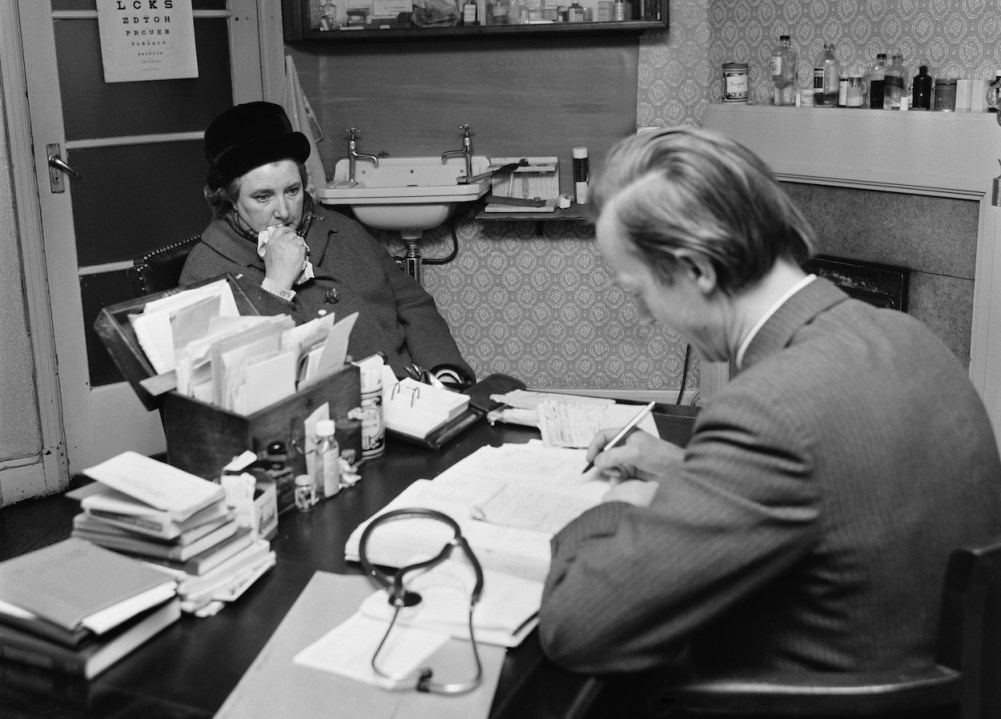
As a hospital doctor, I can cheerfully say that GPs are to blame, since it is they who hand sick notes out like confetti. My accusation has the virtue of being correct: a BBC investigation found that nearly three quarters of the GPs who responded said they had never turned down a request for a mental-health sick note.
But being correct is not the same as being useful, and GPs are human. They have only a certain amount of pugilism they can summon, and rightly feel that they’re chiefly there to maintain the trust of their patients, not to act as moral judges. If a patient says they’re depressed, can’t concentrate, or has a condition no scan or blood test can adjudicate, expecting them to say ‘you’re still fit to work’ is asking a very great deal.
During a brief stint in general practice I worked with one GP who would do exactly that. Douglas Boyle had been a captain in the Paras, and when people came in trying to shift the blame for their own problems, he wouldn’t let them. I watched him put hours into refusing to let people make the sort of weak excuses we all sometimes reach for, and soaking up vast quantities of aggression in response. His fighting spirit seemed endless – so did his overrunning clinics – and both were unfailingly devoted not to winning his point but to helping his patients and putting them back in command of their own lives.
He was one of the most impressive doctors I ever saw, and unless we draw all our GPs from the Parachute Regiment we have to accept he’ll never be what’s typical. Being a first-rate GP is the hardest job in medicine, and if we make it even harder we’ll just get ever fewer willing to endure what it takes. When you find yourself thinking they should do better, remember that Lilley was publicly compared to a Nazi, and you’re asking them to appear that way to their patients.
Make sick notes more onerous, make disability payments less generous, make work more rewarding
Show me the incentive and I’ll show you the outcome. We have made it too easy for people to get onto benefits, too easy to get sick notes and soft diagnoses, and we need to make it harder. This much is plain. What’s less certain is who is willing to step forward and introduce the suffering that any serious change will entail, and which will unavoidably grind some people up, whether their ills are physical or psychological or moral. A psychiatrist friend once said to me that fear of the policeman preceded love of honesty. He meant that developing a conscience came at a personal cost. So it is with welfare reform. Restraints have to come first, and they will look and feel like cruelty. Some will find that intolerable.
Make sick notes more onerous, make disability payments less generous, make work more rewarding: all of these measures can help, and need to be taken. And recent decades suggest they won’t be enough. They’re worth doing because they’ll come with cost savings, and worth even more because, as Milburn suggests, they’ll rescue people from dependency and restore them to the dignity and freedom of work. Sustained, they may even change the trend.
‘Lack of moral fibre’ used to be a common ironic diagnosis when I first trained in medicine – often spoken, rarely written down. The RAF used it to describe men we would now call psychologically injured. There is no doubt our culture lets our youngsters down by cultivating too little of this essential seasoning of the soul. How much pain we’re willing to suffer and to inflict in changing that is less clear. Few of us are Douglas Boyles. I suspect we lack the moral fibre ourselves.






Comments