
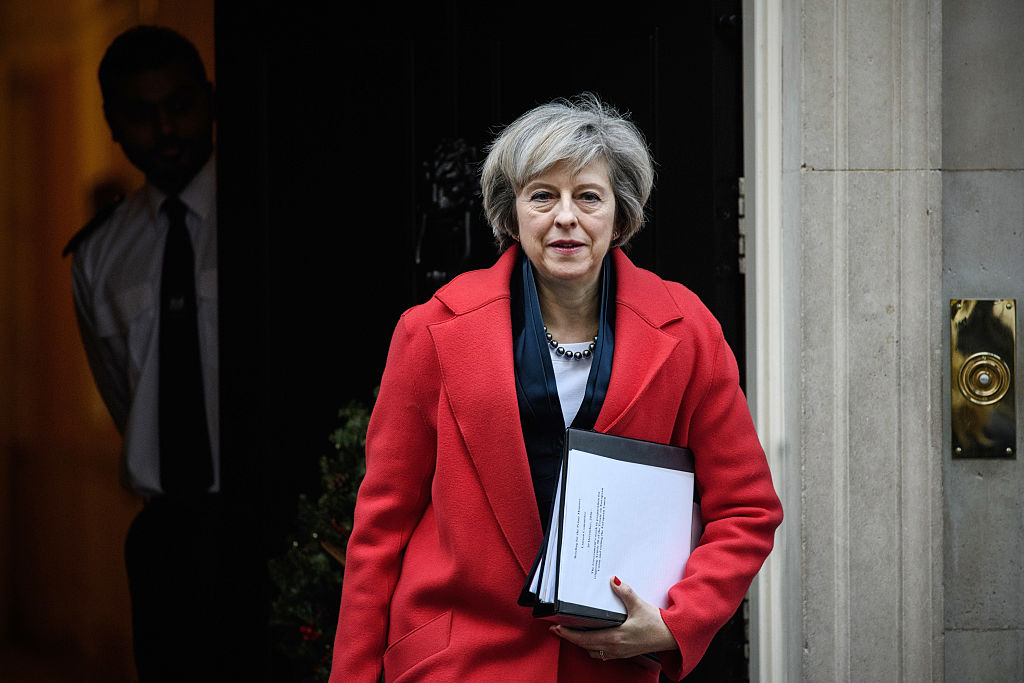
Andy Burnham, the incoming prime minister, thinks English devolution will be the great stroke against Reform UK. On one level this is hard to fathom. Do voters flirting with populism really have any love for local authorities, or the kind of people who run them? All of the villains in the TV show Clarkson’s Farm are from local government. Andy Burnham takes it for granted that more devolution is the answer to populism because he is, without quite being conscious of it, a Mayite – that is to say, someone in the political tradition of Theresa May, who became prime minister of the United Kingdom ten years ago this week. May is arguably one of the most important statesmen of the twenty-first century, second only to Donald Trump. She was the first head of government to have to respond to modern populism, and, owing to a strange conjunction of circumstances, had carte blanche to decide what the new populism would mean. Few have ever deviated from her thesis.
Politics has never progressed since Theresa May, because the British establishment has been unable to even recognise the demands of voters as demands, things which can be agreed or disagreed with
By the middle of July 2016, shortly after the referendum, Theresa May and her circle were the only power left in Britain. ‘Vote Leave’ had dissolved. The triumvirate of Johnson, Gove, and Cummings had fallen apart. The Brexit ultras of the European Research Group, in a remarkable display of shiftlessness, had made no plans to seize power. The defeated party of Remain, meanwhile, immediately began searching for ways to overturn the result; in doing so it renounced any role in shaping what would happen next.
It fell to May to decide what the Leave vote had meant. The Vote Leave campaign was seen at the time as a rather bloodless affair, with a monomaniacal focus on three or four specific grievances – like the size of the country’s annual EU membership fee, or the possibility of a land border with Syria should Turkey join. It also had a futuristic side: the campaign made much of the need to ‘rewire’ the state and had joined forces with a number of obscure technology companies – the first murmur of the populist-Silicon Valley alliance. The referendum debate had turned on the particular deeds and misdeeds of the governing class. This, it was assumed, was how politics would be conducted now that Leave had won.
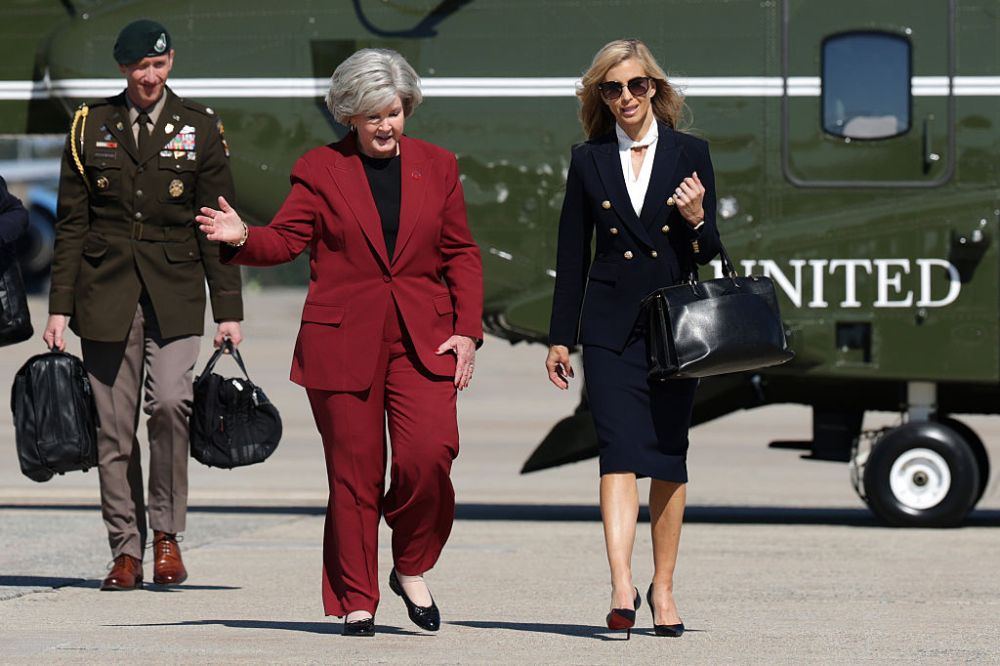
May demurred. In her famous ‘Citizens of Nowhere’ speech in October 2016, the new prime minister, encouraged by her advisor Nick Timothy, put things this way:
‘For the referendum was not just a vote to withdraw from the EU. It was about something broader – something that the European Union had come to represent. It was about a sense – deep, profound and let’s face it often justified – that many people have today that the world works well for a privileged few, but not for them.’
In other words, the people who voted Leave did not have specific grievances with the way things were, but a shapeless and general one. The vote to leave had not happened because the public had come to associate EU membership with some of the country’s problems, but because they felt left behind by the modern world. Modern society had put in place a set of harsh selection mechanisms, like globalisation and meritocracy. These had inevitably created losers who, in their floundering, had grabbed on to causes like Leave. Rather than a competition between two differing visions of the future, the referendum had simply been a cry for help from these dispossessed, a plea to be listened to.
May’s theory of populism was more or less taken on trust. Almost everyone – not least the journalists, academics, and many of the politicians who had supported Brexit – agreed that the Leave voters were not a victorious coalition but a charity case. In nearly every debate about Brexit or populism since May became prime minister, it has been taken for granted that were revolts of the losers from globalisation, or, more generally, from modernity itself; never was it supposed that the country’s rulers were mismanaging things and that people were opposing them for straightforward reasons.
The clearest distillation of the May thesis came with the 2019 film Brexit: The Uncivil War. The film’s climax arrives when Craig Oliver, David Cameron’s head of comms, holds a focus group just before the referendum. The participants begin by discussing issues like immigration and the NHS, but this is soon revealed to be so much window dressing for what, we are told, were the real motives of Leave voters. ‘I’m sick of it! I’m sick of feeling like nothing!’ one of them wails.
No idea has been more influential; no idea has done more to poison public life. If the people who voted Leave did not actually want different policies, only to be ‘listened to’ in the abstract, then nothing about society had to change. Politics has never progressed since Theresa May, because the British establishment has been unable to even recognise the demands of voters as demands, things which can be agreed or disagreed with. To them it is all one plaintive, inchoate cry for help to be appeased – usually by doing what they want to do anyway.
One example is devolution. The demeaning idea that Leave voters only wanted to be heard, and that all their grievances must be purely local ones, has jumpstarted the devolutionist cause in the ten years since the referendum. During the Johnson years, the constant refrain was that Red Wall voters did not want lower taxes or lower immigration, but various northern assemblies that would bring politics closer to them. New and empowered local authorities, staffed by people with the exact same opinions as the political class in London – this is the form the new ‘listening’ has taken, and which Burnham will continue.
Mayism has spread well beyond Britain. A 2016 soliloquy on Trump’s voters given by Michael Moore (by his own telling, a keen follower of events in Britain) trafficked in this same May theory. The ‘beaten-down, nameless, forgotten working stiff’ in the ‘Brexit states’ of Michigan, Ohio, and Pennsylvania would vote for Trump as a form of catharsis, ‘the biggest fuck you in human history… and it will feel good.’ As in Britain, this explanation was immediately accepted by almost everyone; it was never imagined that these voters simply preferred Trump’s policies, like the border wall, to Clinton’s.
This May thesis contributed greatly to the failure of the Biden administration. Biden and his circle took it as read that Trump’s blue-collar voters were not really interested in things like immigration and only wanted to feel represented and listened to. Hence ‘Joe from Scranton’: folksy personal appeal, but with almost no concessions on policy. The voters were unmoved.
Mayism has shaped American ‘dissident’ politics as well. Books like Michael J. Sandel’s The Tyranny of Merit assume that modern America is a harsh meritocracy and that populism is the great lashing out from the losers. Many of its leading pundits, following on from May’s thesis that populism is a revolt against modernity itself, have reasoned that their task is to be anti-rational, to bring magic back into the world. A rather bogus mysticism has been the result. Tucker Carlson’s yarn about having been savaged by demons in his sleep; J.D. Vance smirking about UFOs being devils – both have their origins, ultimately, in Theresa May. Like May, neither of these figures really think that one could oppose the way things are on rational grounds.
So it has gone on. We still live under the May consensus, and it has led to a decade of stasis: cod psychology, cod sociology – anything to avoid treating western populaces as adults with rational preferences on how society ought to be organised. May was a hapless figure but she was the greatest of conservatives: no one has done more to keep the current order of things in existence.




Comments