When Alexandria Ocasio-Cortez told ABC this summer that “Woke 1 was crazy,” she was conveniently forgetting her own history, as if Black Lives Matter riots, defunding the police and the LGBTQ mania were just things that had happened, even happened to her.
We now have Woke 2.0 – a more intelligent, sly and deceitful monster, which knows when not to bare its fangs.
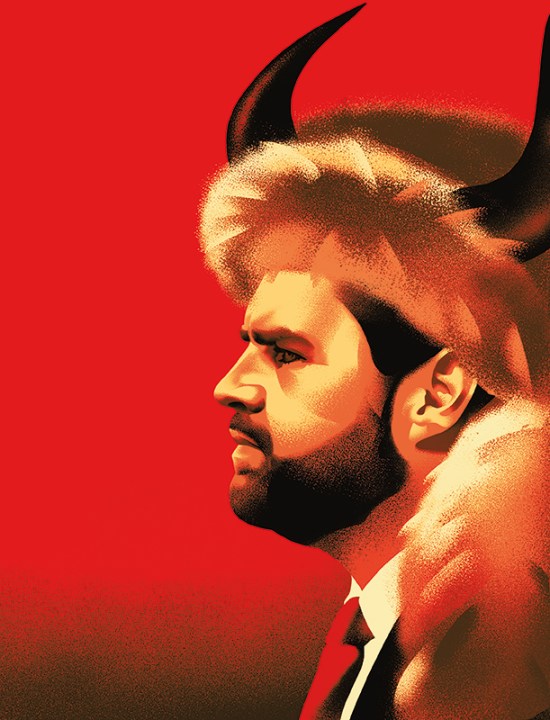
But it’s not just left-wing revolutions that have second acts. Just as a seemingly new Democratic majority asserts itself, and commentators are lining up to pronounce the death of Trumpism, MAGA is rebooting into its own 2.0 version.
MAGA 1.0 was also crazy – in both good ways and bad. It started in 2015, when Donald Trump entered the presidential race on a golden escalator, smashed through the guarded doors of the Republican party, challenged the bipartisan consensus – and horrified people. It challenged the shibboleths of globalization: free trade and mass migration. It pressed against the routine corporate transfer of knowledge and technology to China. It was also an anti-corruption movement rooted in the demand to “drain the swamp.”
This promise was based on the fantasy that a wealthy outsider such as Trump would be immune to the seductions of the rent-seekers and lobbyists in Washington. We all now know how that turned out.
When Trump turned against his fellow populists, the party machine backed up and he won the battles
But MAGA 1.0, Trump’s MAGA, did invite back into politics all sorts of people who’d had little or no influence before him: the nationalists, industrial policymakers, protectionists, immigration restrictionists. It brought in the “restrainers,” foreign-policy thinkers who questioned America’s interventions in the Middle East and its role as the primary guarantor of Europe’s security.
After the shock of Covid lockdowns and vaccine mandates, MAGA 1.0 even assimilated Robert F. Kennedy Jr. and brought into existence the “Make America Healthy Again” movement that vowed to promote a more honest, less-compromised Food and Drug Administration, free from the interference of junk food purveyors, agribusiness and rent-seeking pharmaceutical companies. The podcasters came along too, including Joe Rogan, Tucker Carlson (now liberated from Fox News) and even the tech-right of Silicon Valley. This coalition of the excluded brought Trump to power in 2016 and looked like the vanguard of a realignment in 2024.
But each one of these groups, for its own reasons, now has cause to feel excluded again, passed over or betrayed by Trump. They each have a story of how it happened; few blame Trump directly, almost all of them blame voices from the Establishment that have been able to influence him while in office. Some of them even blame each other for the decline in Republican fortunes.
The disaffection of Representative Marjorie Taylor Greene was a harbinger. Dismissed as a crank and conspiracy theorist, Greene got a real education on Washington and how it works in her short congressional career. She was anti-war, pro-MAHA and eager to drain the swamp. “We never changed,” she wrote in August. “Trump did.”
Trump spent lavishly to help stymie anti-war gadfly Thomas Massie, whose supporters chanted “no more wars” and “America First” at his concession. When Trump turned against his fellow populists, the party machine backed up and he won those internal battles. But when the fight was external, against the Democratic opposition, Republicans got shellacked.
Now, however, we are in the postmortem midterm phase, and the party is at last speaking honestly about its failings. Each part of the coalition is preparing for the end of Trump, assailing the administration for broken promises, or its own forms of corruption.
The present coalition is pointing at the giant hole in Republican turnout this year, and the swing voters who went from Trump in 2024 to Democrats in the midterms, and saying “those are our voters, and we know how to get them back.” Some are trying to get policy wins during Trump’s lame-duck period, others are looking for leadership for 2028.
And the most likely leader is Vice President J.D. Vance. In March, Trump admitted that his Vice President was “philosophically a little bit different than me” when it came to the Iran war. After the midterm blowout, Vance boldly showed that difference by posting a daring analysis of the defeats on Elon Musk’s X. “The reason we lost is the war,” he wrote.
Hawks instantly accused the veep of disloyalty and of laying down his own obnoxious marker for 2028. But Vance was backed up immediately by Donald Trump Jr., the President’s son, who, like a lot of Republican men under 50, has become skeptical of foreign intervention.
Establishment Republicans have tried to downplay the war issue. But it’s worth noting that by this month, six of Spotify’s top 13 podcasts were hosted by former Trump supporters lambasting him over the Iran war – hosts such as Megyn Kelly, Tucker Carlson and, crucially, Joe Rogan. None of these hosts opposes Vance.
Interestingly, three days after the elections, The Joe Rogan Experience subjected the administration to something like a trial in absentia with MAHA leader Calley Means as the prosecution.
The MAHA movement was the last one in on MAGA 1.0, but it is now making serious noise on its way to MAGA 2.0. Means went into the administration as an advisor to RFK Jr. He resigned last month just as the electoral disaster was falling on Republicans. He duly dished the dirt with Rogan for two hours, then went on a tweet-storm against those he considered Establishment and corporatist enemies within the administration.
He didn’t attack President Trump directly. But he singled out then-White House chief of staff Susie Wiles, accusing her of exercising a “stranglehold on any policy decision.” He accused her of saying she needed sugar-industry money to win the midterms and pointed to her close relations with lobbying firm Ballard Partners as a stymieing force on MAHA.
Wiles and Ballard have hotly disputed Means’s accusations, calling them defamatory and provably false. Wiles resigned the very day Means’s episode aired.
Wiles has been replaced by Stephen Miller, the architect of mass deportation. This was seen as a sign of relief for the nationalists and restrictionists, possibly even for MAHA, who believe Miller is aligned with them. But days later, Trump was on 60 Minutes saying his deportation policy “might have been too tough,” that it had hurt him, and he was open to working with Democrats on some kind of deal. In this case Trump was playing the AOC role, looking back on his last two years as president and finding them a bit insane, in retrospect.
Commentator Matt Walsh responded that the policy wasn’t tough enough. Mark Krikorian, executive director of the Center for Immigration Studies, told people not to get too excited: Trump had said this kind of thing before. The President won’t embrace true workplace enforcement of immigration law in sectors such as hospitality and agriculture. Which was another way of saying Trump may try to trade limited immigration amnesties for other necessary reforms.
How Miller and Vance, who are said to be aligned on key issues, handle immigration could be seen as a litmus test as to their suitability to take the Trump movement on.
Another key element in a reformed MAGA will be the input of intelligent policy mavens, who found themselves building influence in the era of Trump while keeping an arm’s length distance from the administration and its grubbier aspects.
Julius Krein founded the political journal American Affairs in 2017 to give Trumpism the intellectual program that it manifestly lacked. Reacting to Trump’s relative shrug at the grotesqueries of Charlottesville – where racists chanted “Jews will not replace us” – Krein said he regretted his vote. “Someone,” he wrote, will have to “salvage that agenda from the wreckage of his presidency.” But Krein has kept at the arguments.
How did a president running on a slogan of ‘America First’ launch another war in the Middle East?
Oren Cass, a former advisor to Mitt Romney, founded the think tank American Compass in 2020 to work out what the right would look like after Trump 1.0. He emerged as one of the most intelligent supporters of Trump’s tariff agenda, though he never became an abject cheerleader. After the midterms, Cass pointed out that voters were angry about corruption, but didn’t single out the President. This is still a country “fed up with its elite,” he concluded. Cass also asked the obvious question: how did a president running on a slogan of “America First” launch another war in the Middle East? “One might reasonably conclude that other, unaccountable centers of power get more influence over American foreign policy than the American people,” he wrote.
That connects Cass to the so-called restrainers, the foreign-policy thinkers who either want to prioritize China as the most urgent threat, and downgrade other regions; and those who want to see America downsize its global commitments to better fit the small-r republican ethos of its people and return to the country’s pre-Cold War, anti-imperialist traditions.
Dan Caldwell, a veteran who advised Defense Secretary Pete Hegseth, was dismissed from the Department of Defense in April last year, with headlines claiming he had leaked classified information, amid whispers that the “isolationists” were being purged. He was later cleared of the charge. Another antiwar figure, the distinguished veteran Joe Kent, quit as head of the National Counterterrorism Center when the war began.
Such figures may have been expelled from MAGA 1.0. Yet, just as they did from 2016 to 2026, outsiders can again play an outsized role in the movement’s reformation.
MAGA 2.0 is already showing independence from Trump, and a stubborn will to impose on him in his last two years and later to carry on without him. They can look at the returns from this month’s elections and justly say that their people didn’t show up. Young men went from 56 percent for Trump in 2024 to 58 percent for Democrats. Republicans kept only a third of Hispanic voters. Two thirds of Republicans told Reuters/Ipsos they don’t want Congress to end Trump’s tariffs, but more than half said they support Congress moving to end the war. These voters never fully belonged to the Republican party. But they are biddable and willing to turn up for the candidate who best represents their interests.
The GOP never wanted MAGA 1.0, but after this November election, the Republican establishment may decide that its only chance of survival is upgrading to a new and more capable model. Whether Vance becomes their man is the central question of MAGA 2.0.




Comments