At a time when technology has invaded our lives, Australia is now running the world’s biggest real-life experiment that seeks to mitigate its effects on our children. What could possibly go wrong?
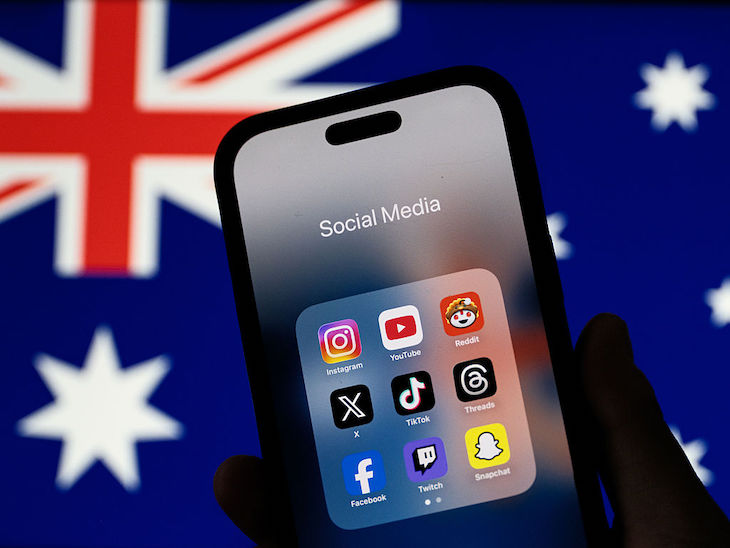
It’s now just over a month since the world’s first social media ban for children launched in Australia. Age-restricted social media platforms (like Facebook, TikTok, and YouTube) must take ‘reasonable steps’ to prevent under 16s creating or keeping an account.
Just a few weeks into the ban, Aussie teens are skirting the rules with ease: two phones, fake birthdays, borrowed accounts
Social psychologist Jonathan Haidt, in his 2024 book The Anxious Generation, argued that smartphones and social media are ‘rewiring’ our children and have led to a rise in mental illness. He has become a champion for banning smartphones at school and has recently called for other countries to follow Australia’s lead.
The ban has been contentious. Scientists have questioned whether the ban will work, and it’s unlikely to reduce screen time. An action like this reeks of ‘we must do something’ alarmism.
That aside, I’m not convinced a ban is the best approach, for several reasons.
It’s well accepted that governments limit alcohol, tobacco, and driving to only be allowed from certain ages. And parents also need to do their bit. In Victoria, kids need 120 hours of supervised driving before they can even be tested. But when it comes to social media, expecting government bans to do the work of parenting is bad policy – and bad parenting.
Governments ought to be relying on an evidence base as they do for other bans. And parents shouldn’t be outsourcing their role in raising children to government.
Parents ought to have a simple deal with government: we won’t tell you how to run the country, and you don’t tell us how to raise our kids.

There’s another problem with bans and laws: they invite people to challenge and subvert them. This is especially the case with teenagers, whose instinct is to push and break boundaries. Our kids are smart. Just a few weeks into the ban, they are skirting the rules with ease: two phones, fake birthdays, borrowed accounts. This naturally evolves into a never-ending game of cat and mouse. Most kids know technology better than their parents. Bans like this don’t work for anyone serious enough to try to get around them.
Do our kids seek to challenge and subvert the rules we place on them? Of course. But these largely take place in the intimate environment of the family home – a place where parents can establish a culture, and have some semblance of oversight and enforcement. Handing off the problem to government diffuses the responsibility of parents.
And that leads to the third and most important reason: kids learn by observation. They see and hear everything. They understand well before they can speak.
In my ‘day job’, I help families navigate the complexity of succession, intergenerational wealth transition and family decision-making. In our industry, we have a saying: ‘Values are caught, not taught’.
The parents who do it well follow two principles: model the behaviour they want from their children, and empower them to develop agency and own responsibility for their decisions.
Addressing the challenges of social media with a ban for children ignores their parents, who firstly have similar challenges themselves, and secondly are best placed to teach their children how to live better with technology.
Agency is at the heart of this war against social media. The platforms have stealthily stripped it away, with algorithms designed to keep us consuming content in endless scroll, while we are microtargeted with advertisements. The solution is not top-down government laws and regulation. Rather, it’s bottom up – affirming our agency and our choice in how we spend our most important asset: our time.
To that end, the role of parents in helping children learn good technology use habits cannot be underestimated. What help is a social media ban if everyone sits around the dinner table on their phones? Can we genuinely tell them to spend time outside with their friends instead of doomscrolling, while glancing up from our own Instagram feeds?
Despite the generation gap, our kids look to us for guidance. We can’t be telling them what to do and not to do. We need to show them. They learn restraint by watching adults, not by being fenced in by law.
Technology like smartphones and social media have helped us be more connected, delivered huge productivity, and we no longer need to bring a lighter to music concerts. On the flip side, they have led to polarisation, distraction, and plenty more. They impact both adults and children.
I trust neither the government nor the platforms to remedy this; one can’t and the other won’t. The solution is within us: as Victor Frankl wrote, we have a unique human ability to find power and meaning between stimulus and response. We are flooded with stimulus; we can choose how we respond. And those closest to us – family and friends – are in the best position to help.
Perhaps the most discomfiting truth in this debate is that no ban can give us back what we’ve already surrendered. Attention and restraint must be practiced rather than enforced. Prohibition often backfires. If we want our children to learn how to live well with powerful technology, we must show them we can step away ourselves. The Nanny State can’t do this work for us. It must be done daily, deliberately, and close to home.


Comments