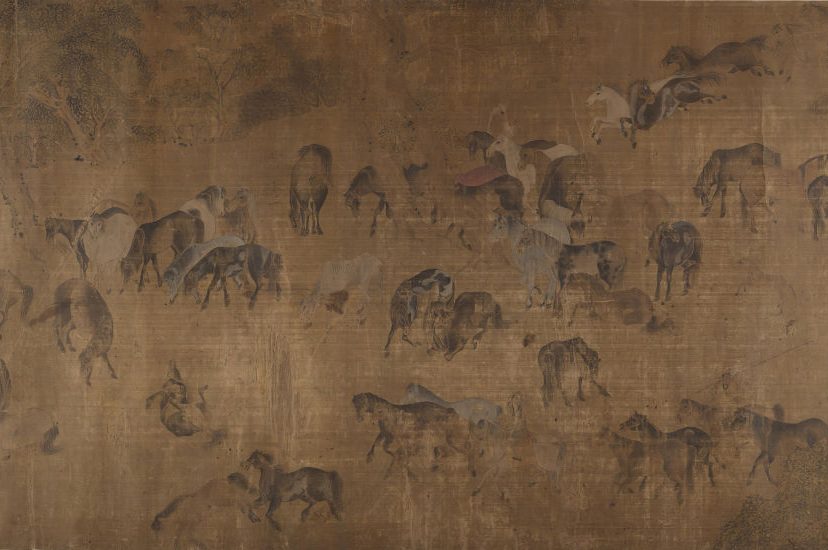

When you own a horse farm, the same question canters repeatedly through your mind: should I buy another horse? Rationally, you know the answer is no, but you inevitably wind up doing it anyway. Because in the grand scheme of things, it’s just one more head in the herd.
The day-to-day of farm management doesn’t change much between 15 horses and 16. It takes some time to acclimate a new arrival, of course. A herd is like a high school: popular kids run the show, and the new blood always faces some bullying. But once he finds his place in the hierarchy, the routine proceeds as usual. And consistency is key with horses.
The herd mostly gets to roam freely through about 40 acres of pasture. This is generally better for horses, which graze in their natural habitat with a run-in shelter available during inclement weather. But the real work begins when they’re brought in in the early morning.
Farm life starts early – and it’s actually the barn cats that always get fed first. Electric fences are high-tech these days, and an AI monitoring system sends an alert to my phone if there’s an outage or a breakout. Still, it’s hard to relax over morning coffee unless you first go out to check.
Work begins before the horses even come in. Stalls must be set: fresh water, hay and morning grain. Hay keeps them fed and occupied throughout the day, while most of their calories come from a custom-formulated grain. It’s preferable to grain indoors to make sure each horse gets precisely what it needs without waste or fighting. Any horse that needs supplements for certain conditions – weight management, arthritis, asthma – typically gets it in their morning feed bucket.

The herd knows what to expect and crowds the gate, sometimes even making it hard to open. But as creatures of habit, they all know which stalls are theirs when they come running into the barn. It’s rare they don’t run directly to where they’re supposed to be. Grooming starts once everyone’s in and fed. Blankets come off, and each horse gets inspected for any sign of illness or injury. Hooves get special attention, as they are a horse’s most valuable, and injury-prone, asset. A small pebble can easily lead to an abscess which can render a horse unrideable for the rest of its life. Substantial grooming, however, is typically only done to a horse that’s going to be ridden.
Somewhat surprisingly, actual riding is only a small part of the day. Even as I always weigh buying a new personal horse for myself, it’s rare I have the time or energy to ride. If a boarder is coming in to ride, they have full access to the property. If they’re looking to ride in the ring, we’ll get the ring ready with cones, poles and standards. Trail riding is easier – we have plenty of land to explore – but requires much more maintenance throughout the year.
It’s farm and land maintenance that takes up the bulk of the day. More often than not, there’s a fence that needs fixing. Trees fall, obstructing a trail or downing a fence, and must be cut up and hauled out. Washouts are common, causing treacherous footing for the horses. The brook that naturally fills their water source can get obstructed, or worse, dry out. On the flipside, the rainy season creates excessive mud that’s as bad for footing as it is unsightly. It’s a constant war against the elements, with endless scraping, grading and filling to keep the terrain rideable.
If the horses are all coming in, there’s usually a secondary reason. Sometimes, it’s because the bulldozer guy is cleaning up the property. Other times, it’s the farrier; shoes stay on year-round, even without much riding. Most often, however, it’s for the weekly hay delivery: 1,000-pound round bales get driven out into the field for supplementary feed. Either way, it’s a reason to stick around the barn for the day.
After the afternoon feeding, the horses go back out – but that doesn’t mean the day is over. Stalls must be mucked, limed and sawdusted in preparation for the next time the herd comes in. Horses that are staying in the barn for whatever reason get set up with food and water for the night. The barn is swept, equipment cleaned and put away, all to look like the day’s work never even happened.
Ultimately, owning a horse farm is a labor of love. All of this work has to be done whether it’s for two horses or 20. And there’s just no world where I give up horses all together. So if an exceptionally big, beautiful addition to the herd comes along, I may balk about the extra commitment or expense, but my love of horses will always win in the end. The 16th head is currently getting acclimated. Now I just have to find the time to ride him.
This article was originally published in The Spectator’s December 22, 2025 World edition.

Comments