
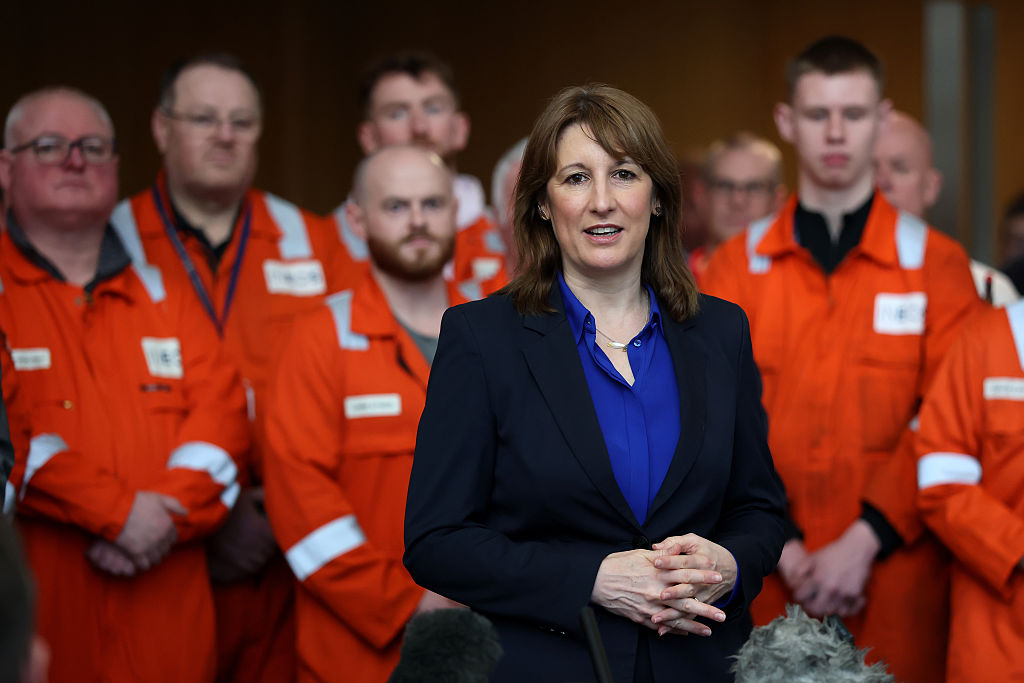
Just as Britain’s economy looked to be ‘turning a corner’, it may be about to slam into a wall.
The warning signs were obvious last week. On Monday, I’m told, the ship insurer Lloyd’s of London saw its ‘war desk’ hit its annual sales target within the first two hours of trading. As you read this email, the Chancellor will meet with the Lloyd’s chair to come up with a plan to support shipping amid the continuing war in the Middle East.
Today, though, turmoil in the market has accelerated. As Asian markets opened overnight, the price of crude surged past $100 a barrel for the first time since 2022. By the time the opening bell rang in London the dominoes were already falling: traders piled into stagflation bets, gilt yields rose on fears of another inflationary wave and talk of interest-rate cuts quickly gave way to expected hikes.
Donald Trump, on Truth Social, said we should not worry and that normal prices will return soon. If they don’t, Keir Starmer and Rachel Reeves have cause to be genuinely fearful. After clocking that economic growth is a lot easier said than done in Britain, the government’s focus had turned to cutting the cost of living. The message to voters was: ‘We are turning a corner’.
And there was good reason to believe we were. Interest rates have been falling with more cuts expected and the Bank of England was expecting inflation to return to its 2 per cent target as early as next month. Now all bets are off.
Bankers at ING have warned that if natural gas prices in Europe persist above €65 per megawatt-hour and oil goes to $110 per barrel then UK inflation could head towards 5 per cent in September. Traders began to bet on rate hikes rather than cuts – though markets have since, thankfully, cooled, suggesting that rates will be held.
But panic has already hit. The AA advised drivers to cut out ‘non-essential journeys’ as part of efforts to conserve fuel, while the RAC said motorists should drive more efficiently and ‘avoid harsh accelerating’.
Conscious to avoid an economic car crash of her own, Reeves took to Zoom this lunchtime for a meeting with other finance ministers from the G7 to discuss a plan to release emergency oil reserves – something which the International Energy Agency had called for. The group, though, decided not to release the reserves, saying they ‘will continue to closely monitor the situation’. The hope, around the world, is that the falls in oil price we saw as the day went on will be sustained.
Those hopes seemed to gain strength as oil fell back, gilt yields calmed slightly and stock markets recovered some losses. Nevertheless, the Chancellor took to the Commons to provide an ‘economic update’ in an attempt to reassure the nation.
Reeves was frank: ‘The movement [in markets] we have already seen will put upward pressure on inflation in the coming months,’ she told MPs. However, she would stand ready to ‘protect the public finances and help families with the cost of living’. The MoD, too, would not have to pay for the cost of any action relating to Iran – instead using Treasury reserves.
The Chancellor had a reassuring message for households worrying about increased bills. The energy price cap – which is due to fall in April – remains unchanged, meaning any higher prices would not feed through to bills until July at the earliest. Those who rely on heating oil, however, may feel the impact sooner, with the Treasury promising action later this week.
But if things in the Middle East drag on, we could find ourselves in totally uncharted territory – as former White House economist Tyler Goodspeed explained on today’s Reality Check episode. Indeed, if shipping continues to be constrained in the Strait of Hormuz, Reeves admitted: ‘We don’t know what further action will be required.’
At that point, if Ofgem recommends raising the energy cap again, the demands from Labour’s backbenches for more support will be mighty hard to ignore.
But let’s not forget Liz Truss, who pledged tens or even hundreds of billions to limit energy prices during the last shock in 2022. It was that technically limitless commitment that freaked out markets and contributed to the inflationary spiral we’d only just recovered from – more so than unfunded tax cuts.
If oil and gas prices do not come back down soon Reeves will face staggering pressure for similar support. Only this time she has very little room to manoeuvre.




Comments