
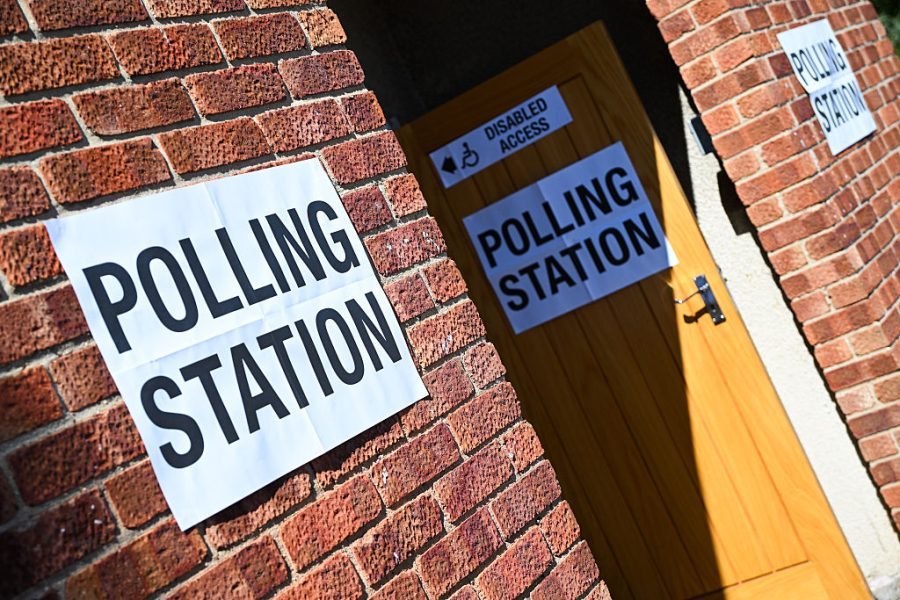
It is not always easy to guess what lasting effects a prime minister will have. With Sir Keir Starmer’s announcement that he is leaving parliament – he was only ever a backbencher for four months when first elected, and he clearly does not care for it – immediate thoughts are of an ignominious end. But Starmer may leave behind a profound change.
Today the House of Commons will take the remaining stages of the Representation of the People Bill, then send it to the House of Lords for its scrutiny there. It is a hugely significant piece of draft legislation but has largely disappeared in the fog of everyday political war.
Representation of the People Acts are generally major statutes because they regulate the electoral system and how the House of Commons is composed. The 1832 Act, the Great Reform Act, swept away rotten boroughs and established a systematic property-based franchise; the 1867 Act lowered the property qualification and extended the franchise to renters and agricultural tenants; the 1918 allowed all men over 21 to vote and enfranchised some women voters.
Should there be a height requirement or a test on telling the time and knowing the alphabet?
The main effect of the current Bill, introduced in February but subject to a carryover motion so it could be revived in the new parliamentary session after May, will be to lower the minimum age for voting in general elections, local elections and referendums from 18 to 16. It changes the age at which people can vote for their MPs for the first time in nearly 60 years. The Representation of the People Act 1969, brought in by Harold Wilson’s government, lowered it to 18 from 21.
The current Bill would put the United Kingdom in a very small group of seven other countries – Argentina, Austria, Brazil, Cuba, Ecuador, Malta and Nicaragua – which allows 16-year-olds to vote. Readers can judge for themselves whether that is a group the membership of which seems a compelling argument. Labour pledged in its manifesto at the 2024 general election to reduce the voting age in order to ‘increase the engagement of young people in our vibrant democracy’ and seemed to regard that as argument enough for such a profound change.
Let us start with the basics. 16- and 17-year-olds are, for most purposes, legally regarded as children (for example, under the Children Act 1989). They are still generally the responsibility of their parents, and there are all sorts of limitations and prohibitions on them because they are not regarded as fully competent and responsible to make decisions for themselves: They may not buy tobacco or alcohol, they must be in education, training or employment and they are generally dealt with by a different criminal justice and detention system.
To enfranchise children, then, there must be some robustly compelling argument, some pressing imperative to right a palpable wrong and correct some burning injustice in the UK’s electoral system. After all, 95 per cent of the countries in the world do not allow 16- and 17-year-olds to vote, so Britain would become a very stark outlier.
The Labour party does not seem to think so. That casually tossed-off phrase from its manifesto – ‘increasing the engagement of young people in our vibrant democracy’ – is so piously bland it has virtually no meaning. In any event, there must surely be some lower limit of the voting age, so why 16? Why not 14, or 13, or 10? Should there be a height requirement or a test on telling the time and knowing the alphabet?
Lowering the voting age is in fact part of a wider picture of progressive thought which is bifurcated between licence to do some things, extending choice over which is deemed liberal and civilised, and increasing infantilisation of teenagers by imposing prohibitions which are ‘for their own good’. It results in some absurd outcomes.
At 16, you can consent to sexual activity (though in England you cannot marry until 18), something of an inversion of the traditional ‘no sex before marriage’ mantra. You are also legally presumed to have the capacity to consent to medical treatment. Once you reach 17, you can drive. But there is a long list of things you cannot do – some major, some trivial. If you imagine these prohibitions and requirements being placed on voters, which will be the situation if the current bill becomes law, they show the absurdity and inconsistency of how we treat adolescents.
You must be in full-time education, employment or training (will you be given an exeat to go to the polling station?). You may not buy cigarettes, alcohol or vapes, and you may not have a tattoo. You may not marry in England; you can marry in Northern Ireland but only with parental consent. You may not have a standard current account at a bank or have a mortgage, and you may not serve on a jury.
These are not wholly arbitrary activities. The limitations acknowledge that they require a degree of maturity, autonomy, judgement and experience. All of those should apply with perhaps more force to voting than to any other activity. It is, after all, our most basic civic right and (this side of the coin is too often overlooked) civil responsibility.
To be able to vote but unable to have a tattoo reveals a fundamental absurdity. Universal adult suffrage has been a long and difficult fight, but the requirement of adulthood is important. There is little sign of today’s 16- and 17-year-olds being dramatically more mature and responsible than ever before (nor is there any onus on them to be). But voting is more than a right, it is a tacit political contract: you possess the franchise and it is your responsibility to understand what you are doing. You are expected to be grown-up about it. Around the world, 18 is regarded as a reasonable gateway to participation in the democratic process. Why change it now?




Comments