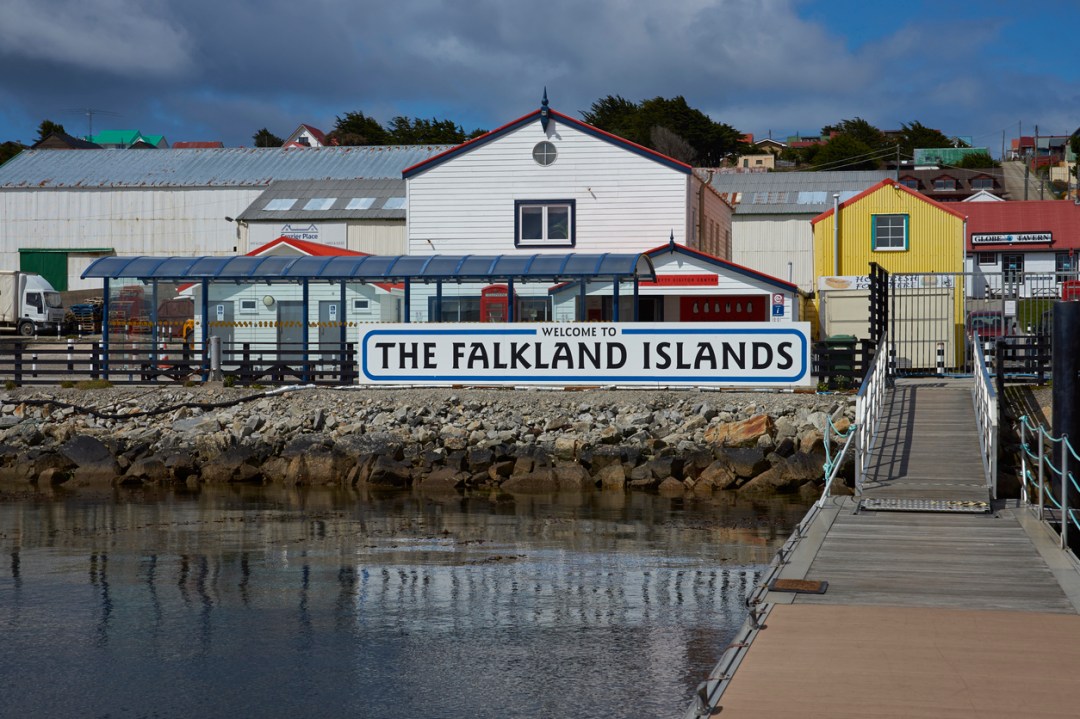
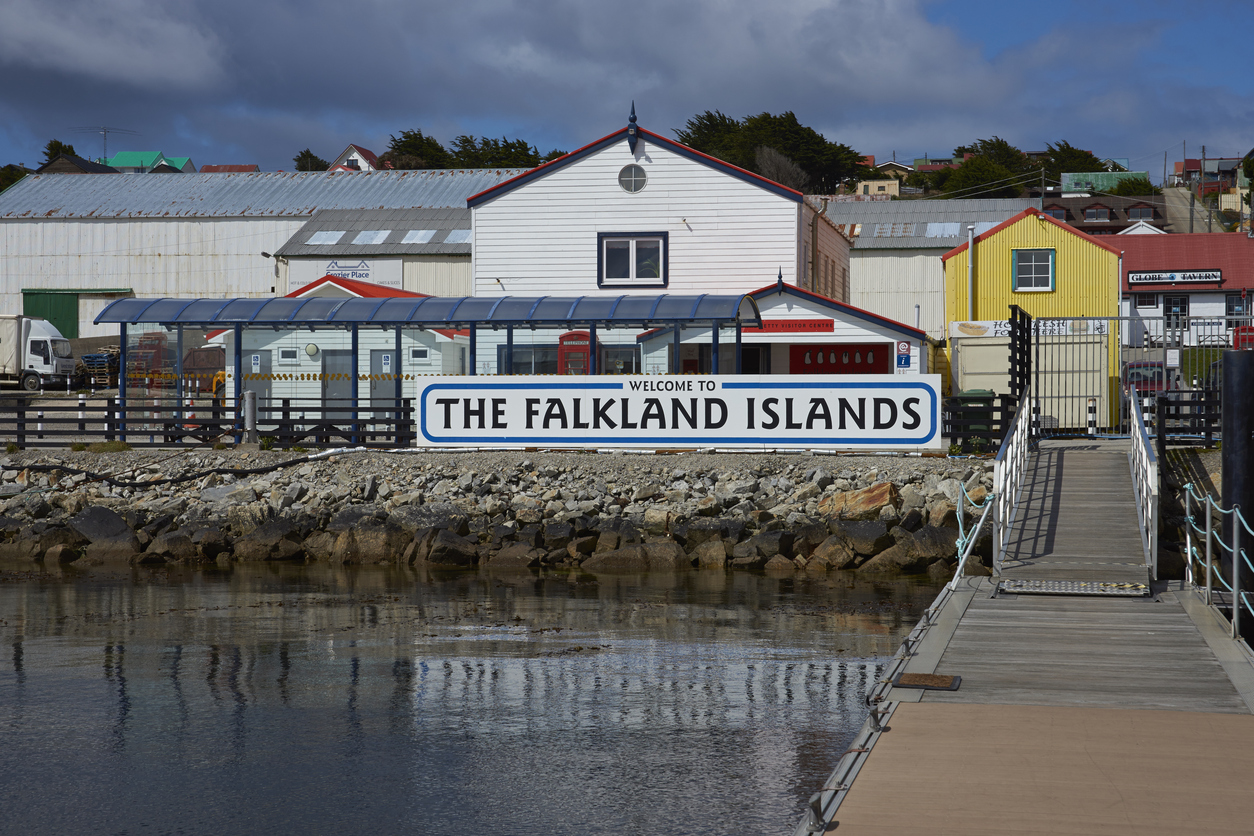
Rumour had it that the Falkland Islands were running out of food. There was panic, it was said, and people had forgotten what fresh food looked like. It all sounded pretty far-fetched, but it was what a couple of UK publications were reporting. And it was particularly apposite for me since I was about to travel to the Islands for my latest visit. The last thing I wanted was to get there and find that I couldn’t actually eat.
Well, I’m writing this in Stanley, and am pleased to report that the cafes are operating as normal, as are hotels and guest houses. And in people’s homes throughout the Islands everything is hunky-dory. I’ve had a cooked breakfast wherever I’ve been, from Staney’s comfortable Malvina House hotel to remote B&Bs in tiny hamlets. Last night, dinner was roast beef followed by bread and butter pudding, all washed down by a pint of local bitter. You can’t do better than that.
In the UK, this would be a major crisis. I can only imagine the outcry if ham, cheese and flour started disappearing from shelves in Tunbridge Wells
So, what was the fuss about? Just journalistic invention? Not quite. Recently, the planned maintenance of the Islands’ main supply ship, the Unispirit, took five weeks longer than expected during ‘dry docking’ in Brazil. Given that the Islands import the overwhelming majority of the things needed for ordinary life and almost everything you’d typically find in a supermarket, a five-week delay is clearly sub-optimal. People suddenly found that their favourite sandwich fillings, particularly ham and cheese, weren’t readily available. Flour, too, was in short supply, as was canned fruit and veg. The shelves weren’t empty, but nor were they as full as normal.
Now, in your average community in the UK, this would be a major crisis. I can only imagine the outcry if ham, cheese and flour started disappearing from shelves in Tunbridge Wells. Statements from Downing Street would be demanded. Social media would be abuzz. Heads would roll, not just Keir Starmer’s. The army would be called in. Loads of folk would be stockpiling. Shoplifting would be even more prevalent than usual.
Perhaps that just shows how spoiled we are. Because if there’s one thing that characterises the Falklands, it’s resilience and an ability to keep things in perspective. After all, Islanders my age and older, particularly at this time of year, remember their homeland actually being invaded not so long ago, with missiles, curfews and the real possibility of subjugation. Some still remember growing up in remote farms with no roads or telephone connections, and schooling carried out by occasional visiting teachers flown in for a day or so. If you had to consult a doctor, you did so over a radio link, to which all your neighbours could listen if they so wished. What you didn’t grow or rear, you didn’t eat. You might visit ‘town’ (i.e. Stanley) once a year, and many people never left the Islands from the moment they were born till the day they died.
In short, these are hardy, self-sufficient folk. So how did they react to supermarket shelves being barer than usual? No one’s actually going hungry, they said, even if it’s a bit annoying. And if we have to switch our sandwich filling from ham to tuna for a few weeks, well, far worse happened in 1982 when the Argies invaded. In any case, being at the end of a global supply chain, as a remote island community in the southern Atlantic always will be, means that we’re used to building in some contingency. We plan ahead if we need anything, from KitKats to kitchen tiles. That’s why our larders are well stocked and able to last us through any hiccups. And the ship will get to us eventually (which indeed it did).
The Falklands Islands government also carried out its contingency plans while demonstrating enviable operational agility. I interviewed the government’s chief executive, Andrea Clausen, last week, and she was at pains to emphasise that while, yes, nobody expected that five-week delay, and while it certainly presented challenges, medical essentials, for example, immediately switched to an air supply. If the supply-ship delay had gone on longer, food essentials could be sourced via another vessel used by the British armed forces. In fact, the bigger problem, she told me, wasn’t so much stuff getting in, as getting exports like wool, meat and fish, out.
So, it turns out that ‘food shortages in the Falklands’ was not quite the whole truth. A more accurate headline would have been ‘Falkland Islanders respond to food supply challenge with typical calm efficiency’. Not quite so eye-catching? Sure. But one from which we in Britain would do well to learn.






Comments