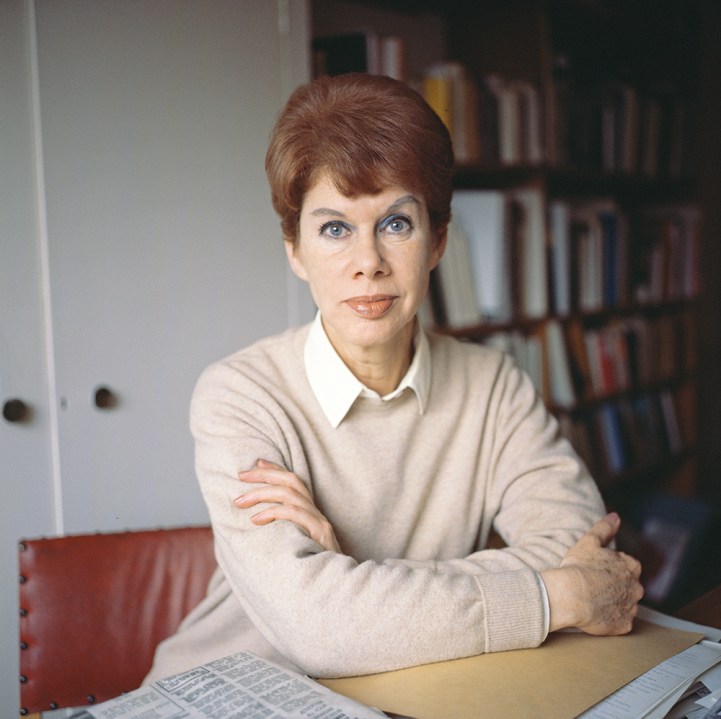
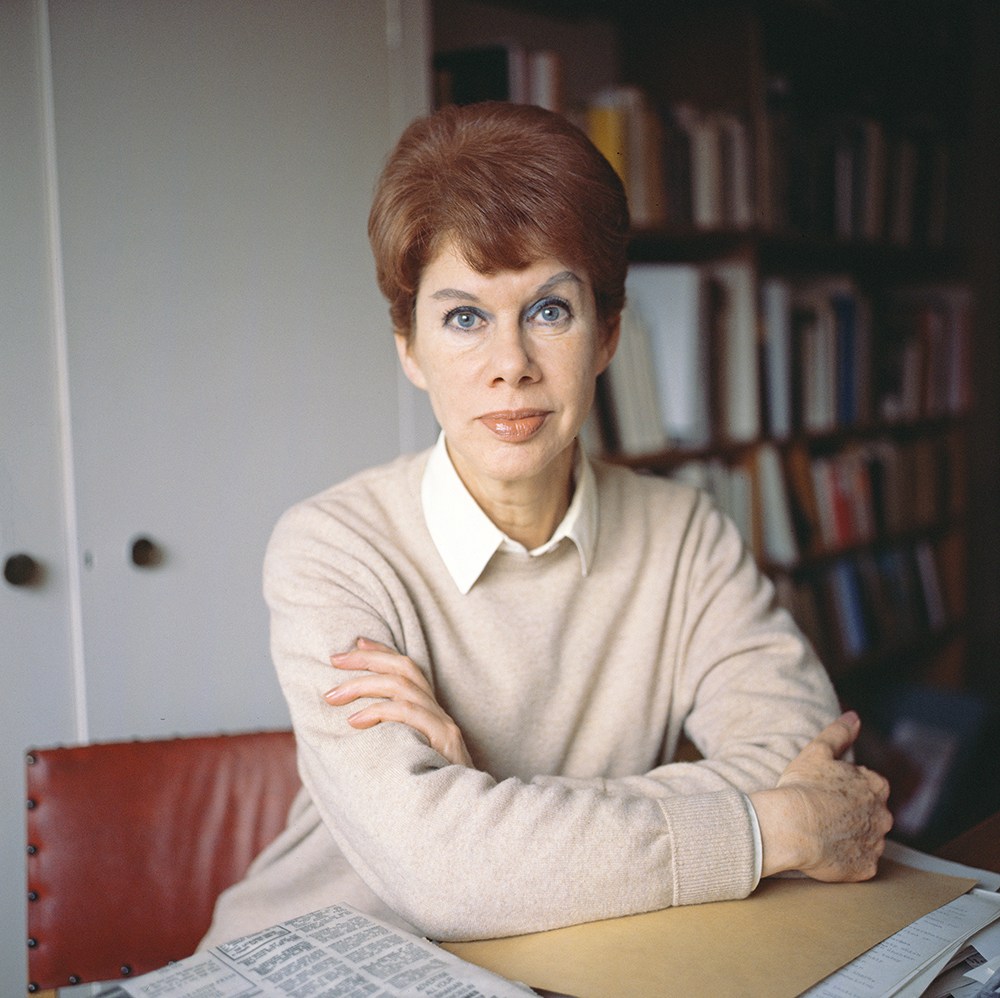
Anita Brookner, at 80, knew that, were any biographer to delve too deeply into her private affairs, her literature would be ruined. The work was one thing, matters of the heart quite another. In both of her distinguished careers, first as an art historian, then as a so-called ‘lady novelist’, she had found it advisable to keep her authentic self at one remove from her storied accomplishments, and she saw no reason for this division – the personal set apart from the sombrely professional – not to endure beyond her death.
She determined, therefore, to thwart any attempt at biography by, wherever possible, erasing all evidence of her existence beyond the collections held in university archives and the fading recollections of contemporaries, family and friends. Let time be her judge, not a busy and presumptuous writer scouting for material. ‘I have no private papers,’ she had informed an interviewer some years earlier. ‘I shall leave no trace. That’s the ideal.’ Now, as the end of her life approached, this ideal state was close to being realised.
Spare a thought, then, for Hermione Lee. Having undertaken to produce an authorised account of Brookner’s life, for publication a decade after the author’s death at 87, she experienced what may be described as biographer’s remorse:
Once I began to think about her, I soon realised that she had indeed taken evasive action in advance of any pursuit and made away with as many personal papers as she could, and that her frequent interviews were a brilliant strategic form of self-defence… As I went further into the deep forest of Brookner territory, I could hear her in my head, distinctly and courteously uttering two words: ‘Go away.’
In Anita Brookner: Art & Life – its title being an echo of A Start in Life (1981), Brookner’s remarkable debut as a novelist, Lee respectfully ignores the wishes of her disobliging subject. She begins by making an essential distinction. The author of Hotel du Lac (1984) was categorically not like one of her heroines,
the image of a sad, lonely woman in a long grey cardigan, wistfully yearning for an absent or unreliable lover, gazing out of the window of a bleak London flat or on to the misty waters of a Swiss lake… Put the caricature up against Anita Brookner’s lifelong dandyish, witty, controlled, stylish performance, in life and art, and it looks misleading.
To identify Brookner as a wit and a dandy is to place her – justifiably, in my view – in the lineage of such debonair figures as George Sand or Oscar Wilde rather than, say, Barbara Pym. If not exactly larger than life, neither was the writer an unassuming presence. In person, this ‘sad, lonely woman’ was stylish, determined and intimidating, a kind of coiffured quaintrelle, with a tightly curled chignon and a Silk Cut perpetually on the go.
For many years, Brookner’s salon was the Courtauld Institute in Marylebone, where she lectured in art history before pivoting, at 53 and seemingly without premeditation, to a successful career in literature. All the wonderful early novels, including Hotel du Lac, winner of the Booker Prize for fiction, were written in her office at the Courtauld over the summer break, which helps explain why they are all the same length. She typed for 12 weeks, revised the manuscript only a little and completed it before the start of the new academic year; or so she said.
Proofs of the existence of this Anita Brookner are widely available: the dolefully humorous media appearances, the unamused photographs in the National Portrait Gallery, anecdotal accounts of publishing lunches and brief glimpses at book launches. Lee pulls together many of these episodes in a chapter entitled ‘Public and Private Views’, which may be the most densely quotable essay I have read all year. One example:
Penelope Lively encountered her on the steps of the Marble Arch Marks & Spencer. Brookner asked, benignly: ‘Your couturier?’
Another:
She famously had a habit of arriving very early at parties and leaving very quickly… Brookner glided into the room. A few moments later, she came out again; I was still at the entrance, and made the mistake of saying: ‘But Anita, you’ve only been here for five minutes!’ To which she replied, with perfect courtesy: ‘And I’m so glad that three of them were spent with you.’
Which is all very well and delightful. But it is also indicative of the challenge Lee faces in assembling a reliable and penetrating biography of one so staunchly opposed to it. How is she to pierce Brookner’s immaculate armour? If the author is not her characters, and the public record is a smokescreen – and if, furthermore, Brookner did indeed shred the traces of her ‘real’ self – where is the biographer to turn for the truth and nothing but? Lee’s compromise solution is to sift the art for significant clues, then piece together the life from the evidence available.
Readers may recall that Brookner was a regular contributor to these pages, filing numerous book reviews and essays across several decades. I am reliably informed her copy rarely – OK, never – required correction. Search The Spectator archive for her appreciation of the novelist Elizabeth Taylor. It is as good a piece of popular literary criticism as you will find anywhere: astute, sensitive, generous without resort to flattery and attuned above all to the psychology of the writer she so admired. And it is in this manner that Lee approaches the task of reconstructing Brookner from everything she did leave behind, including her fiction.
‘I have no private papers. I shall leave no trace. That’s the ideal’
First, the biographer gives us the facts of Brookner’s early life as they are known. She was born in London in 1928, the only child of Polish-Jewish immigrants. It was not a happy home, and to escape its gloomy atmosphere, the solitary girl would spend hours at the nearby Dulwich Picture Gallery. She excelled academically, took her PhD at the Courtauld Institute of Art, lived in Paris for a time, then joined the teaching faculty at the Courtauld. In 1967, she was the first female Slade professor of art at Cambridge University, where she specialised in, as she would later term it, Romanticism and its discontents: Géricault, Ingres, Delacroix. Lee assumes personal romances too, with their inevitable disappointments, but her sources for these are practically non-existent, a census record or a cryptic journal entry. Instead, she carefully lets recurring themes in Brookner’s novels tell a plausible, but not definitive, version of events.
Then, in a brilliant chapter on Brookner’s distinguished career in art history, Lee demonstrates how the Slade professor’s attitude to the styles of painting and writing she admired defined not only her aesthetic but also a moral code, both of which the author then explored at length in her fiction. Those critics, often male, who dismissed Brookner, grumbling that she wrote the same novel 24 and a half times – frustratingly, At the Hairdresser (2011), her poignant final novella, was published only electronically – truly missed the point. She was an artist who returned at regular intervals to the same subjects, her perspectives changing with age and the refinement of her technique. She published too regularly for the book trade’s comfort, but now her account is closed the novels may be seen for what they are: a literary chronicle of life’s journey from middle to old age, the universal experience of heading towards – as she titled her late masterpiece – The Next Big Thing (2002). If this sounds unexpectedly Proustian in scope, it shows how ill-served she was by her detractors and the orthodoxies of the sales cycle.
In her art and her life, Brookner was in sympathy not merely with the consolations of literature, that project that can ruin lives as well as save them, but also its limits. To the more ‘claustrated’ (a favourite Brookner word) book lover she is the patron saint of reading, writing, feeling and thinking about literary art. Ultimately, these are the rules of engagement by which Lee abides, even as Dr Brookner is instructing her, with a frosty smile, to go away. And if, of necessity, this thoroughly absorbing and beguiling biography errs on the side of art over life, surely the woman herself might grudgingly approve.





Comments