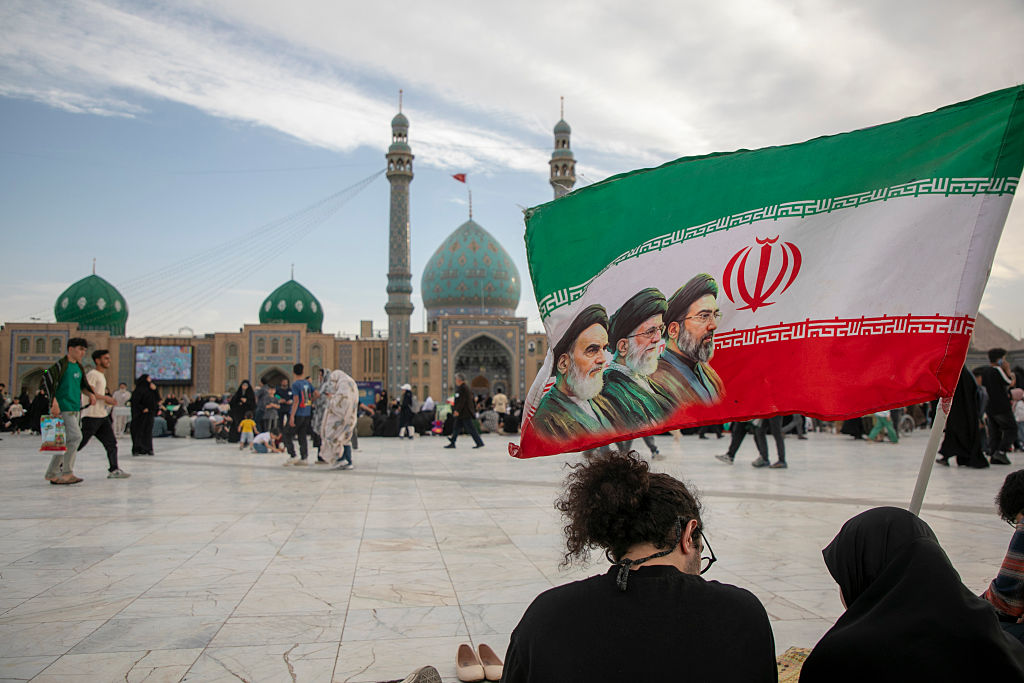
America’s war on Iran was supposed to give Iranians their freedom. But even in February, at the start of the conflict, the prospects for regime change seemed doubtful. Now hardline IRGC generals appear to be calling the shots. They’ve used the war as a pretext to go after opponents and increase the Islamic Republic’s repression to horrific new levels. More than 6,000 people, including protesters, journalists, lawyers, human rights defenders, dissidents and members of ethnic and religious minorities have been detained under the guise of national security. Many are executed after being dragged through kangaroo courts.
As the world focuses on the dithering and blunders in Washington, the horrors being visited on the long-suffering Iranian people are rarely mentioned
As the world focuses on the dithering and blunders in Washington, the horrors being visited on the long-suffering Iranian people are rarely mentioned. Amnesty International has noted: “To maintain their grip on power, the authorities have unleashed an all-out assault on people in Iran.” An internet shutdown lasting 88 days (partial online access was only restored on May 26) prevented reporting of human rights violations and allowed the authorities to act with even greater impunity.
It’s important to put names to the endless statistics. One such is 17-year-old Matin Mohammadi who is awaiting execution in a Tehran jail, along with two other teenage boys. All three had confessions beaten out of them in a torture cell, according to human rights activists, after rigged charges in relation to the deaths of pro-government paramilitaries.
With its limitless appetite for cruelty, the regime enjoys mock-executions before the real thing. Thousands of civilians have suffered such a fate.
To add to Iranians’ misery, the internet shutdown has devastated the already crippled economy – wrecking small businesses and wiping out income for millions of people who are dependent on digital connectivity.

In the West we’re understandably fearful of the economic damage the war has done – or will do when the oil shock really kicks in the coming weeks or months. But justifiable scorn for the Trump administration’s botched attempt at regime change seems to be drowning out any objective criticism for the thugs and criminals running Iran.
The scowling regime apologist Seyed Mohammad Marandi, a professor at the University of Tehran, is a frequent guest on the news in the West. He’s usually given an easy time by interviewers who are attuned only to the failings of Trump and his cabinet cronies, and not the crimes of Iran’s killers and torturers.
On YouTube, Marandi’s truculent attacks on the US and UK are celebrated as acts of resistance against western imperialists, while his contemptuous denial of the horrors of the regime he supports go unchallenged.
When the current conflict started, many Iranians celebrated the death of Ayatollah Khamenei. Who could blame them? The Ayatollah was the regime’s figurehead and unchallenged leader who oppressed, impoverished and murdered them for nearly 40 years. But there was also a sense of déjà vu. America had launched another attempt at regime change, without being able to even articulate what would happen next, let alone explain how they would achieve it.
Iranians rose up in 1999, 2009, and 2019, to no avail. In 2022, furious, nationwide protests exploded after the killing of a 22-year-old Kurdish Iranian woman Mahsa Amini by morality police. Some predicted this would finally mark the beginning of the end for the regime. It didn’t.
The result then, and the upshot after more nationwide protests earlier this year were depressingly familiar: militias and IRGC troops pumping bullets into protesters; Iran’s torture chambers and grimy police cells dripping with the blood of brave young women and men who simply want a better future.
Trump and Netanyahu cynically told them to rise up in January, with promises of support. But bombs from the air – including a mistaken attack on a girls’ school, which the Pentagon has been reluctant to admit, let alone apologize for, are no match for millions of armed police, IRGC, and Basij militia. Iranians lack even a strong political or social movement around which to coalesce.
Britain and the US owe a debt to the people of Iran. British Petroleum (formerly the Anglo-Iranian Oil Company) and the CIA were behind the overthrow in 1953 of the last democratically elected Iranian leader, the reforming Prime Minister Mohammad Mosaddegh. This coup paved the way for the decadent rule of the Shah – and ultimately, the violent uprising that gave us the current Islamist regime, which has oppressed Iranians and fomented violence across the Middle East ever since. The West should pay greater attention, however, to informed Iranian voices rather than gung ho figures in the Pentagon and discredited former royalty.
The current regime in Tehran is vile. But intelligence, not empty threats, is needed. Arash Azizi, the Iranian academic and long-term opponent of the regime in Tehran, made the point recently that Tehran has been sanctioned harder and harder for over 40 years and it’s simply not worked. The West should play the longer game, and use the carrot as well as the stick.
It tried this with the JCPOA nuclear containment agreement in 2015; the deal at least succeeded in freezing Iran’s nuclear program. Trump is currently struggling to get back to that relatively sanguine situation, while failing to re-open the Strait of Hormuz.
A better life for Iranians will come from sustained pressure in and outside Iran, not the war fantasy of a Washington neocon. But neither will common sense prevail while hawks pull the strings in the White House.




Comments