
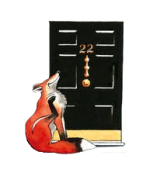

Donald Trump’s long-standing and ever more ardent desire to own Greenland helps explain his attitude to Putin. Putin used cod history of imperial Russia to justify aggression against Ukraine and was allowed by a feeble West to turn that aggression into actual invasion. Trump avoids condemning that invasion and has supported Putin’s version of Russia’s rights. In relation to Greenland, he produces a sketchy historical account about how American boats got there first and an overdramatised theory, akin to Putin’s Ukraine one, about how a Greenland not owned by the United States threatens his country’s security. Frustrated by what he sees as the prissy pygmies of Nato, he envies the freedom of action of his friend and fellow imperialist, Vladimir.
Some people I respect, as well as many I don’t, support the building of the new Chinese embassy in the old Royal Mint site which our government has just approved. Their chief reason seems to be that our intelligence services want it. Those services indicate they will have perfectly good ways of monitoring what China is up to in its new building. They set much store by the improvements in our embassy in Beijing which we shall be allowed in return. The views of spooks should be taken seriously, of course, but they miss more important factors. The optics of a vast, secretive Chinese building in the heart of the City imply that Britain sees China as the greatest power on earth, beside which increasingly unpopular American power, centred on Nine Elms, looks marginal. The Chinese will wish to foster that imperial impression and work ever harder to make reality catch up with appearance. It is in our interest to keep Chinese diplomats in ugly, unprestigious, scattered and poorly functioning buildings for as long as they break our laws and subvert our institutions.

Sir Keir Starmer said on Monday, ‘There is a principle here that cannot be set aside… any decision about the future status of Chagos belongs to the people of Chagos and the United Kingdom alone. That right is fundamental, and we will support it.’ Apologies, no, he did not say that. For ‘Chagos’, read ‘Greenland’, and for ‘the United Kingdom’, read ‘the Kingdom of Denmark’. Why won’t he let Britain, for which he is responsible, keep the rights he asserts for Denmark, for which he is not? Donald Trump promptly made the same mistake the other way round, belatedly criticising Starmer over Chagos while praising his own attitude to Greenland.
Following the Jenrick flit last week, James Orr, Reform’s leading intellectual, explained the situation in the Sunday Times. We are witnessing ‘the decline and fall of the oldest and most successful party in history,’ he wrote. The Tories are part of the collapse of ‘the entire cosmopolitan mindset that dominated western politics from 1945 to 2016’. Britain’s ruling class had ‘governed the country as if it were nowhere in particular’. Now we need ‘a vision animated by the politics of home’: Britain ‘is a home not an economic zone’. To love one’s community and country, says Orr, is ‘a pre-rational natural disposition of the human heart’. I agree with much of that, so why does it make me uneasy? Two reasons. The first is that it contains wrong history. Margaret Thatcher was not the neo-liberal whom Orr describes, but a proudly provincial woman overwhelmingly motivated by her idea of home and of Britain (particularly England). So she saw liberty, especially economic liberty, not as a global-elite template to be imposed universally, but as part of Britain’s cultural identity. She wanted to re-empower the national character, not efface it. My second reason is Orr’s use of ‘cosmopolitan’. The word has often been deployed anti-Semitically (as in ‘rootless cosmopolitan’). I do not see why it is wrong to be cosmopolitan. It is just that relatively few people are, a fact which democratic leaders should respect. My question for Reform is, ‘How do you develop a successful “politics of home” without allowing the freedom necessary to create economic opportunity?’ I fear the Reform mindset is more one of resentment than of, well, reform.
In an age when most bishops make no difference, Bishop James Jones is an exception. His pastoral strength as Bishop of Liverpool led to his chairmanship of the Hillsborough panel. His most famous phrase arising was ‘the patronising disposition of unaccountable power’. As we sit in the House of Lords, Friday after Friday, going through the committee stage of the Assisted Dying Bill, it echoes in my ears. Bishop Jones has seen this patronising disposition not only in relation to Hillsborough, but also – more relevantly to assisted suicide – in his independent panel on Gosport War Memorial Hospital, where the lives of more than 450 patients had been unnecessarily shortened by dangerous doses of medication. He himself has pointed out, in relation to assisted suicide, that those dying may be ‘in the hands of indifferent professionals who will be given greater powers over life and death’. This must be true, and it is a mathematical certainty that it is truer than ever because of the immense pressures on the NHS as more people grow old and fewer people care for them. The logic, if not the conscious intention, of unaccountable power, is to push more people towards killing themselves. Can assisted suicide legislation be devised which resists that logic? It is for the bill’s promoters to show how it can. Their present tactic is to evade this question.
As before, the editor has kindly allowed me to advertise here the AGM of the Rectory Society, of which I am chairman. The guest of honour is Tom Holland, historian and podcast superstar, whom I shall interview. It will take place in Chelsea Old Church at 6.15 p.m. on Tuesday 10 February. Please apply to ali@everington.net for tickets.




Comments