It is testament to the decline of Manchester United that the sacking of their manager, Rubin Amorim, on Monday has been treated as a second-order story. True, rather dramatic events in South America have put such things into their perhaps proper perspective, but you do feel that even if it were an especially slow news day, this once momentous event at English football’s second most successful – and some would still say greatest – club wouldn’t have elicited much more than a shrug.
Amorim has gone out with a bit of a whimper, though the unkind might say he never really arrived. His departure, it appears, was precipitated by a confrontation with director of football Jason Wilcox over a clash of responsibilities. Amorim issued a ‘strong statement’ after the club’s 1-1 draw with Leeds United insisting he wished to be the manager of Manchester United, not just the coach – suggesting he wanted more power over the club’s transfer policy.

He may have a point there. I’m sure I’m not alone among football fans in finding the manager/director of football dichotomy opaque and confusing. It’s a bit like the relationship between the lyricist and writer of the book in a musical, or that between the producer and executive producer of a film. Surely it’s the same job?
Or ought to be? Having one person bringing players into the club and another trying to make those players – whom he hasn’t chosen and may not fancy – fit into his idea of how a team should play sounds like a recipe for disaster. Amorim isn’t the first to fall foul: Manuel Pochettino and Jose Mourinho at Spurs both departed under similar clouds, while Celtic fans are currently splitting their never-short rations of abuse between their hapless new manager and the board.
Alternatively, it could be argued that the whole business of recruiting players, once done with a sit-down with the family if it was a youngster, or a handshake and perhaps a brown envelope in a service station car park if they weren’t, is now a complex globalised business requiring agents, linguists, lawyers and, yes, directors of football and perhaps the board of directors too. We are not in David Graeber (Bullshit Jobs) territory at all. The roles have become separate and both are necessary.
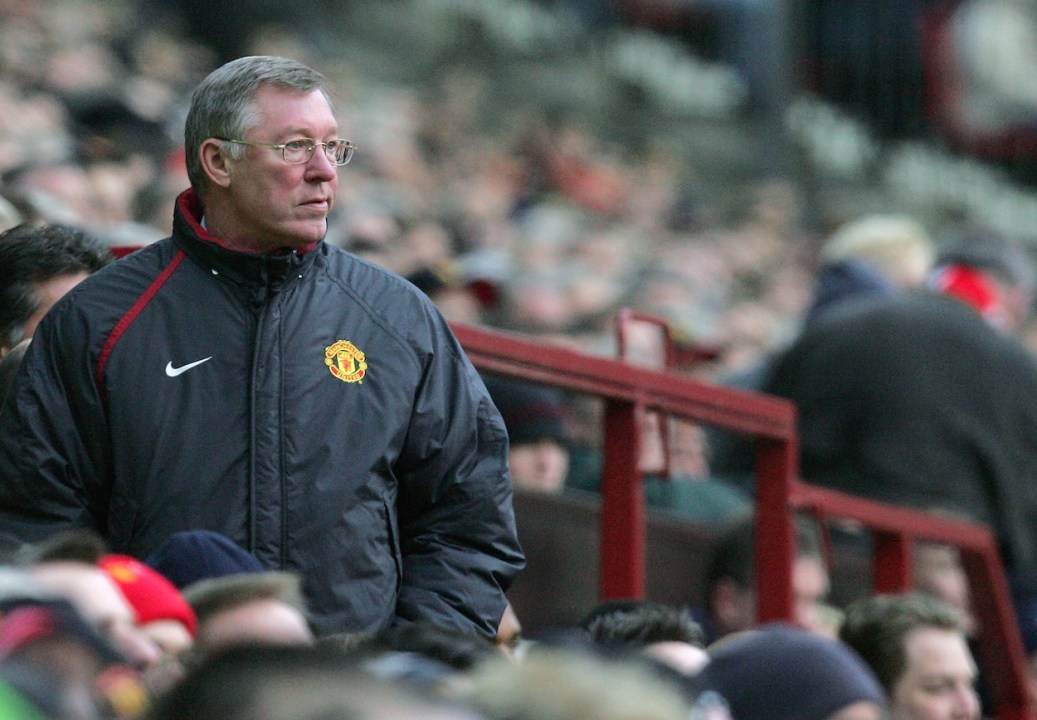
Amorim’s job title was coach, though, so perhaps he shouldn’t have complained. But his job satisfaction must have been minimal, as it must be for many managers these days. Long gone are the days of the all-powerful dug-out tyrants, most famously Alex Ferguson, but also Brian Clough, Bill Shankly and Jose Mourinho (in his Chelsea prime). It must feel at times that the role of the manager/coach these days is to occupy a space, to soak up the ire of the fans in the inevitable lean times, acting as a human shield for those higher up the chain of command but far lower down in the public consciousness.
The danger is that players may be sensing this increasing impotence from their line manager. Where once Alex Ferguson’s hair-dryer treatment, or a flying boot across the dressing room, could focus minds and galvanise teams, now the power has decidedly shifted. Amorim could say what he wanted, but if the dressing room knew he wasn’t really the one calling the shots – and might not be around for long anyway – it would likely have fallen on deaf ears.
It is testament to the decline of Manchester United that the sacking of their manager, Rubin Amorim, on Monday has been treated as a second-order story
This is a particular problem at desperate clubs – those that in the recent past had enjoyed great success and are frantically trying to resurrect themselves to satisfy their rabidly demanding fans and premium-paying sponsors. Clubs tend to go slightly mad in these circumstances. Liverpool had a desperate period with no title for 20 years and developed a micromanaged recruitment and player-management system as a result, before they finally cracked it – thanks to a dynamic and inspiring one-off manager. Manchester United are coming up on 15 championship-less years and appear to be developing similarly obsessive tendencies, but with no saviour in sight.
Which is very bad news for the Red Devils. In such circumstances, the players – or more likely their agents – will know that they can extract terms well beyond their player’s true worth and secure hard-to-terminate contracts that will see their clients comfortably ensconced for years, even if their form fails them. It’s football’s version of the moron premium. The Daily Telegraph recently published a list of the 71 best and worst signings of United’s post-Ferguson era; many of the (many) duds stuck around for ages, picking up massive wages and contributing precisely nothing.
For the fans, it is awful. Just as with a major Hollywood flop, there are so many people involved in a bewildering array of seemingly overlapping roles that it can be next to impossible to determine why the resulting production was such a mess. So, with underperforming super-clubs, you not only have to sit through the regularly dire performances, you can’t even enjoy hurling abuse, as you don’t really know who to blame.





Comments