In 2023, the State of Nature Report announced that Britain was one of the world’s most nature-depleted countries. This can have been scarcely surprising to anyone conscious of the ever-emptier countryside, and perhaps even expected for a small island that gave birth to the Industrial Revolution. But Lee Raye’s many sources reveal that the process has long predated the steam engine, with far-reaching effects not just on the natural world but on national psychology.
The 14 species featured in this book once bulked large in the British consciousness – as living beings and also as metaphors, morals, similes and symbols. They gradually vanished from view, impoverishing both the environment and our imaginations, and we now long for them: as amputees suffer ghost pains in their missing limbs, we feel the loss of animals once central to our culture.
Such absences have usually resulted from our own actions – extirpations, over-exploitations and collateral damage as we increasingly devastate our demi-Eden. But Raye knows human needs must be considered when seeking to restore nature, to avoid ‘environmental colonialism’, when arrogant outsiders impose unjust or unrealistic notions on established communities and landscapes.
The grey whale was familiar enough to the Romano-British for its bones to be carved by soldiers garrisoning Hadrian’s Wall. Whales also feature in Celtic Christianity (St Columba warned of one lurking off Iona, and St Brendan landed on another, believing it to be an island), while one Old English epithet for the sea was ‘whale’s home’. For centuries, whales were terrifying Leviathans or wonders of creation, before less poetic ages began to see them as sources of lamp oil or corset stays, to destructive and dislocating effect. By the 19th century, grey whales had been eliminated from the Atlantic – though they still persist in the Pacific.
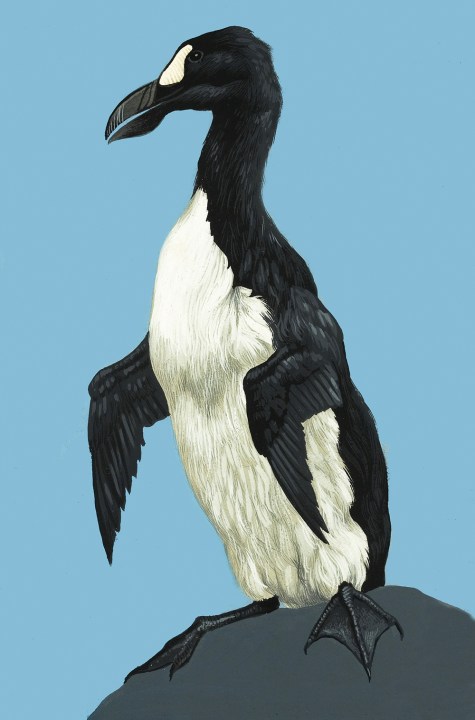
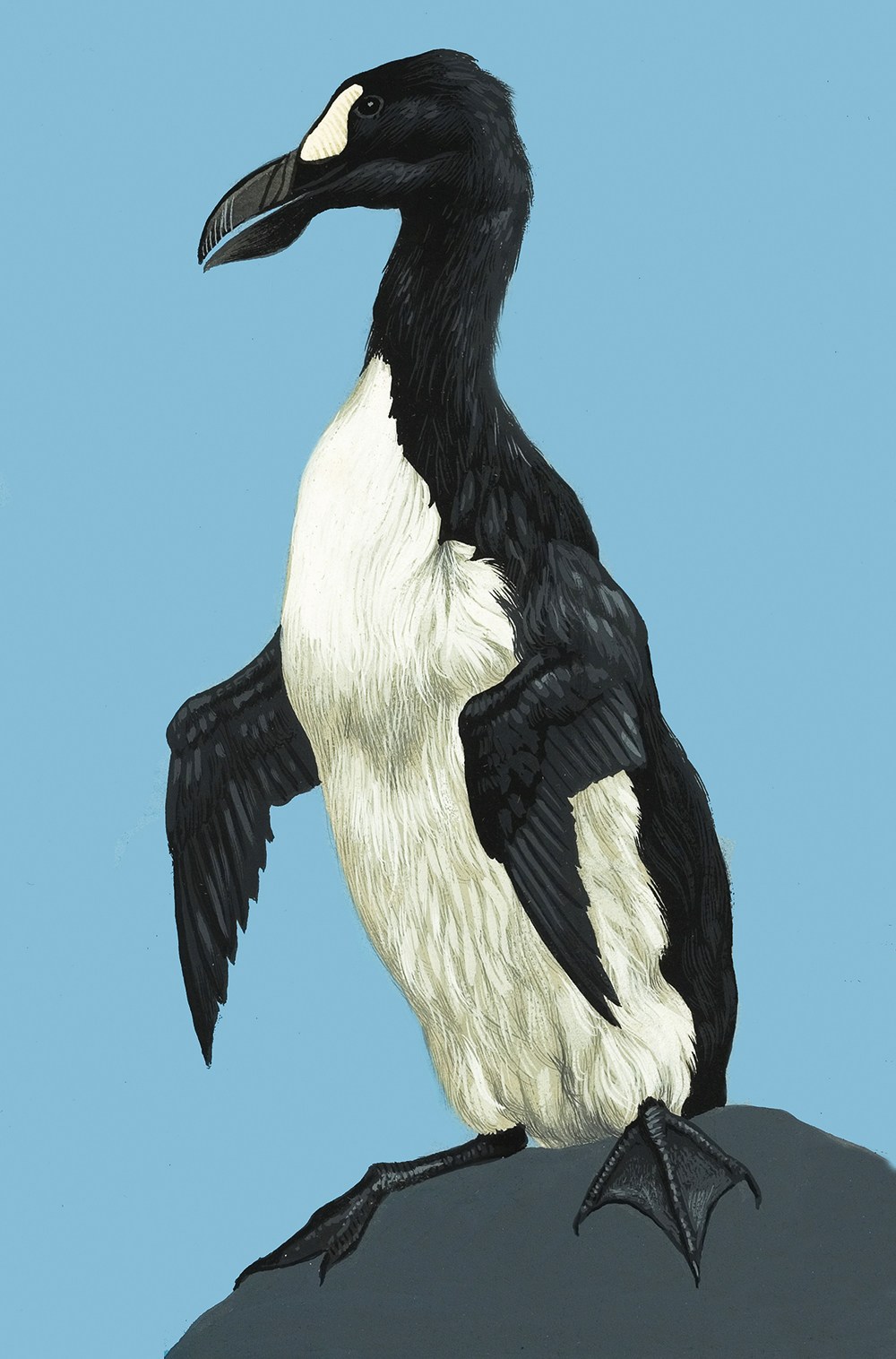
The great auk – possibly the original ‘penguin’, from Welsh words for ‘white’ and ‘head’ – reputedly became extinct in 1844, when the last birds were killed on an islet off Iceland. They were flightless, and therefore supremely vulnerable to hungry humans, while their beautiful eggs were eagerly sought by oologists. No sooner had they gone than they were mourned; in Charles Kingsley’s The Water Babies (1863), the chimneysweep Tom meets the sole survivor, a ‘grand old lady’ sitting on ‘Allalonestone’, who tells him of their extinction and then weeps tears of oil. In another tradition, the last auk was killed as a witch by the St Kildans. In Ruthven Todd’s surreal 1943 novel The Lost Traveller, the hero seeks the last auk, only to become the poor bird just as the frightened fisherman’s bludgeon descends.
Eagles, too, could shapeshift, as in the Mabinogion, when Blodeuwedd’s husband Lleu is magically transformed into an eagle at the moment of his murder, to become human again through the power of poetry. They were simultaneously snatchers of lambs and symbols of kingship, like Tolkien’s Gwaihir the Windlord, who saves Frodo from Mount Doom.
According to legend, St Felix of Dunwich made a beaver a bishop after it saved him from shipwreck
The wolf was regarded as a menace to livestock, the devourer of battlefield dead and even a demon – but Wulf was also popular as a name connoting chivalric warriorhood, as in Beowulf or St Wulfram, and one wolf was said to have guarded the severed head of St Edmund. Wild swine could damage crops, but they were also worthy quarry for the likes of Sir Gawain, and spirit guides for churchmen siting monasteries. Beavers were hunted for fur and their secretion castoreum, but according to legend, St Felix of Dunwich made one a bishop after it saved him from shipwreck.
Raye relieves stories of man’s inhumanity to animals by turning the view point around, so we see through a ‘lens of animality’. In a 16th-century poem, ‘Marchan Wood’, red squirrels travel from Wales to London to scold the Elizabethan English for cutting down Walian woods, while in the 1611 ballad ‘The Powte’s Complaint’, ‘powtes’ (a regional name for burbots and other similar fish) bewail the draining of the Fens.
Britain still suffers losses, with nearly one in six of all species threatened with extinction. But some of the animals in this book are returning to claim their own, such as cranes, great bustards and wild boar; and beavers are starting to refashion the thirsting land in an older image. With luck (and assistance), sturgeons may one day again surge up into the Humber and lynxes slink in to deal with our deer and satisfy a yearning for big cats beyond the Beast of Bodmin. In looking back at our old co-existence with such creatures, Raye helps us look forward to such times.



Comments