
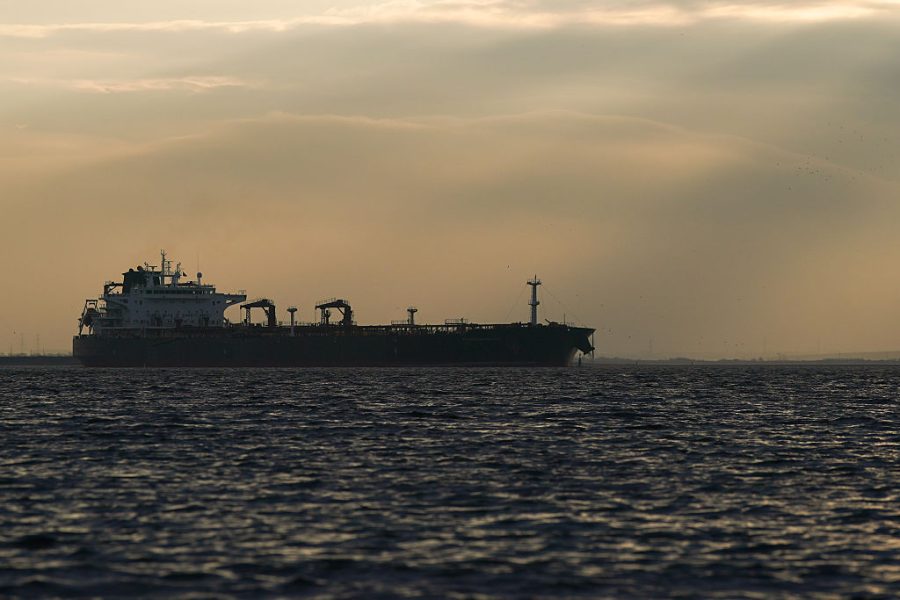
It has not required advanced training in detecting nuance or reading between the lines in recent days to understand that Donald Trump is annoyed. A man who wears his demands, if not quite his heart, on his sleeve, he has made it abundantly clear that he wants America’s allies, especially but not exclusively the leading members of Nato, to provide additional resources and assets for a US-led effort to maintain maritime commerce through the Strait of Hormuz. The President is angry and disappointed that such help has not been immediately forthcoming.
Trump took to his Truth Social platform, as always, to air his feelings earlier this week:
The United States has been informed by most of our Nato ‘Allies’ that they don’t want to get involved with our Military Operation against the Terrorist Regime of Iran, in the Middle East, this, despite the fact that almost every Country strongly agreed with what we are doing, and that Iran cannot… be allowed to have a Nuclear Weapon. I am not surprised by their action, however, because I always considered Nato, where we spend Hundreds of Billions of Dollars per year protecting these same Countries, to be a one-way street – We will protect them, but they will do nothing for us, in particular, in a time of need.
We should never act recklessly when British lives are at stake
There is much in the President’s tirade which is contentious, distorted and mendacious. What is undeniable, however, is that it is a true and accurate representation of his feelings. That is a reality around which Western leaders must navigate, the backdrop to decision-making for Sir Keir Starmer, Emmanuel Macron, Friedrich Merz and others.
The UK’s response, the Ministry of Defence (MoD) announced on Wednesday, has been to send a ‘small team’ of military planning staff to the headquarters of US Central Command (CentCom) at McDill Air Force Base in Tampa, Florida. CentCom is one of the Pentagon’s 11 unified combatant commands, established in 1983 and responsible for all US military activity in the Middle East and Egypt, central Asia and south Asia. Because its area of responsibility includes Iran, Iraq, Afghanistan, the Persian Gulf, Saudi Arabia, Syria, Yemen and Israel, it is rarely a backwater.

The Times reports that this ‘handful’ of UK military personnel has been sent to Florida ‘to help plan and develop options for how to enable shipping to transit through the chokepoint, which is feared to contain mines’. No doubt they will make a useful contribution: the UK’s armed forces still have a strong reputation in planning, preparation and staff work. It is unlikely, however, that President Trump was expecting the deployment of a ‘handful’ of personnel to a US headquarters which numbers several hundred.
There is an alarming suggestion that part of the underlying motivation for sending planning staff to CentCom is an unwillingness on the part of British defence chiefs to send military assets to the Strait of Hormuz because it is ‘an incredibly fluid situation at the moment’. Effectively, the MoD is arguing that the uncertainty over how much of a threat Iran presents, and of what kind, makes it simply too dangerous for the Royal Navy to send warships to the region to contribute to a US-led operation. Military chiefs reportedly fear that Iran would ‘try to sink British warships with advanced weapons, including anti-ship cruise missiles, ballistic missiles and kamikaze drones’.
I suspect that most commentators and analysts would agree that, yes, your adversaries in a conflict zone may well attempt to sink your ships and strike at any other significant assets. That is, in one respect, the very essence of warfare. But it brings some fundamental questions into sharp focus.
It may be that the service chiefs and senior policy officials at the MoD assessed the whole spectrum of military, political, economic and commercial risks and decided that any potential benefits from a direct military contribution in theatre did not justify the possible costs. That is a very complicated and multifaceted nexus of policy issues, from the cost of living in the UK to our bilateral relationship with the United States. It would be more worrying if they had decided that the putative loss of lives, warships and other naval or aerial assets was prima facie unacceptable and so shaped policy as a red line.
We should never act recklessly when British lives are at stake. But there is a danger in finding yourself with resources concentrated in so few assets of such proportional expense and value to you that it effectively paralyses you in terms of effective action. Conflict is an inherently risky affair yet, as a possible last resort, intrinsic to the exercise and protection of national interests.
If we have reached the stage where our armed forces are so small and vulnerable that we are unable even to assist our much more powerful ally, the United States, something has gone very wrong. Keeping the Strait of Hormuz open is absolutely in Britain’s national interest. If we will not help, that is a political decision. If we are unable to help, that is even more serious.






Comments